
Head-to-head comparison
Elegoo Centauri Carbon vs Bambu Lab P1S: Hardened Nozzle or AMS?
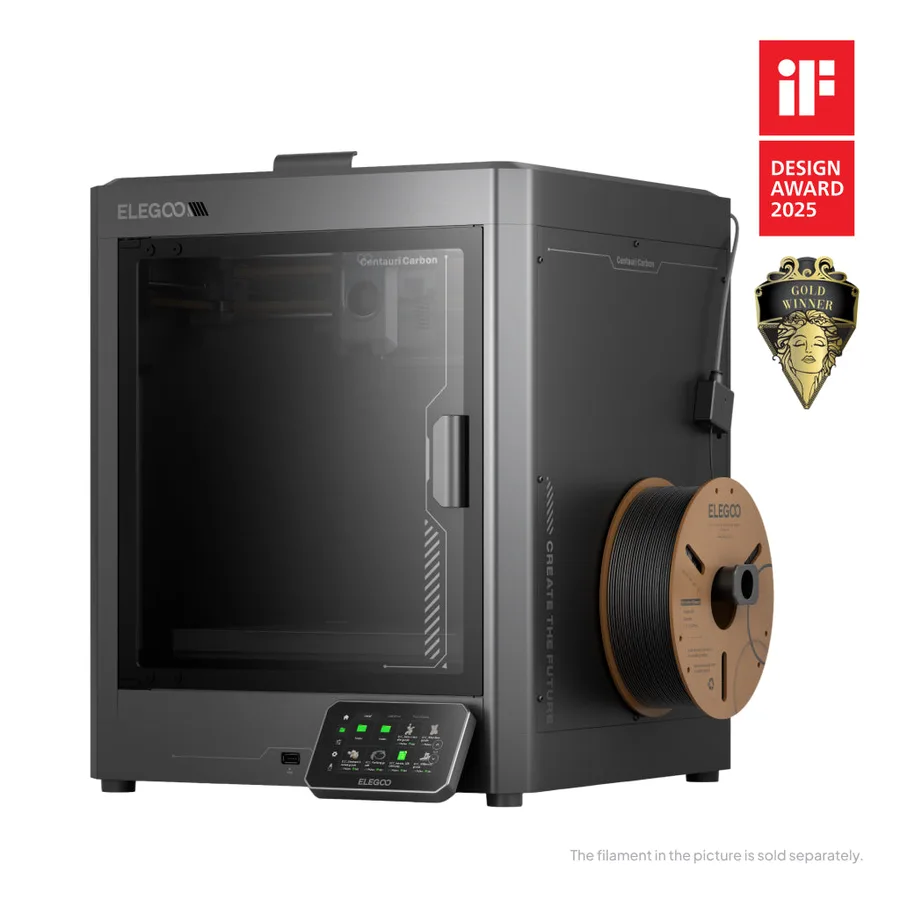
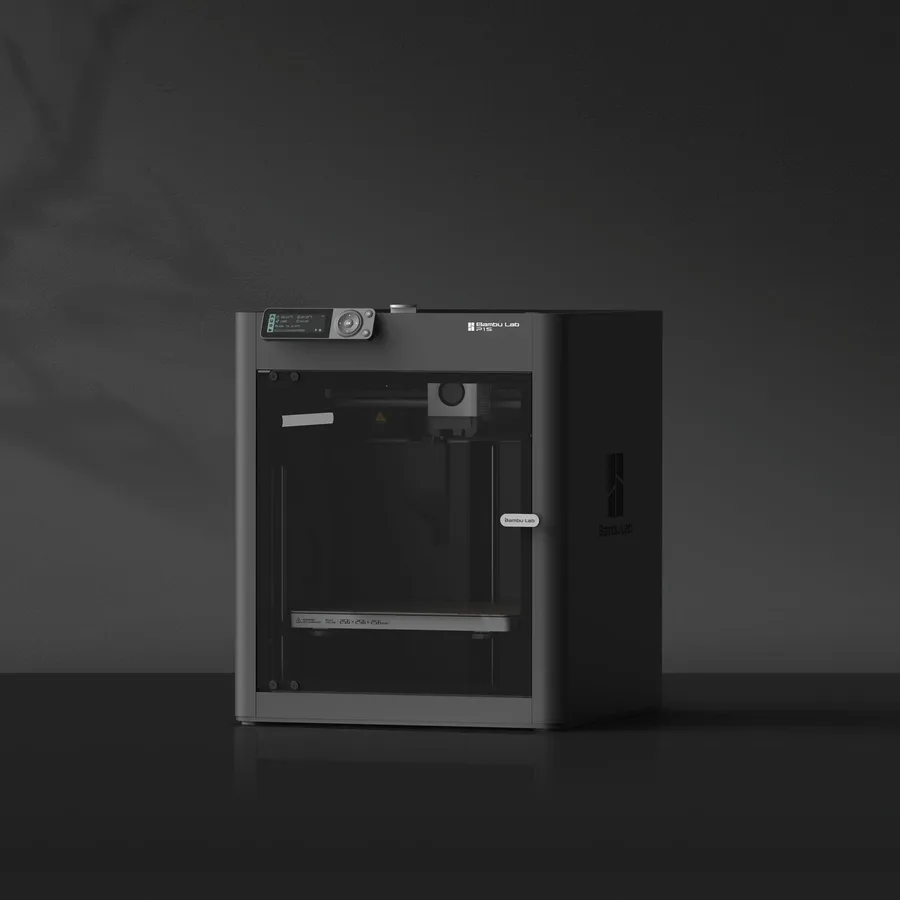
The short answer
Pick the Centauri Carbon if you're targeting carbon-fiber-filled filaments, with a hardened-steel nozzle, a hotend advertised up to 320°C, and built-in air filtration. Pick the P1S if Bambu Lab's AMS ecosystem for multicolor printing and a lighter machine, 12.95 kg versus 17.5 kg, matter more than the reinforced nozzle.
Documentary comparison of manufacturer specifications. Not personally tested.
Choose the Elegoo Centauri Carbon if…
- A hardened-steel nozzle built to resist the abrasion of carbon-fiber-filled filaments per Elegoo.
- A hotend advertised up to 320°C and a bed up to 110°C, above the 300°C and 100°C advertised for the P1S.
- Built-in air filtration and a 4.3-inch touchscreen with a chamber camera per Elegoo.
- Power-loss recovery and automatic calibration documented by the manufacturer.
Choose the Bambu Lab P1S if…
- A lighter machine, 12.95 kg advertised versus 17.5 kg for the Centauri Carbon.
- AMS compatible, with several possible versions depending on the accessories chosen, for multicolor printing.
- PLA, PETG, ABS, and ASA documented per manufacturer profiles, inside an enclosed chassis by default.
- A built-in monitoring camera for following prints and making timelapses, per the official Bambu Lab store.
Specifications side by side
| Specification | Elegoo Centauri Carbon | Bambu Lab P1S |
|---|---|---|
| Technology | Filament (FDM) | Filament (FDM) |
| Build volume | 256 × 256 × 256 mm (10.1 × 10.1 × 10.1 in) | 256 × 256 × 256 mm (10.1 × 10.1 × 10.1 in) |
| Printer dimensions | 398 × 404 × 490 mm (15.7 × 15.9 × 19.3 in) | 389 × 389 × 458 mm (15.3 × 15.3 × 18 in) |
| Weight | 17.5 kg (38.6 lb) | 13 kg (28.5 lb) |
| Enclosure | Enclosed | Enclosed |
| Claimed top speed | 500 mm/s | 500 mm/s |
| Claimed acceleration | 20,000 mm/s² | 20,000 mm/s² |
| Max nozzle temperature | 320 °C (608 °F) | 300 °C (572 °F) |
| Max bed temperature | 110 °C (230 °F) | 100 °C (212 °F) |
| Multicolor | Single-color machine; confirm any separate multicolor package and its compatibility. | AMS compatible; AMS 2 Pro configurations require the appropriate accessories. |
| Materials | PLA, PETG and selected reinforced filaments according to the exact nozzle and material profile. | PLA, PETG, ABS and ASA, subject to manufacturer profiles and setup requirements. |
| Screen | 4.3-inch touchscreen | — |
| Built-in camera | Yes | Yes |
| Connectivity | Wi-Fi, USB | — |
| Listed features | Auto bed leveling, filament runout sensor, built-in air filtration | Auto bed leveling, filament runout sensor, built-in air filtration |
— : not listed by the manufacturer on the pages we reviewed.
Build volume and footprint
Both machines share the same 256 × 256 × 256 mm nominal volume per Elegoo and Bambu Lab. The gap shows up elsewhere: the Centauri Carbon weighs 17.5 kg versus 12.95 kg for the P1S, for an enclosed chassis of a similar size.
On a shelf or workbench, that weight difference mostly shows up when moving the printer, not in the space taken by the build plate itself, with both advertising a similar footprint per their listings.
Materials, temperatures and enclosure
The Centauri Carbon advertises a hardened-steel nozzle and a hotend up to 320°C per Elegoo, built to resist the abrasion of carbon-fiber-filled filaments. The bed heats up to 110°C, with auxiliary cooling for functional parts.
The P1S advertises a hotend up to 300°C and a bed up to 100°C per Bambu Lab, with PLA, PETG, ABS, and ASA compatibility per manufacturer profiles. Its listing doesn't mention a hardened nozzle or carbon-fiber-filled filaments.
Multicolor: CANVAS or AMS
The Centauri Carbon on its own stays single-color per Elegoo: any multicolor addition goes through the CANVAS package, sold separately, with its exact compatibility and contents still to verify on the chosen listing.
The P1S stays AMS compatible, with several possible versions depending on the accessories chosen. In both cases, the multicolor system remains a standalone accessory, worth checking before comparing two prices.
What to check before buying
On the Centauri Carbon, check whether the listing includes air filtration, and be sure to distinguish this original model from the newer Centauri Carbon 2, which doesn't necessarily share the same features per Elegoo.
On the P1S, the included AMS version and required accessories depend on the bundle chosen per Bambu Lab. Compare the retailer's exact bundle contents rather than the product photo alone, since included spools or starter accessories can differ from one listing to another. The enclosed 3D printer guide and the ABS and ASA page help check what the enclosure genuinely adds depending on the material you're targeting.
Sources
- Elegoo — Centauri Carbon tech specs (fr.elegoo.com)
- Bambu Lab — P1S tech specs (eu.store.bambulab.com)
- How we compare printers
Published 2026-09-28, updated 2026-09-28.