
ABS vs ASA Filament: Why You Need an Enclosure
ABS and ASA have a reputation for warping and popping off the build plate on an open-frame printer. That is not a random glitch: both materials shrink noticeably as they cool, and that single fact drives most of the machine and settings decisions covered here.
Find My 3D Printer editorial team·Published September 10, 2026·Updated September 16, 2026·Manufacturer documentation, no hands-on tests claimed

The short answer
Per manufacturer documentation, ABS and ASA shrink substantially as they cool, which causes warping on open-frame printers, so an enclosure that keeps chamber temperature stable is recommended for both. ASA holds up better to UV and outdoor exposure than ABS according to Prusa and Polymaker, but both release potentially hazardous fumes and need a ventilated room. Several enclosed printers in the catalog, including the Bambu Lab P1S and the Elegoo Centauri Carbon 2, are built with this kind of filament in mind.
Why ABS and ASA Both Want an Enclosure
Unlike PLA, ABS and ASA contract noticeably as they cool from nozzle temperature down to room temperature. Per Prusa's knowledge base, that contraction builds internal stress: the bottom layers, already cooled, get pulled upward as the layers above them shrink in turn. The visible result is warping, corners lifting off the plate or edges curling mid-print.
An enclosure counters this by keeping the air around the part warmer and, more importantly, more stable, which shrinks the temperature gap between layers. That is why a lot of makers reserve ABS and ASA for functional parts printed on an enclosed machine rather than for a first print on an open-frame printer.
Without a dedicated enclosure, Prusa's documentation offers a partial workaround: turning on the slicer's draft shield, a sacrificial wall printed around the part that buffers local temperature swings. It helps, but it is not a substitute for a real enclosed chamber.
ABS or ASA: the Real Difference Is Outdoor Durability
On paper ABS and ASA share most of their properties: similar mechanical strength, similar cooling behavior, and nozzle and bed ranges that overlap closely. The best-documented difference is UV resistance. Per Polymaker's technical data sheet for ASA and Prusa's ABS article, ASA holds its color and strength better outdoors, while ABS yellows and turns brittle under sustained sun exposure.
That difference should drive the decision for outdoor parts: a mailbox bracket, a sun-exposed enclosure, or an automotive trim piece benefits from ASA's weatherability. For a part that stays indoors, neither manufacturer's documentation points to a clear edge for one material over the other beyond UV behavior, so the choice often comes down to filament availability or settings you already have dialed in.
Ventilation and Safety, According to the Manufacturers
Prusa's knowledge base is direct about this for both materials: ABS and ASA release potentially hazardous fumes during printing, styrene among them, and printing should happen in a well-ventilated room. That guidance sits alongside the enclosure recommendation, and the two can pull in opposite directions in practice.
The catch Prusa flags is this: the room needs air exchange for air quality, but you should not create a draft directly over the print, or you risk reintroducing the warping the enclosure was meant to prevent. An enclosure with an activated-carbon filter, on models that offer one, is the way to satisfy both requirements without blasting the part with cold air.
For regular ABS or ASA printing, a separate or well-vented room works better long-term than a closed home office, especially if several prints run back-to-back in the same day.
Bed Temperature and First-Layer Settings
Recommended bed temperature ranges differ a bit between the two materials. For ABS, Prusa lists a recommended 100 °C (212 °F), with a usable range between 80 and 110 °C (176-230 °F) depending on part size. For ASA, Prusa recommends 105 °C (221 °F) for the first layer and 110 °C (230 °F) afterward, while Polymaker's technical data sheet for its PolyLite ASA lists a 75-95 °C (167-203 °F) range depending on the profile.
Those gaps show there is no universal setting: every filament-and-printer combination needs to be calibrated from the manufacturer's data sheet and fine-tuned with first-layer test prints, not copied from a different filament with a similar name. Bed adhesion also depends heavily on plate condition and cleaning between prints, something manufacturers flag consistently in their material guides.
Drying and Storage Before You Print
ABS and ASA are both hygroscopic: they absorb moisture from the air, which can cause bubbling, popping at the nozzle, and a rougher surface finish. Bambu Lab's ABS/ASA/PC guide recommends drying around 80 °C (176 °F) for about eight hours before printing, then storing the spool in a sealed box. Polymaker's technical data sheet for ASA lists a separate figure: 70 °C (158 °F) for seven hours.
Before a long print session, drying the filament as a precaution beats waiting for visible symptoms on the part, especially if the spool has been open for a few weeks or stored outside its original bag.
Acetone Vapor Smoothing: an Optional Finish, Not a Print Setting
ABS and ASA share a property PLA does not have: their surface can be smoothed after printing with acetone vapor. Per Prusa's knowledge base, ABS "can be smoothed with acetone," and ASA can be sanded wet or dry, or glued and welded with acetone and smoothed in its vapors, which leaves a glossy finish close to an injection-molded part.
That finish has a trade-off: per the same documentation, acetone-smoothed prints tend to lose detail and sharp edges, which makes it better suited to display pieces and enclosures than to the functional parts covered elsewhere on this page. Chemical smoothing is an optional finishing step, not a strength upgrade, as our strongest filament guide covers in more detail, so skip it on any part that still needs to hold a tight tolerance.
This is also a good moment to double check ventilation before starting an acetone vapor session: the same well-ventilated room recommended earlier in this guide for print fumes works for post-processing too, and acetone vapor, a volatile and flammable solvent, should never be used near an open flame or a running heater. Treat smoothing as a separate step after the print has fully cooled, not something to combine with an active print job in the same enclosure.
Which Enclosed Printers in the Catalog Fit
An enclosure is not an optional accessory for ABS and ASA; manufacturers treat it as a condition for consistent results. In the catalog, several enclosed machines are built with this kind of filament in mind: the Bambu Lab P1S, the Bambu Lab P2S, the Creality K1C 2025, the Anycubic Kobra S1, and both versions of the Elegoo Centauri Carbon 2.
Before buying a spool of ABS or ASA, check the compatible-materials list published by the manufacturer of the printer you are considering. Maximum nozzle and bed temperature, active versus passive enclosure, and whether a filter is available all vary between models, even among enclosed machines.
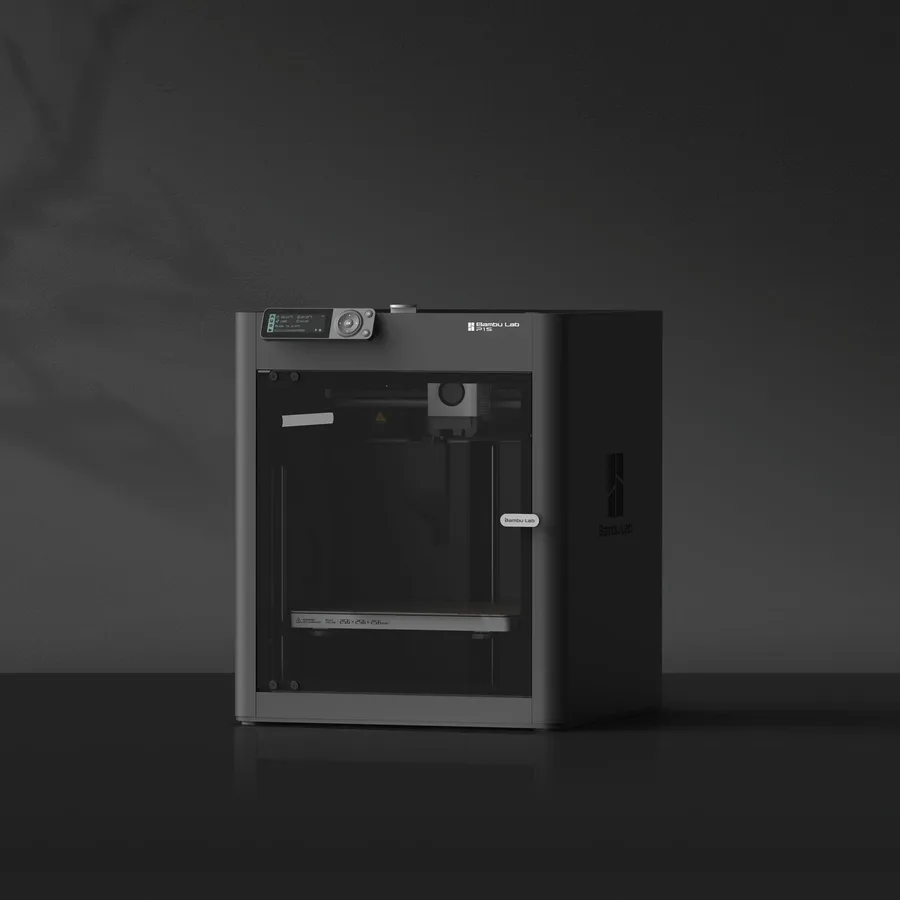
Bambu Lab P1S
256 × 256 × 256 mm
The same nominal volume as the A1, with an enclosure and a different motion system.
Check the precise AMS version, adapters and accessories included. Enclosure alone does not establish material suitability.
Specifications and seller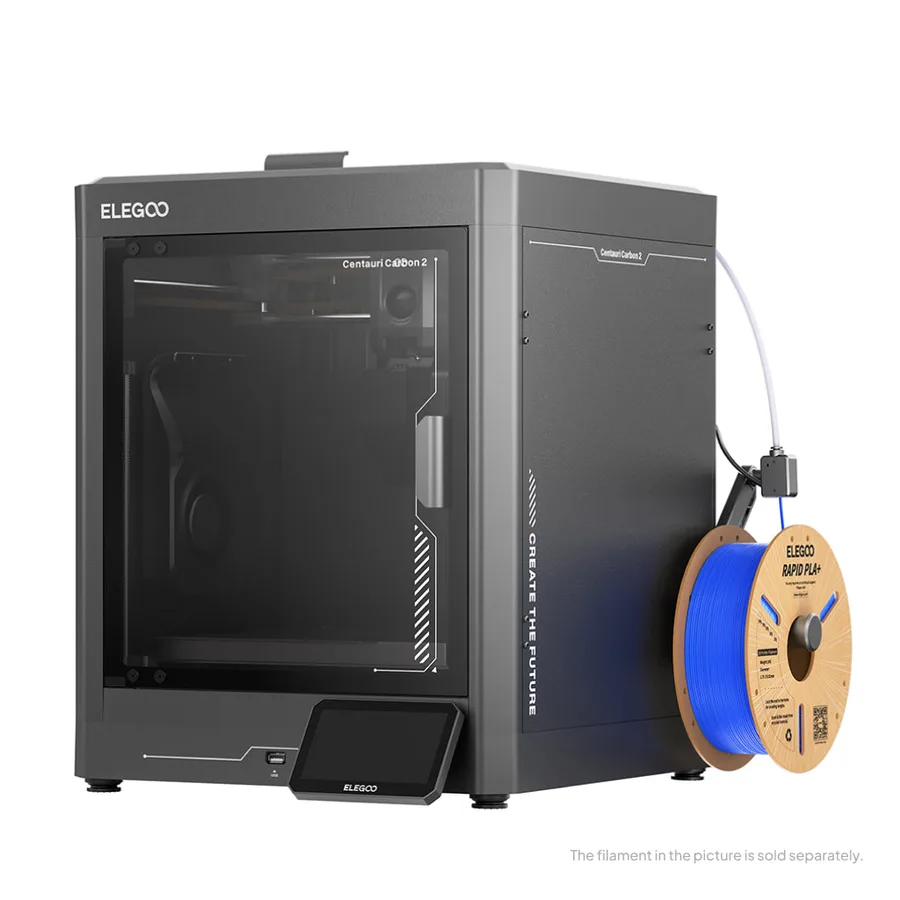
Elegoo Centauri Carbon 2
256 × 256 × 256 mm
Another manufacturer to compare when you need an enclosed machine in the 256 mm build-volume class.
Carbon, Carbon 2 and Carbon 2 Combo are different listings. Confirm the complete package before comparing prices.
Specifications and sellerSources and limits
- Prusa Knowledge Base — ASA
- Prusa Knowledge Base — ABS
- Prusa Knowledge Base — Enclosure guidepost
- Bambu Lab Wiki — ABS / ASA / PC usage guide
- Polymaker Wiki — PolyLite ASA technical data sheet
We organize manufacturer and community documentation; we have not measured these products ourselves. The manual for your exact model takes precedence over general guidance.
A clearer shortlist starts with your projects.
Use the free buying checklist and budget worksheet before comparing offers.