How we chose
- Only printers documented in our catalog, with a manufacturer spec sheet reviewed in September 2026 (build volume, dimensions, footprint, chamber temperature).
- Volume benchmarks by project type rather than one single "large format" figure: a 256 mm class bed is already common, genuine large format starts further out.
- No scores and no claimed testing: we have not tested these printers, and every reason relies on each manufacturer's own published specifications.
- Printers chosen for different large-format use cases rather than one single leaderboard: open or enclosed, a cubic volume or a tool changer, an accessible entry point or an industrial format.
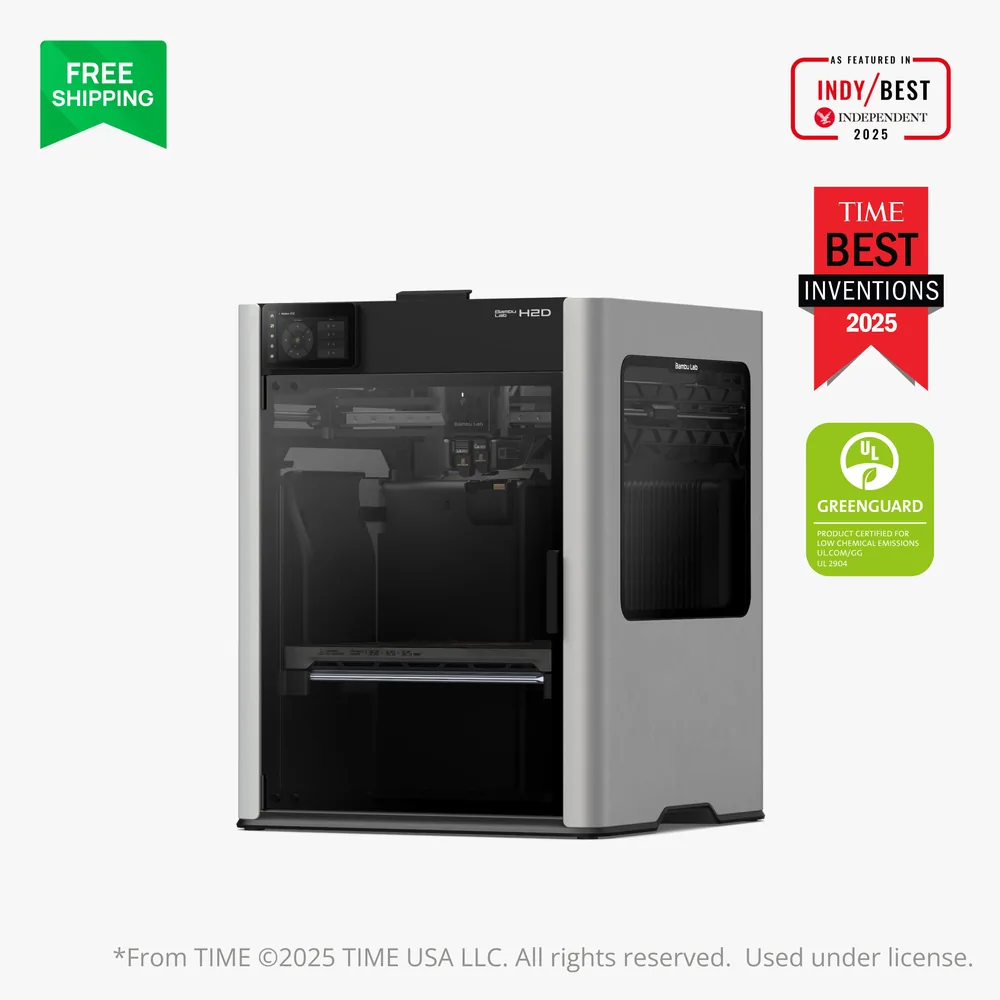
- Some spec sheets show paid partner offers, labeled "Ad". Printers without a verified offer yet, like the A2L, the H2D, or the OrangeStorm Giga, can still make the list.
What actually counts as a "large" build volume?
"Large format" depends entirely on what you print. A 180 mm build plate already covers most miniatures, supports, and small accessories comfortably; that is the volume of a compact machine like the Bambu Lab A1 mini. For organizers, decorative pieces, or most everyday print jobs, a 220-256 mm plate already covers a large share of typical needs without hunting for anything bigger.
The real need for something beyond that shows up mostly for single-piece parts over roughly 250-300 mm on one axis: a life-size cosplay helmet, a body panel, a furniture part, or a human-scale prop. That is the category this page addresses, with a few possible paths: a printer with a larger plate like the ones in this lineup, or redesigning the file to print it in sections that get assembled afterward.
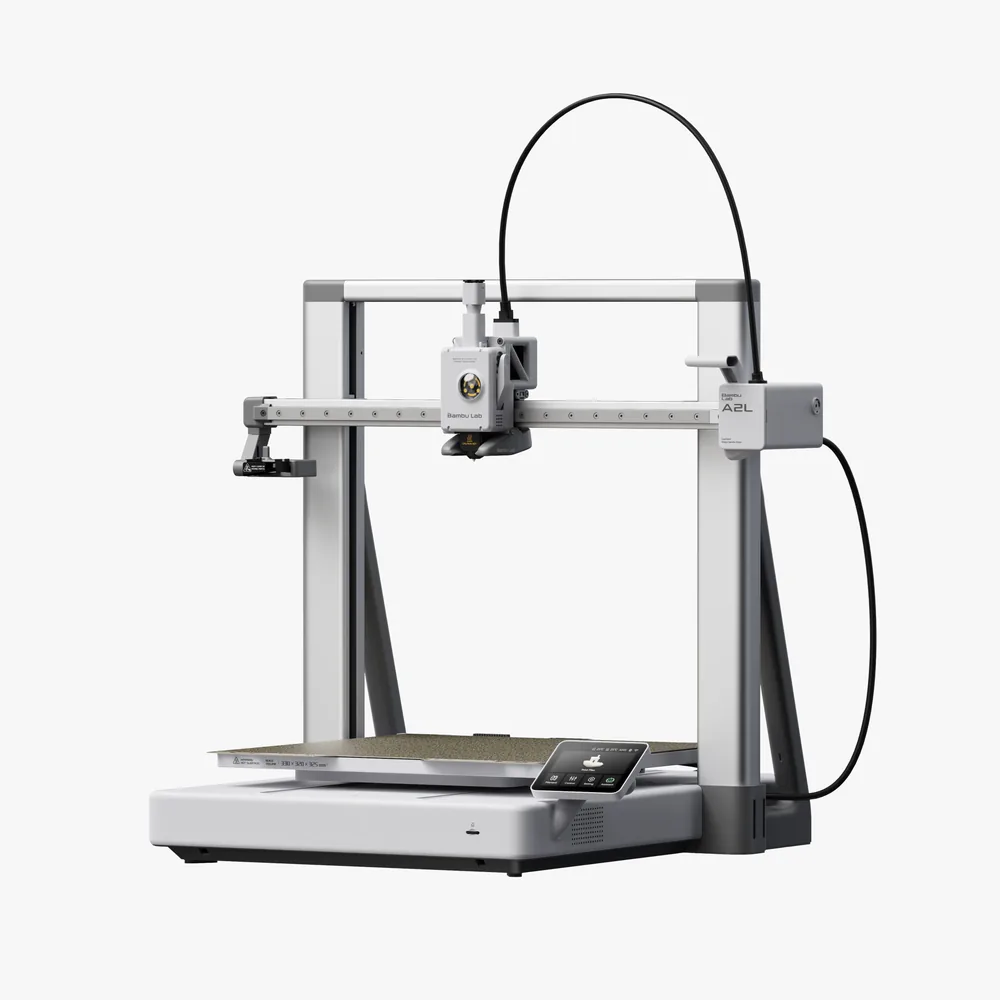
On enclosed FDM printers, a 256 × 256 × 256 mm build volume is no longer unusual: it is the nominal volume of several enclosed-chassis machines in the catalog, including the Bambu Lab P2S and the Elegoo Centauri Carbon 2. Beyond that, the pool shifts category entirely, which is exactly what this lineup covers, from the open-frame A2L at 330 mm class up to the 800 mm OrangeStorm Giga.
Before shopping for a specialized machine, it is worth checking whether a 220-256 mm plate already fits the job, even if that means rotating the part diagonally in the slicer to squeeze a few extra millimeters on the tightest axis.
Beyond 256 mm: seven different ways to go large
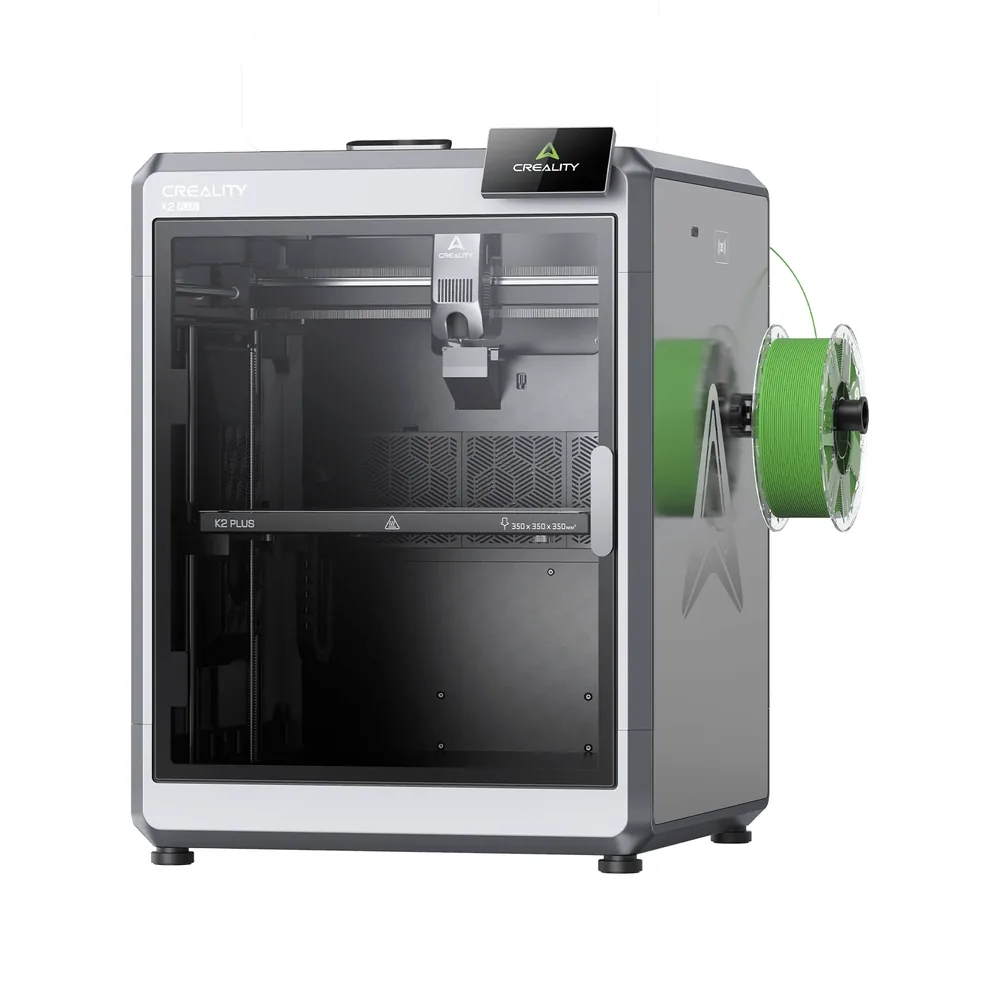
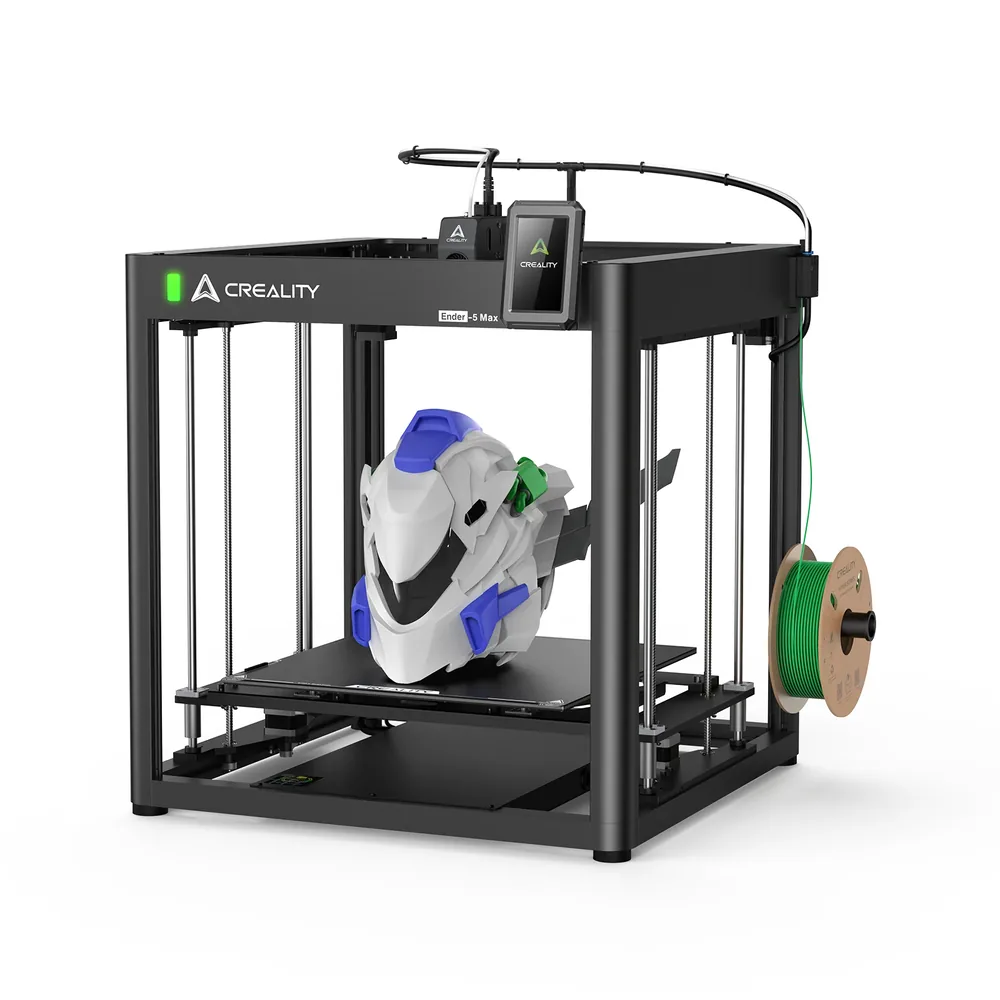
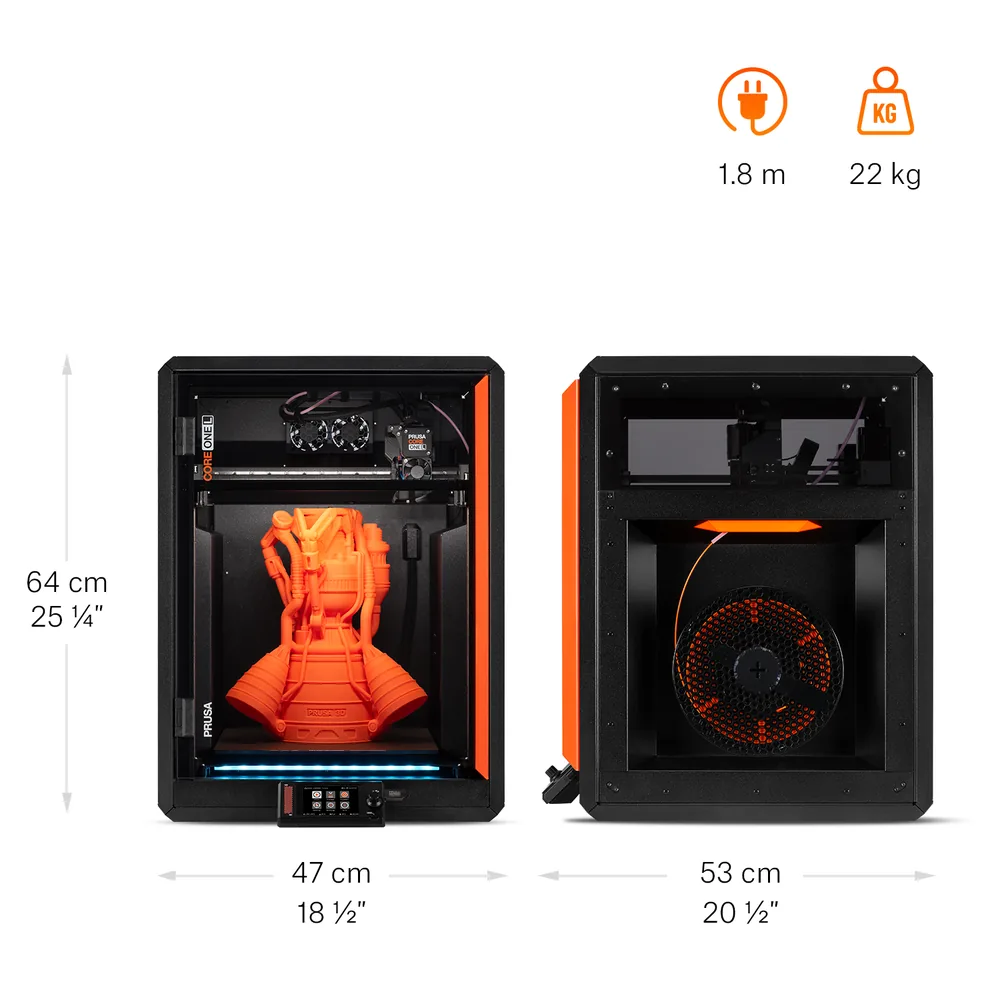
Past that common size, the pool of machines shrinks sharply and shifts category. On an open frame, Bambu Lab's A2L doubles the A1's space (330 × 320 × 325 mm) without straying from the A-series' simplicity, while the Creality Ender-5 Max reaches 400 × 400 × 400 mm on an equally open frame but with independent dual Z axes. On an enclosed frame, the Creality K2 Plus (350 mm class) and the Prusa CORE One L+ (300 × 300 × 330 mm) add active chamber heating, an advantage for materials that shrink while cooling over a large area.
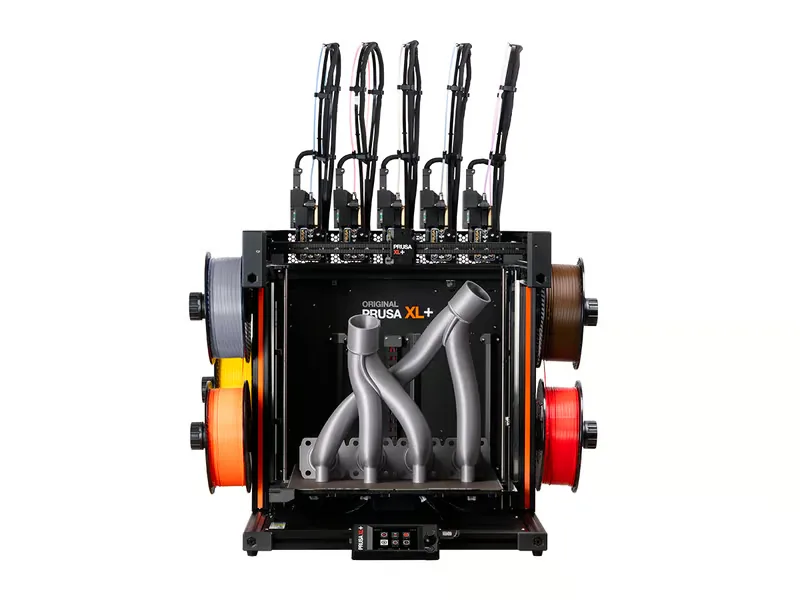
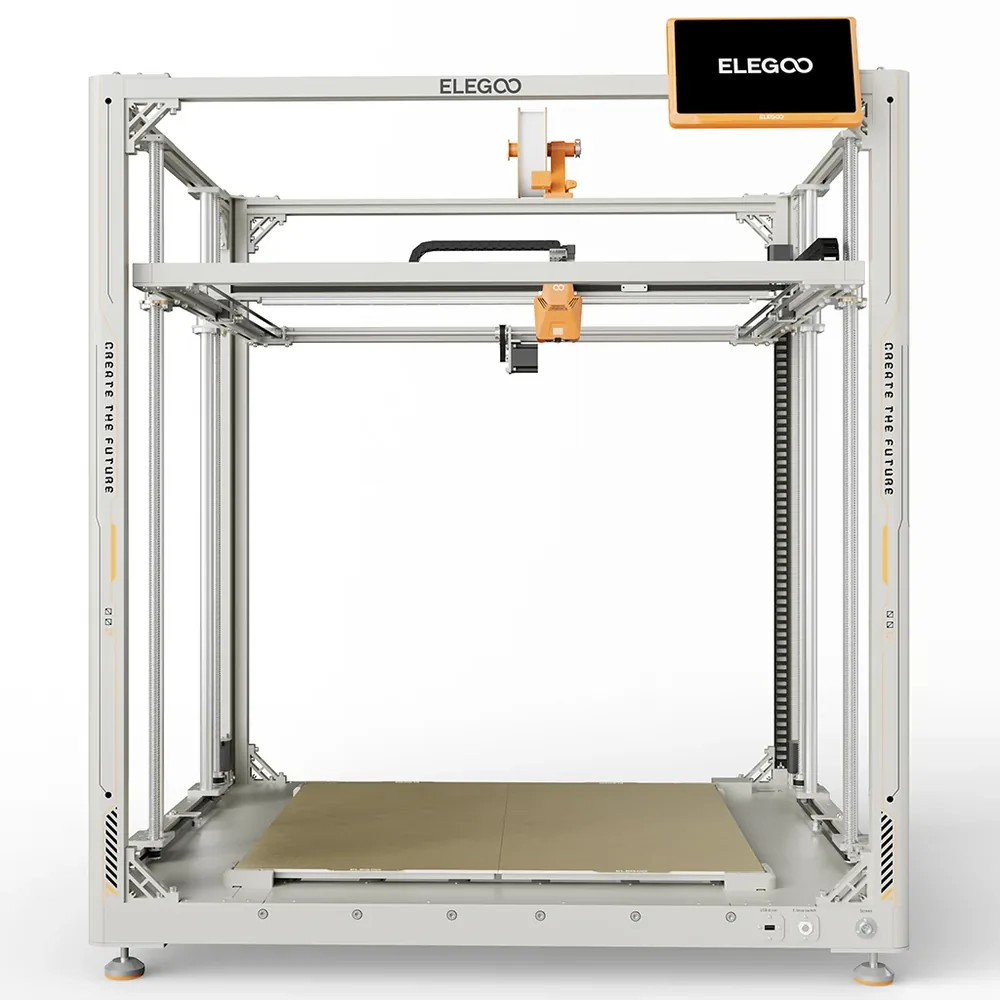
Other machines change approach entirely: the Prusa XL+ reaches 360 mm class with a tool changer that scales from 1 to 5 automatic heads rather than a spool-based system, the Bambu Lab H2D combines a dual nozzle with an optional laser module on a volume up to 350 × 320 × 320 mm, and the Elegoo OrangeStorm Giga targets industrial use with 800 × 800 × 1000 mm and up to four nozzles for printing several parts in parallel.
These machines are not meant to replace a compact everyday printer: they target workshops or a recurring need for large parts, with proportionally more footprint, weight, and material use. Before buying one, it is worth having already hit the ceiling of a more standard build plate a few times.
The alternative: splitting the part into sections instead of switching machines
For a one-off oversized part, most slicers and modeling tools let you cut the model into sections that each fit the machine's volume, then glue, dowel, or screw them together after printing. That is the standard approach for cosplay and life-size props: it costs some sanding and seam finishing, not a new machine.
This approach has limits: a part that must stay rigid across its full length, like a structural bracket, needs a carefully chosen cut plane and assembly method so the seam does not become a weak point.
What a large build plate actually changes day to day
Print time grows with volume, but not linearly: a part twice as tall can multiply the layer count and therefore the print duration by a similar factor, raising the odds that something (a clog, a detach, a power blip) happens partway through an unattended multi-hour print.
Warping also gets harder to control over a larger footprint, especially with materials that shrink as they cool like ABS or ASA: the wider the base, the more the corners tend to lift if the bed is not heated and leveled evenly. The warping page covers the settings that reduce this risk.
Finally, a bigger plate means more floor or desk space, a heavier loaded plate to move around, and a noticeably higher material cost per failed print: it is worth budgeting for that up front, consumables included, with the startup budget tool.
What to check before buying a large printer
Build volume alone is not enough to decide: on a wide part, bed heating uniformity and first-layer quality matter more than on a small one, where a slight leveling error often goes unnoticed. An enclosed machine with a bed that reaches a high enough temperature helps limit warping on wide bases, especially with ABS or ASA.
Also check the material compatibility the manufacturer lists for the specific model, whether extra accessories are sold separately (a multicolor system, a reinforced enclosure kit), and whether your project genuinely needs an outsized volume or just something close to 256 mm. The printer finder helps compare catalog machines against these criteria before deciding.
The special case of large-format resin printing
Resin works differently: build volumes stay generally more compact than FDM, because a bigger vat means more liquid resin to heat, clean, and dispose of responsibly, with cost and handling that scale up quickly. Current catalog resin machines, like the Saturn 4 Ultra 16K, stay focused on fine detail rather than raw volume, with usable dimensions well below a large FDM printer's.
A bulky resin part is therefore more often handled by assembling several separately printed pieces than by hunting for a giant resin machine, especially since post-processing (washing, curing) gets longer and more demanding as the part grows. The resin buying guide covers the benchmarks specific to that process.
Volume benchmarks by project type
| Project type | Volume that's usually enough | What to check before buying bigger |
|---|
| Miniatures, supports, small accessories | Up to roughly 180 mm per side | A compact machine is enough; no need to size up |
|---|
| Organizers, decorative pieces, everyday parts | 220-256 mm per side | The most common size on current enclosed machines |
|---|
| Single part 300-350 mm on one axis | Specialized machine or split into sections | Compare a dedicated machine's cost against assembly |
|---|
| Life-size cosplay helmet, bust, or prop | Splitting into sections in most cases | Cut-plane and assembly quality matter more than raw volume |
|---|
| Detailed but bulky resin part | Assembling several resin prints | Post-processing time grows with part size |
|---|
| Regular workshop use of large parts | Specialized large-format machine | Footprint, plate weight, and material consumption |
|---|
Frequently asked questions
At what volume does a printer actually count as "large format"?
There is no official threshold, but a 256 mm cube is already the common volume on current enclosed FDM machines, so it is not an exceptional size. "Large format" more realistically starts beyond roughly 300-350 mm on one axis, where few consumer machines still cover the need without splitting the model.
Is it better to buy a bigger printer or split the part into sections?
For a one-off need, splitting the model into sections assembled after printing usually costs less and stays more flexible than a dedicated machine. A large-format printer makes more sense for regular, ongoing use with bulky parts, not a single unusual project.
Is warping more common on a large build plate?
Yes: the wider a part's base, the more its corners tend to lift while cooling if the bed is not heated and leveled evenly, especially with ABS or ASA. The dedicated warping page covers the settings that reduce this risk.
Do large-format resin printers exist?
The concept exists but stays rare and costly to run: a bigger vat means more liquid resin to handle and process. Most bulky resin projects are handled instead by assembling several smaller prints.
Does a large-format printer need a stronger heated bed?
A wide base is more sensitive to temperature variation than a small part, so bed heating uniformity matters more than on a compact format. Check the temperature range the manufacturer lists for the specific model rather than assuming a large bed heats evenly by default.
How long does a large-format print take?
It depends mostly on the part's height and layer count, not just its footprint: a tall part can require dozens of hours of continuous printing. That extra time also raises the odds that something goes wrong mid-print while unattended, worth planning for before starting a long job.
Sources
- Elegoo — OrangeStorm Giga (elegoo.com)
- Creality Store — K2 Plus (store.creality.com)
- Bambu Lab Store — H2D (eu.store.bambulab.com)
- Bambu Lab — A2L specifications (bambulab.com)
- Prusa Research — XL+ specifications (prusa3d.com)
- Creality — Ender-5 Max specifications (store.creality.com)
- Prusa Research — CORE One L+ specifications (prusa3d.com)
- Our methodology