
Carbon Fiber Filament: The Nozzle You Need and What "Carbon" Means
"Carbon fiber" filaments are not solid carbon. They are ordinary PLA, PETG, or PA loaded with short, chopped fibers. That changes how stiff a part feels, but it also imposes a hardware requirement that many people discover too late.
Find My 3D Printer editorial team·Published September 16, 2026·Manufacturer documentation, no hands-on tests claimed

The short answer
A "carbon fiber" filament is a base polymer (PLA, PETG, or PA) loaded with short fibers that boost stiffness and reduce warping without necessarily improving impact resistance. According to Prusa's documentation, these fibers are highly abrasive and require a hardened-steel nozzle, or a brass nozzle wears out within a few prints. The stiffness gained often comes at the cost of brittleness and weaker layer-to-layer adhesion.
What "carbon fiber" actually means
A filament sold as "carbon fiber" is not a structural composite like the ones used in aerospace parts. It is a base polymer, most often PLA, PETG, or PA, into which the manufacturer has blended short, chopped carbon fibers, typically somewhere between 10 and 20 percent of the total weight.
Those short fibers do not deliver the tensile strength of a woven carbon fiber sheet. What they do is stiffen the material and reduce its tendency to deform as it cools, which is why these filaments often produce a part that looks crisper and holds its dimensions better than an unfilled version.
The fiber content also gives these filaments a distinctive matte, slightly textured surface finish instead of the glossy look of an unfilled PLA or PETG, which is part of why makers reach for them even on parts where the stiffness gain barely matters.
PLA-CF, PETG-CF, PA-CF: three bases, three jobs
PLA-CF keeps PLA's easy printing while gaining stiffness, which makes it a solid pick for parts that need to stay straight under their own weight, like a mounting arm or a bracket, without needing heavy mechanical duty.
PETG-CF aims for a balance between stiffness and better moisture and moderate-impact tolerance than PLA-CF. PA-CF targets demanding technical parts: according to Prusa, a carbon-fiber-filled grade such as Prusament PA11 Carbon Fiber warps noticeably less than pure nylon, at the cost of pricier consumables and a higher nozzle temperature.
Why a hardened-steel nozzle is mandatory
Prusa's Knowledge Base is unambiguous on this point for every fiber-filled filament: carbon, glass, and kevlar are "highly abrasive" materials that require a hardened-steel nozzle. A standard brass nozzle, being softer, wears out after only a few hours of printing with these fibers.
Printing carbon fiber filament through a standard nozzle is not just a slow quality decline: the documentation also flags a higher risk of clogging if the first layer is not perfectly dialed in, on top of the wear itself. Checking the nozzle type installed before loading a fiber-filled spool avoids replacing a nozzle prematurely.
Stiffness gained, impact resistance lost
The mechanical trade-off Prusa documents for fiber-filled composites is clear: stiffness and tensile strength go up, but layer-to-layer adhesion gets worse and impact resistance (Charpy toughness) goes down. The part becomes more brittle under a sudden impact rather than a slow bend.
That trade-off makes carbon fiber a poor fit for parts meant to absorb an impact, such as a protective case, where a more flexible filament like PETG or TPU remains the better choice. It suits parts that need to stay rigid under a static load instead, such as a tool holder or a jig.
Which printer works with carbon fiber filament?
A model's name guarantees nothing: a printer called "Centauri Carbon" is not automatically equipped for every fiber-filled filament, and conversely a machine without that word in its name may well accept an optional hardened-steel nozzle. The manufacturer's spec sheet is the only reliable reference.
Before buying a fiber-filled spool, check two things on the target machine's spec sheet: the material of the nozzle it ships with, and whether it can be swapped for a hardened-steel one if it is not already. This is worth comparing across models such as the Elegoo Centauri Carbon, the Bambu Lab P1S, or the Creality K1C.
First layer, layer height, and nozzle diameter versus clogs
Prusa ties the risk of clogging directly to basic settings: the first layer must be dialed in perfectly or the nozzle clogs, and the taller the layer height and the wider the nozzle, the lower that risk. The documentation sets the lowest optimal values at a 0.4 mm nozzle and a 0.2 mm layer height; going below that, for instance to chase finer detail, multiplies clogs with a fiber-filled filament.
In other words, carbon fiber filament is the wrong candidate for a highly detailed print at 0.1 mm layers. It performs best at medium layer heights, on functional parts where stiffness matters more than tiny surface details. The layer height guide and the first layer guide help set those two parameters before the first filled spool goes in.
Prusa also recommends a cold pull before printing a composite, so you start from a clean nozzle: the material is heated, allowed to cool partway, then pulled out in one motion, taking the previous filament's residue with it. A leftover bit of PLA in the nozzle is sometimes all it takes to trigger the first clog of a fiber-filled spool.
Temperatures, budget spools, and fibers that are only decorative
Composites do not share a single temperature: Prusa's Knowledge Base gives a nozzle range of 240 to 285 degrees C (464 to 545 degrees F) and a bed range of 70 to 110 degrees C (158 to 230 degrees F) depending on the base polymer, meaning the usual PLA, PETG, or nylon temperatures nudged up by a few degrees. The build surface follows the same logic and depends on the base, not on the presence of fibers.
The documentation also warns that some cheap filaments have worse print characteristics, with frequent clogging, oozing, and filament breaking. A filled filament that snaps inside the feed tube or clogs a nozzle that is already hardened steel often points to the spool itself rather than the machine. Prusa further notes that some fibers are added purely for looks: its black PETG Carbon Fiber is filled with fibers "just for aesthetic purposes." A "carbon" label therefore does not always announce a mechanical gain, and the manufacturer's data sheet remains the only place to check.
Other precautions worth knowing
Carbon fibers do not just wear the nozzle: the feed tube and the drive gears of an extruder can also suffer from heavy use, which justifies more frequent maintenance than a standard PLA schedule. Regular maintenance limits the buildup of abrasive particles inside the drive system.
A clogged nozzle remains the most common symptom of a nozzle that is too worn, or simply the wrong type, for a fiber-filled filament. If clogs pile up on carbon fiber spools while a standard PLA prints fine on the same machine, the nozzle is the first component to check.
It is also worth keeping a fiber-filled spool sealed with desiccant between prints, since the base polymer underneath the fibers, whether PLA, PETG, or PA, keeps whatever moisture sensitivity it already had. Skipping that step tends to produce the same stringing and popping symptoms as an unfilled filament that was left out too long.
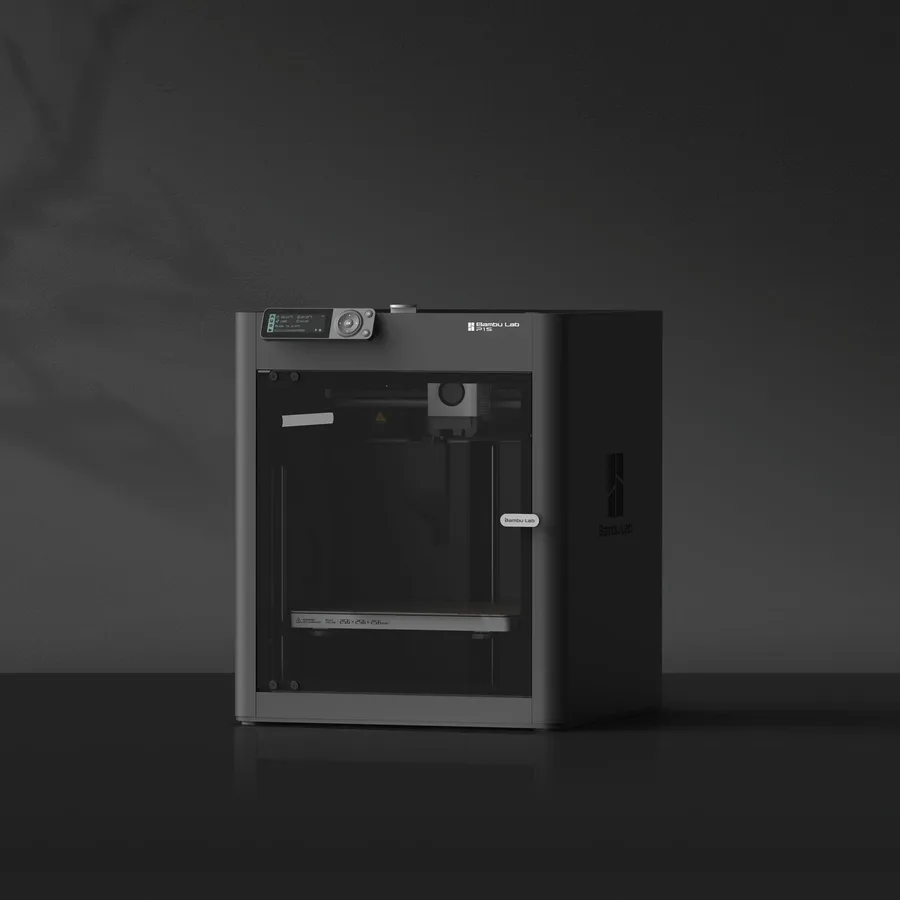
Bambu Lab P1S
256 × 256 × 256 mm
The same nominal volume as the A1, with an enclosure and a different motion system.
Check the precise AMS version, adapters and accessories included. Enclosure alone does not establish material suitability.
Specifications and sellerCreality K1C 2025
220 × 220 × 250 mm
An enclosed format with different dimensions from 256 mm printers; manufacturer-specified hotend up to 300°C.
Distinguish the original K1C from K1C 2025. Check accessories and regional delivery before ordering; check the exact bundle in the manufacturer’s US listing.
Specifications and seller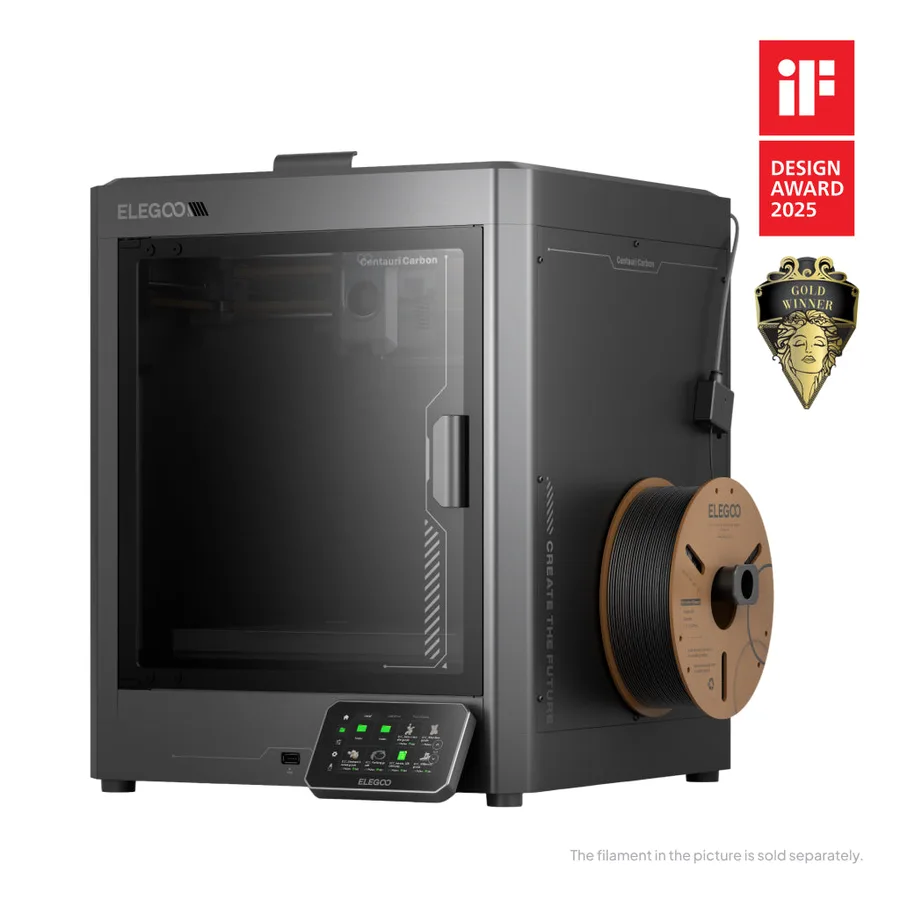
Elegoo Centauri Carbon
256 × 256 × 256 mm
Manufacturer specifications include a 320°C hotend, 110°C bed and automatic calibration.
Do not confuse the original Carbon with Carbon 2. Confirm the exact model and any CANVAS compatibility with the seller.
Specifications and sellerSources and limits
- Prusa Knowledge Base — Composite materials (carbon, kevlar, glass)
- Prusa Knowledge Base — Polyamide (Nylon)
We organize manufacturer and community documentation; we have not measured these products ourselves. The manual for your exact model takes precedence over general guidance.
A clearer shortlist starts with your projects.
Use the free buying checklist and budget worksheet before comparing offers.