
CoreXY vs Bed Slinger: What Kinematics Change on a 3D Printer
Two 3D printers can share the exact same build volume and behave very differently depending on how they move the nozzle through space. This page explains bed slinger, CoreXY, and CoreXZ kinematics using documented machines, and what each one actually changes for speed, footprint, and maintenance.
Find My 3D Printer editorial team·Published September 16, 2026·Manufacturer documentation, no hands-on tests claimed

The short answer
A classic Cartesian printer, often called a bed slinger, moves the bed along one axis while a gantry moves the nozzle along the other two, a simple design found on the Prusa MK4S. A CoreXY printer keeps the bed fixed or moves it only vertically, putting all horizontal motion on a lightweight print head driven by two fixed motors and crossing belts, as on the Creality K1 or Sovol SV08, which cuts the mass that has to accelerate and allows higher speeds and accelerations. CoreXZ, used on the Ender-3 V3, links the X and Z motors to speed up a design that stays closer to a bed slinger than a full CoreXY rebuild. The choice mostly affects practical speed on tall parts, footprint, and how easy the machine is to maintain, more than the quality of a part printed slowly and well tuned.
Two Ways to Move the Nozzle: Cartesian and CoreXY
A classic Cartesian printer, often called a bed slinger, moves the heated bed along one axis while a gantry moves the print head along the other two. The Prusa MK4S illustrates this design: according to the manufacturer, it is an "open bed-slinger" i3-style printer, where the bed moves along the Y axis while the nozzle assembly handles the X axis, an architecture built on ten years of the same principle and designed for full access to every part without lengthy disassembly.
A CoreXY printer works differently: the bed stays fixed, or only moves vertically on the Z axis, and the entire nozzle moves horizontally on X and Y through two fixed motors connected by crossing belts. The Creality K1 pairs this kinematic system with a print head the manufacturer lists at 190 grams, marketed as lighter to cut motion inertia, a principle that clearly sets this design apart from a classic bed slinger.
Why Kinematics Change Practical Speed
On a bed slinger, the bed has to accelerate and decelerate with the part being printed sitting on top of it, which caps practical speed and acceleration without hurting accuracy. On a CoreXY, only the lighter print head moves horizontally: the Creality K1 lists a 20,000 mm/s² acceleration that, per the manufacturer, lets it reach 600 mm/s in just 0.03 seconds, a spec directly tied to the low mass being moved.
The Sovol SV08 pushes this further with a CoreXY kinematic system the manufacturer describes as built to reduce moving mass and improve motion control, paired with a listed top speed of 700 mm/s and 40,000 mm/s² acceleration. The Ender-3 V3 shows a third path with its CoreXZ system, which links the X and Z axis motors according to the manufacturer to reach 600 mm/s and 20,000 mm/s² acceleration on an architecture that stays closer to a bed slinger than a full CoreXY.
The Effect on Tall Parts and Vibration Risk
Moving a bed loaded with the part being printed, as on a bed slinger, more easily transmits jolts to that part as it gets taller, which can show up as visible ripples on vertical walls at higher speed. A CoreXY design limits this risk by keeping the bed still or moving it only vertically, so the part being printed stays less exposed to the horizontal accelerations that cause this vibration.
This advantage is why manufacturers often pair a CoreXY kinematic system with high speed and acceleration figures on their spec sheets, as shown by the numbers for the Creality K1 and Sovol SV08. A well-tuned bed slinger, with properly tensioned belts, is still entirely capable of producing quality parts at a more moderate speed, a point kinematics alone does not settle.
Footprint and Access to the Machine
A bed slinger needs clearance at the front and back for the bed's travel along the Y axis, space to plan for even if the machine itself stays compact. The Prusa MK4S relies on an open aluminum frame, with no glued or welded parts according to the manufacturer, which allows full disassembly with a basic set of Allen keys to reach any component.
A CoreXY printer generally concentrates all horizontal motion on the print head, which cuts down on the clearance needed in front of and behind the machine, but calls for side or top access to the frame for belt and rail maintenance. This design also lends itself more easily to a closed enclosure, since the bed never crosses the machine's walls, a point covered on our 3D printer enclosure page.
Maintenance: What Actually Differs by Kinematics
The full access on the Prusa MK4S, built for routine maintenance without a complicated teardown, shows the advantage of an open bed slinger: every belt, rod, and connector stays visible and reachable without pulling off panels. On a flying-gantry CoreXY machine like the Sovol SV08, maintenance leans more toward the gantry's own alignment, something the manufacturer addresses with four independent Z motors enabling automatic gantry leveling (Quad Gantry Leveling) to compensate for wear or a slight misalignment.
Neither kinematic system is inherently more fragile: they simply shift maintenance attention to different spots, visible belts and rods on an open bed slinger, gantry alignment and linear rails on a flying-gantry CoreXY.
CoreXZ and Hybrids: A Compromise for Speed at Lower Cost
CoreXZ, used on the Ender-3 V3, is neither a classic bed slinger nor a full CoreXY: the manufacturer links the X and Z axis motors to gain speed and acceleration on an architecture that otherwise stays close to a traditional i3 frame. The manufacturer markets it as up to twelve times faster than a regular i3-style printer by its own measure, while keeping a simpler and less costly build than a full flying-gantry CoreXY.
This kind of hybrid targets buyers who want more speed than an entry-level bed slinger without necessarily investing in an enclosed CoreXY machine or a kit-built printer like the Sovol SV08. It still remains a middle-ground design, whose actual benefits depend mostly on a given manufacturer's specific choices rather than a general rule for every machine carrying that name.
What This Actually Changes for a First Purchase
For a first purchase with no need for extreme speed, a Cartesian bed slinger remains a safe bet: simple design, visible maintenance without disassembly, and a lineup of proven machines like the Prusa MK4S or, in a comparable open architecture, the Bambu Lab A1. Our beginner's guide to buying a first 3D printer covers the other criteria worth weighing alongside kinematics before deciding.
For anyone chasing faster prints without giving up stability on tall parts, a CoreXY machine like the Creality K1 or, in an enclosed form, the Bambu Lab P1S, is a more consistent choice for that goal than reading a top-speed number alone.
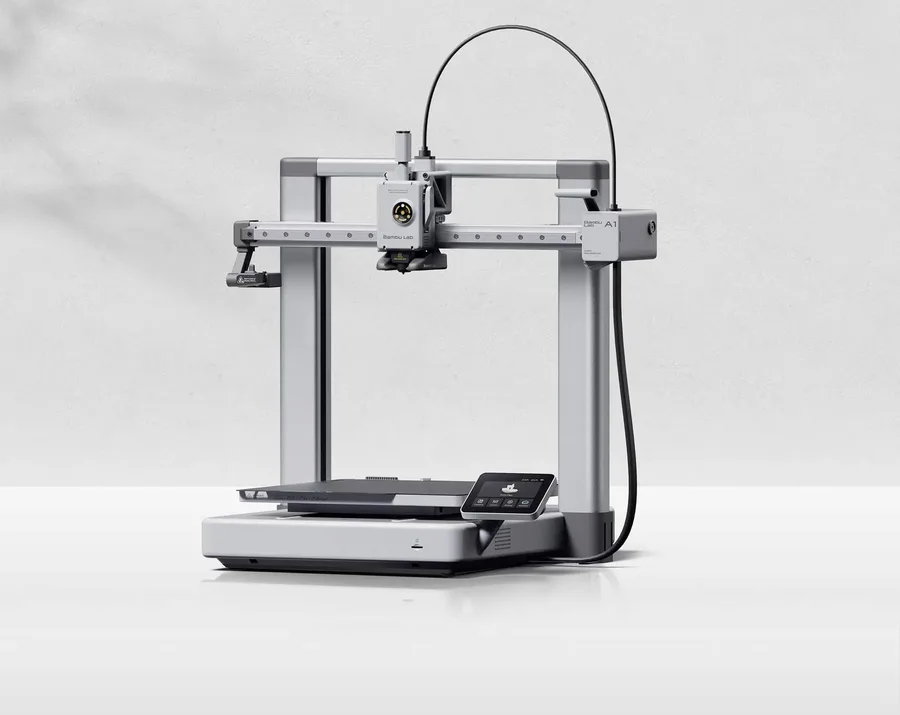
Bambu Lab A1
256 × 256 × 256 mm
More space on every axis than the A1 mini, while keeping the A1 family workflow.
An open frame does not provide the same thermal conditions as an enclosed printer. Choose materials accordingly.
Specifications and seller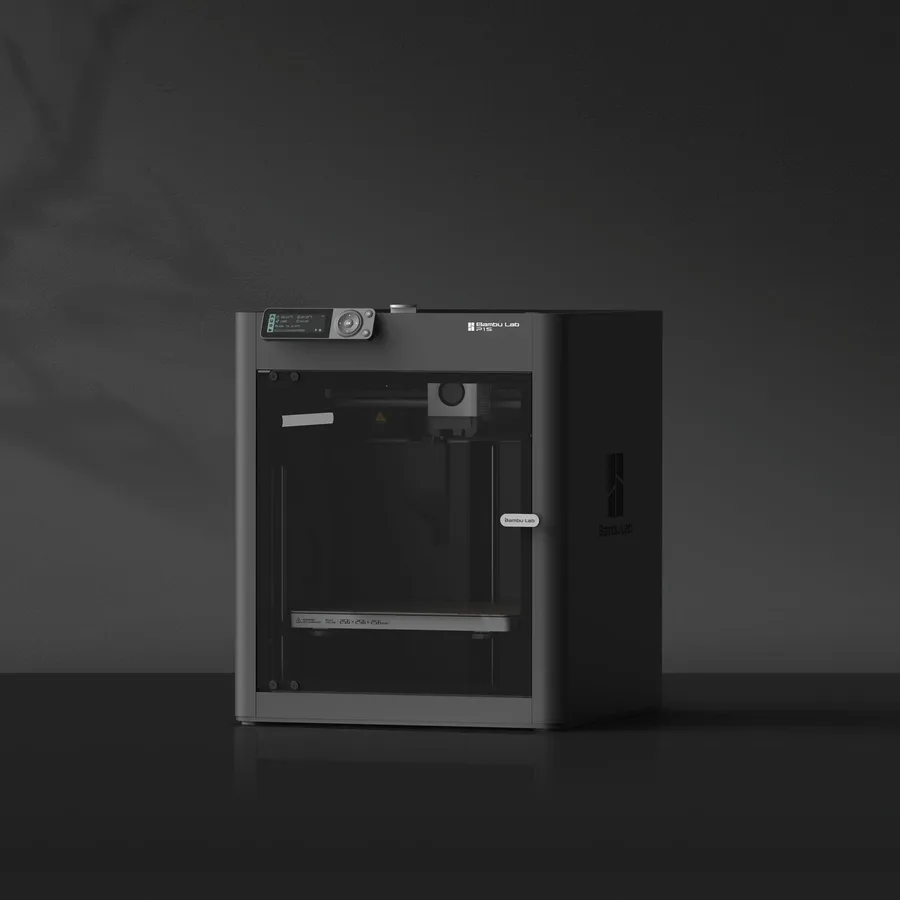
Bambu Lab P1S
256 × 256 × 256 mm
The same nominal volume as the A1, with an enclosure and a different motion system.
Check the precise AMS version, adapters and accessories included. Enclosure alone does not establish material suitability.
Specifications and seller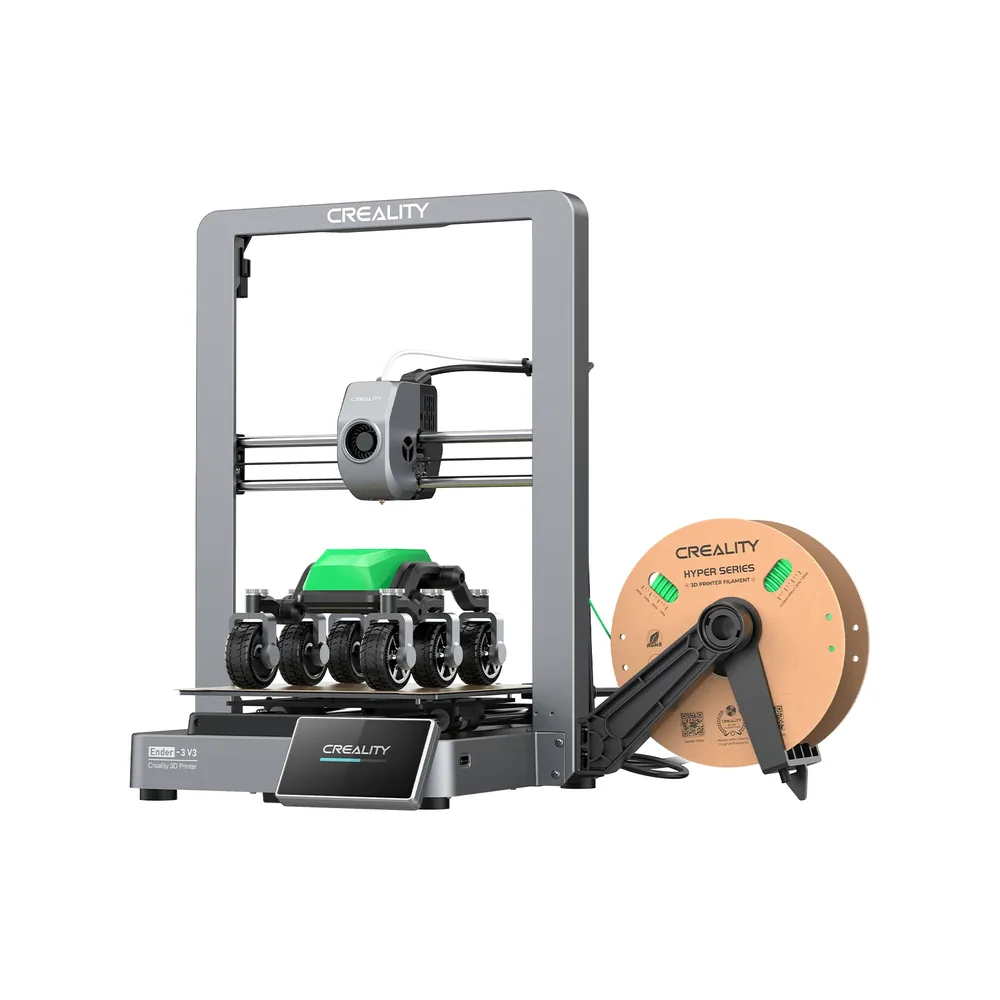
Creality Ender-3 V3
220 × 220 × 250 mm
CoreXZ kinematics, dual motors on the Y axis, and acceleration advertised up to 20,000 mm/s² to cut print time.
Open frame: the advertised speed depends heavily on filament and model; ABS and ASA fall outside the documented use case for this machine.
Specifications and seller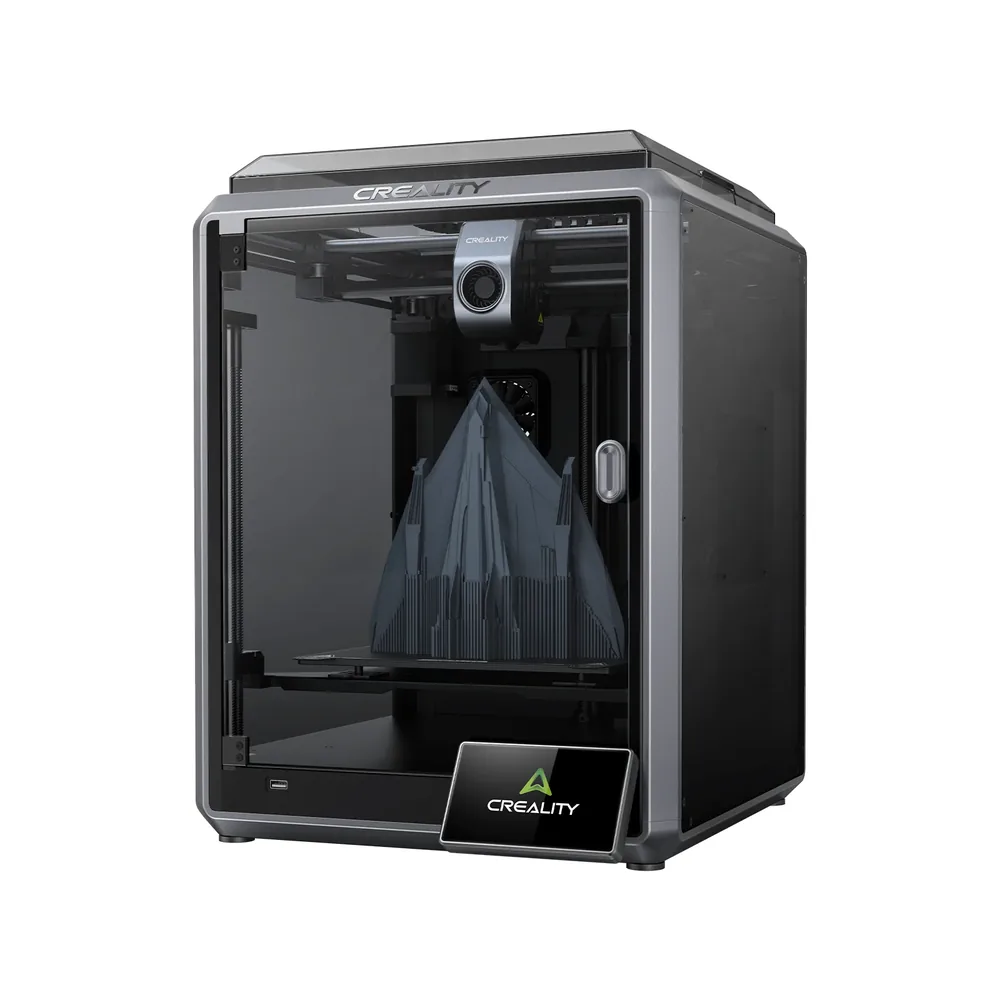
Creality K1
220 × 220 × 250 mm
An enclosed die-cast aluminum alloy chassis with glass panels, hands-free automatic leveling, and a top speed advertised at 600 mm/s.
The AI monitoring camera is offered as an option on this base model; check whether it's included in your chosen listing.
Specifications and seller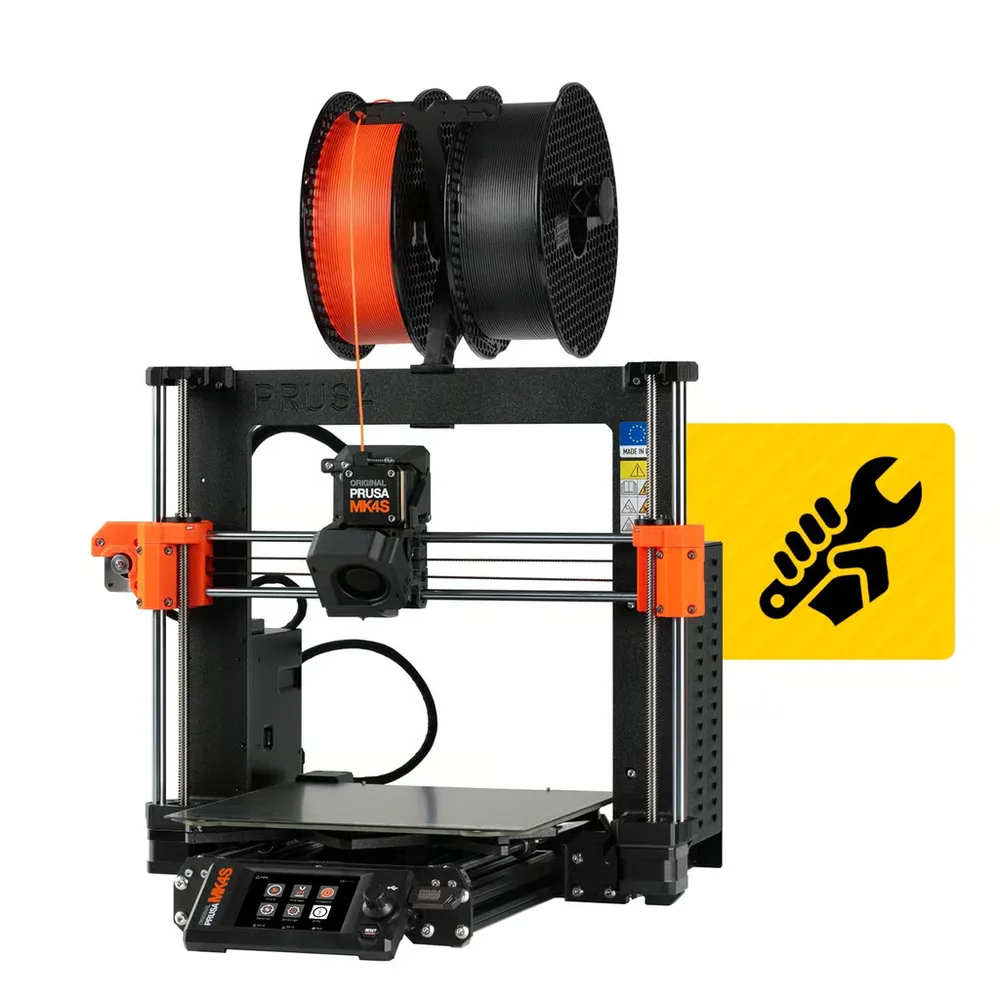
Prusa Research Original Prusa MK4S
250 × 210 × 220 mm
An open-source design with the Nextruder extruder, 360° part cooling and an ecosystem of parts and print profiles thoroughly documented by Prusa Research.
The chassis stays open by default: the enclosure and filter are separate add-ons worth planning for regular ABS or ASA use.
Specifications and seller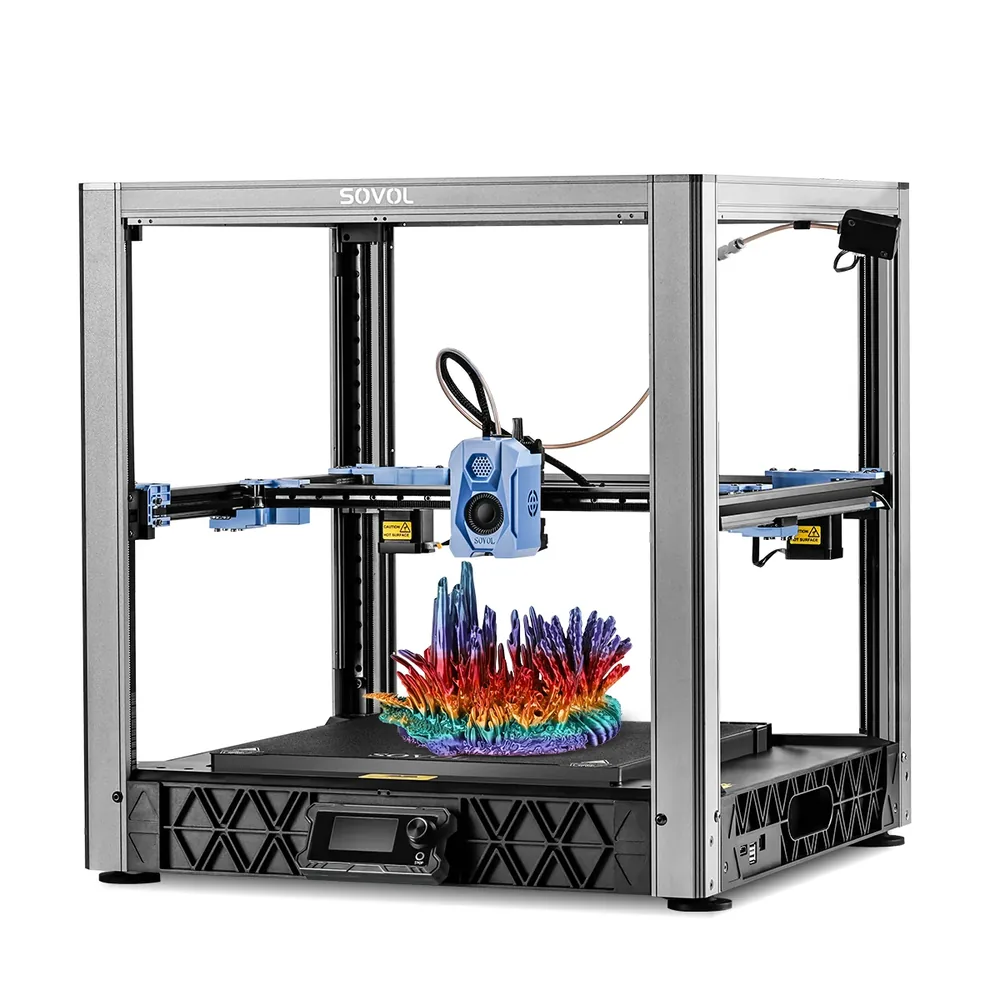
Sovol SV08
350 × 350 × 345 mm
A CoreXY kinematics inspired by the Voron 2.4 with four independent Z motors, a top speed advertised at 700 mm/s and acceleration up to 40,000 mm/s² per Sovol, an open-source kit shipped 90% assembled.
The chassis stays open; an enclosure is sold separately. The exact box contents aren't detailed on the manufacturer's listing, check before buying.
Specifications and sellerSources and limits
- Creality — K1 3D Printer
- Sovol — SV08 3D Printer
- Prusa — Original Prusa MK4S
- Creality — Ender-3 V3
We organize manufacturer and community documentation; we have not measured these products ourselves. The manual for your exact model takes precedence over general guidance.
A clearer shortlist starts with your projects.
Use the free buying checklist and budget worksheet before comparing offers.