
For a fast Voron-style CoreXY kit
Sovol SV08
A kit-built CoreXY FDM printer inspired by the Voron 2.4, with a 350 × 350 × 345 mm nominal build volume and a top speed advertised at 700 mm/s.
In short The Sovol SV08 is an open-frame filament (FDM) 3D printer with a 350 × 350 × 345 mm (13.8 × 13.8 × 13.6 in) build volume. Sovol claims a 700 mm/s top speed, a 300 °C (572 °F) nozzle and a 100 °C (212 °F) bed; the printer measures 550 × 537 × 575 mm (21.7 × 21.1 × 22.6 in).
Documentary analysis · Not personally tested
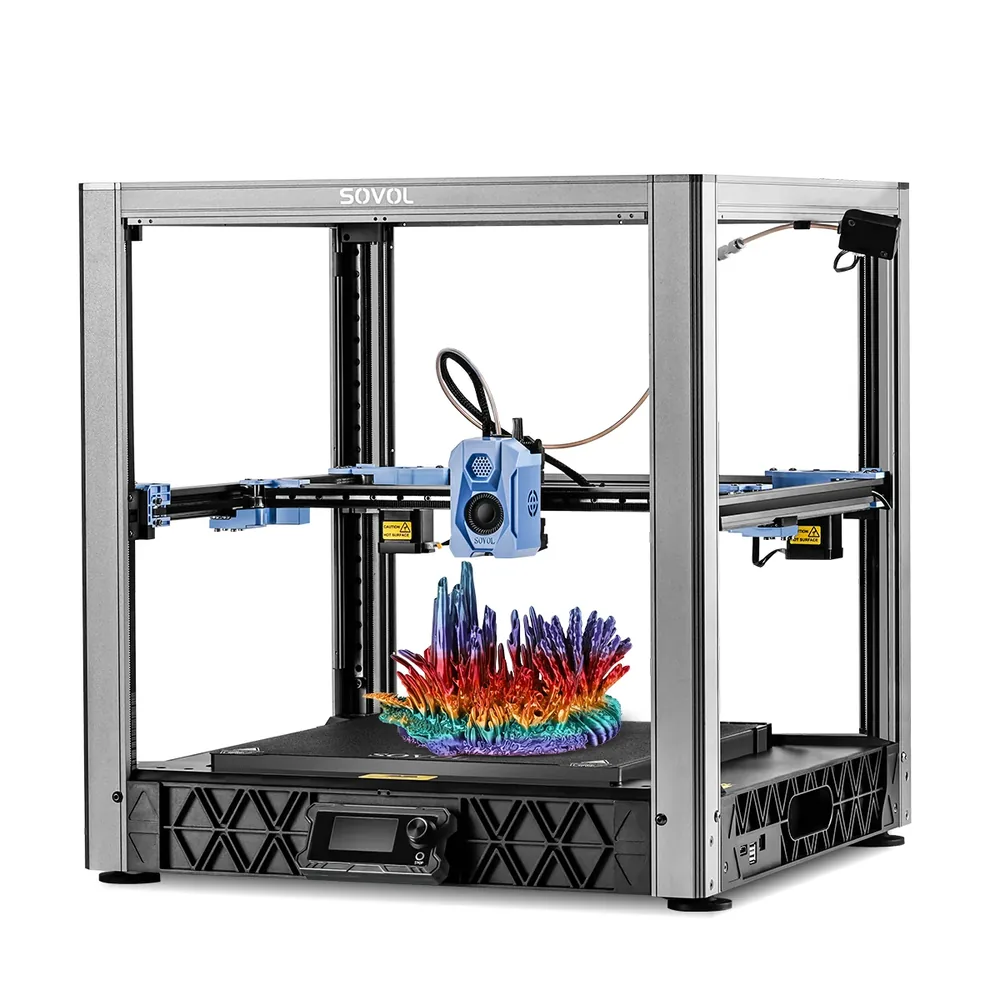 FDM · Open frame
Why consider it?
A CoreXY kinematics inspired by the Voron 2.4 with four independent Z motors, a top speed advertised at 700 mm/s and acceleration up to 40,000 mm/s² per Sovol, an open-source kit shipped 90% assembled.
What to verify
The chassis stays open; an enclosure is sold separately. The exact box contents aren't detailed on the manufacturer's listing, check before buying.
Sovol SV08 specifications
- Technology
- Filament (FDM)
- Build volume
- 350 × 350 × 345 mm (13.8 × 13.8 × 13.6 in)
- Printer dimensions
- 550 × 537 × 575 mm (21.7 × 21.1 × 22.6 in)
- Enclosure
- Open frame
- Claimed top speed
- 700 mm/s
- Claimed acceleration
- 40,000 mm/s²
- Max nozzle temperature
- 300 °C (572 °F)
- Max bed temperature
- 100 °C (212 °F)
- Multicolor
- No stock multicolor system; single extruder per Sovol.
- Materials
- PLA, PETG, TPU, PETG-CF, ABS, and other common filaments per Sovol, with a nozzle advertised up to 300°C.
- Screen
- 5-inch touchscreen
- Built-in camera
- Yes
- Connectivity
- Ethernet, Wi-Fi
- Listed features
- Auto bed leveling, filament runout sensor
How much space does it need?
The Sovol SV08 measures 550 × 537 × 575 mm (21.7 × 21.1 × 22.6 in) for a 350 × 350 × 345 mm (13.8 × 13.8 × 13.6 in) build volume: the dashed box is the printer, the solid cube the nominal build volume, about 25% of the machine’s volume. Add room for the spool or multicolor unit, cables and ventilation.
Source: official Sovol pages (sovol3d.com), checked September 28, 2026. Manufacturer claims, not our measurements. Build volume is nominal: orientation, supports and reserved zones can reduce the usable space.
Which projects is it for?
The SV08 is a CoreXY FDM printer that Sovol presents as a tribute to the Voron 2.4, with a 350 × 350 × 345 mm nominal build volume. It targets makers who want an open-source machine close to a Voron kit without going through a full self-build.
Shipped 90% assembled per Sovol, with about an hour of assembly advertised, it targets those willing to do a bit of mechanical setup in exchange for a CoreXY kinematics stiffer than a typical consumer printer.
Materials and setup
Sovol advertises a nozzle heating up to 300°C and a bed up to 100°C, compatible with PLA, PETG, TPU, PETG-CF, and ABS. The 0.4mm nozzle ships as standard, with 0.2/0.6/0.8mm diameters available as options.
The four independent Z motors and linear rails on every axis aim for better mechanical rigidity at high speed, which matters given the advertised 700 mm/s top speed and 40,000 mm/s² acceleration.
What the bundle includes or not
Per Sovol, the printer arrives 90% assembled, with a built-in camera for remote monitoring. Both the firmware and the hardware stay open source, allowing configuration beyond the factory defaults.
The chassis stays open out of the box: an enclosure is offered separately for anyone wanting better conditions for ABS or composites. The exact box contents (hardware, tools, a test spool) should be checked on the retailer's listing.
Alternatives to compare
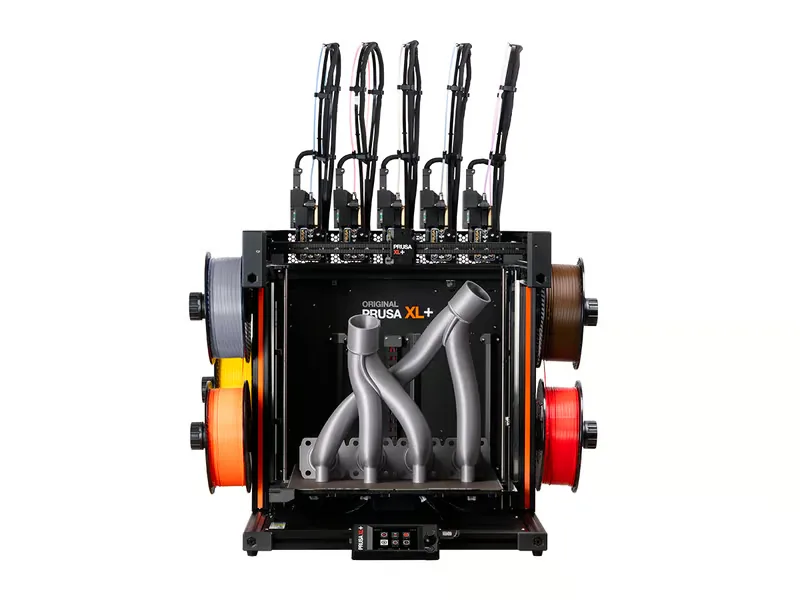
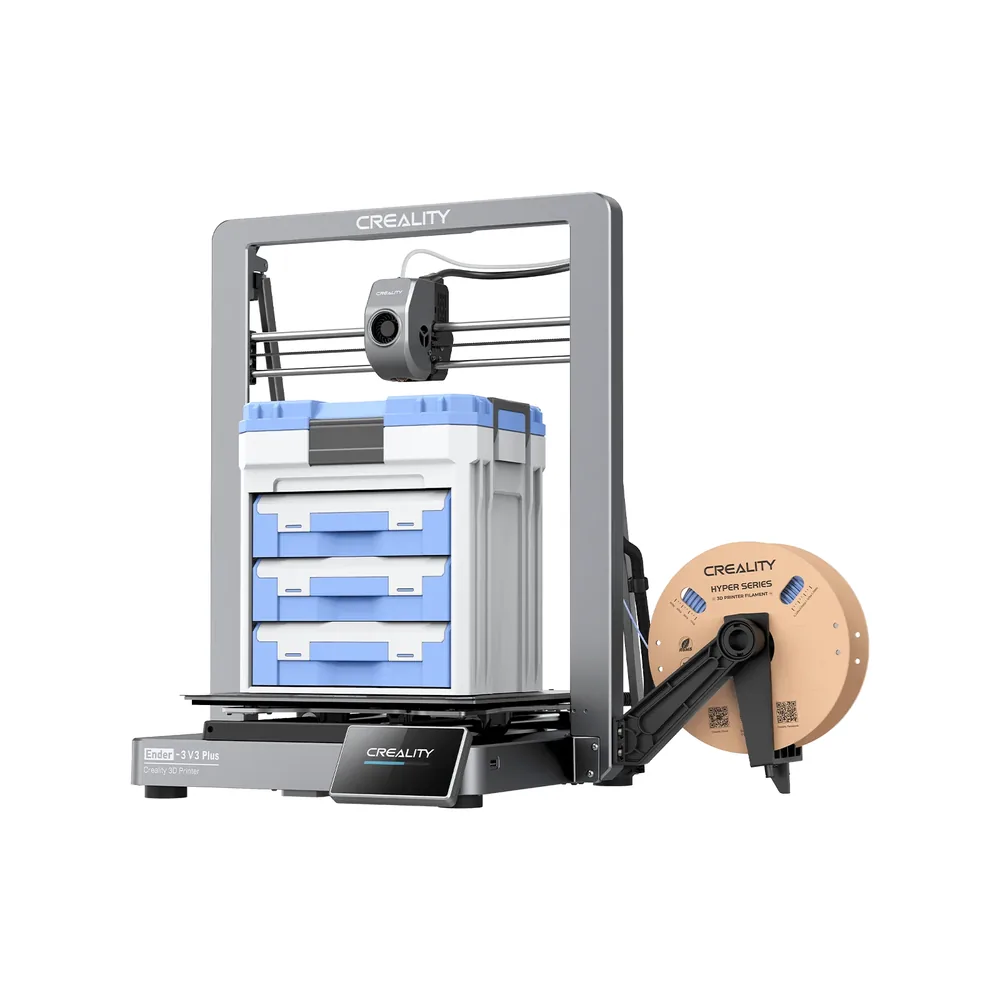
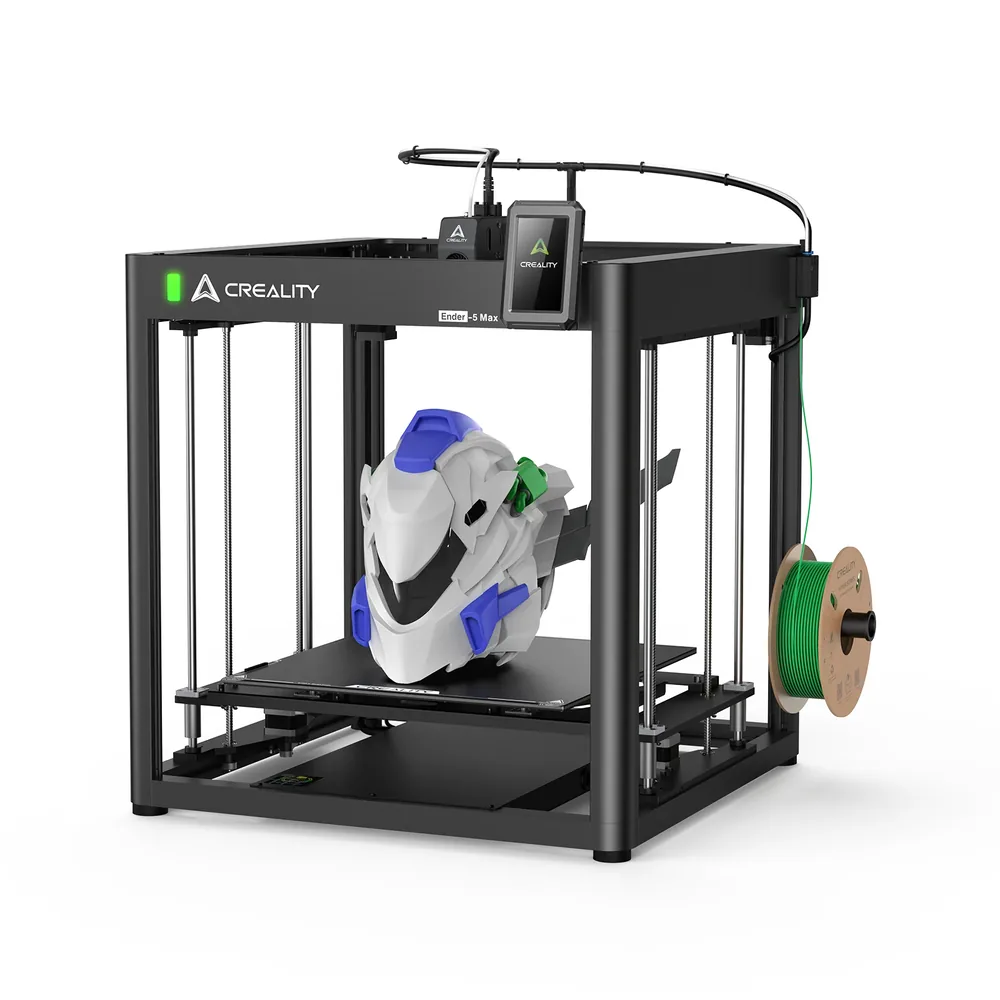
For a more compact footprint with a similar CoreXY approach, the Creality K1 Max ships enclosed out of the box, unlike the open SV08. The functional-parts buying guide helps weigh the value of a volume this large for this kind of project.
Against other CoreXY kits you assemble yourself, the SV08 stands out for its advertised speed and Voron inspiration; always compare the stated pre-assembly level before choosing between a kit and a ready-to-run machine.
Similar printers to compare
Sources and limits
- Source: official Sovol pages (sovol3d.com), checked September 28, 2026. Manufacturer claims, not our measurements.
- How we assess specifications
We have not measured noise, real printing speed, accuracy or reliability, so none of these is rated here.