
For speed with CoreXZ kinematics
Creality Ender-3 V3
An open-frame FDM printer with CoreXZ kinematics, a 220 × 220 × 250 mm nominal build volume, and a top speed advertised at 600 mm/s.
In short The Creality Ender-3 V3 is an open-frame filament (FDM) 3D printer with a 220 × 220 × 250 mm (8.7 × 8.7 × 9.8 in) build volume. Creality claims a 600 mm/s top speed, a 300 °C (572 °F) nozzle and a 110 °C (230 °F) bed; the printer measures 358 × 374 × 498 mm (14.1 × 14.7 × 19.6 in) and weighs 7.8 kg (17.2 lb).
Documentary analysis · Not personally tested
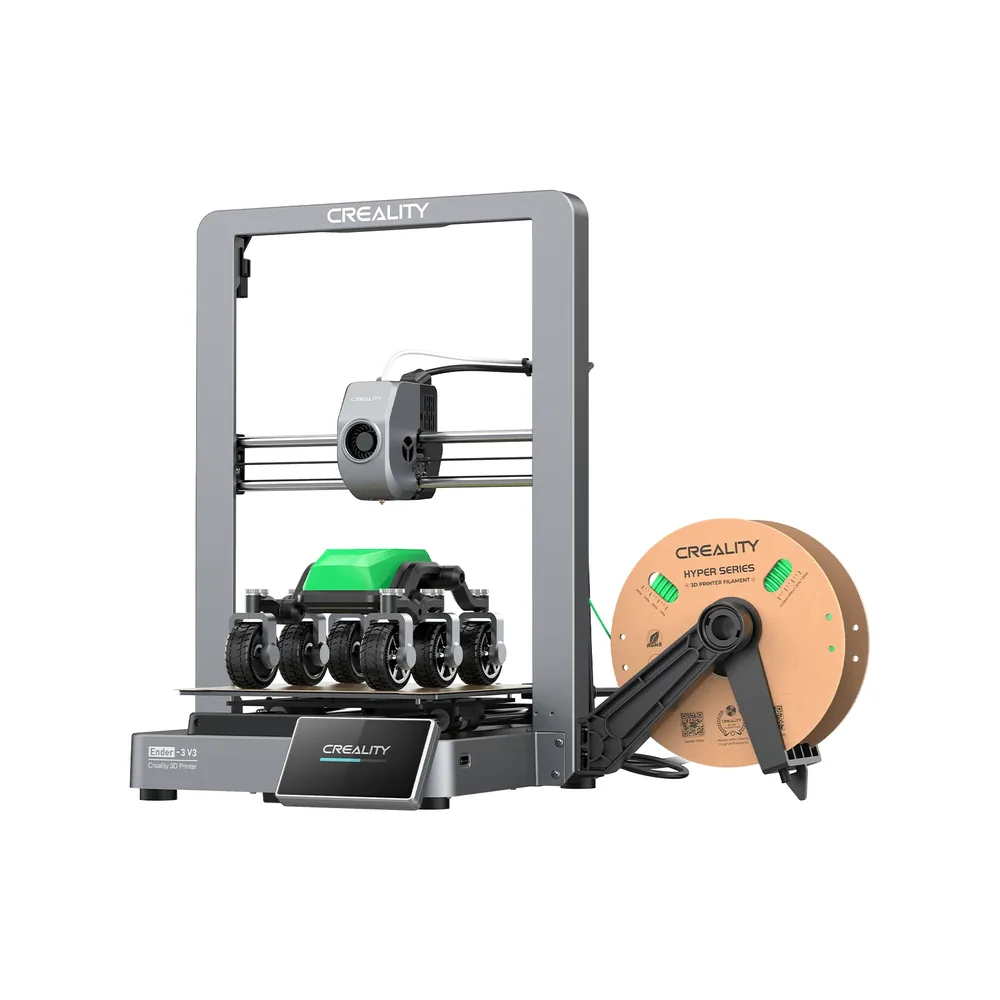 FDM · Open frame
Why consider it?
CoreXZ kinematics, dual motors on the Y axis, and acceleration advertised up to 20,000 mm/s² to cut print time.
What to verify
Open frame: the advertised speed depends heavily on filament and model; ABS and ASA fall outside the documented use case for this machine.
Creality Ender-3 V3 specifications
- Technology
- Filament (FDM)
- Build volume
- 220 × 220 × 250 mm (8.7 × 8.7 × 9.8 in)
- Printer dimensions
- 358 × 374 × 498 mm (14.1 × 14.7 × 19.6 in)
- Weight
- 7.8 kg (17.2 lb)
- Enclosure
- Open frame
- Claimed top speed
- 600 mm/s
- Claimed acceleration
- 20,000 mm/s²
- Max nozzle temperature
- 300 °C (572 °F)
- Max bed temperature
- 110 °C (230 °F)
- Multicolor
- No stock multicolor system; a combo with a color system is offered separately depending on the listing.
- Materials
- Hyper PLA and standard PLA through the quick-swap tri-metal nozzle, per Creality.
- Screen
- 4.3-inch screen
- Built-in camera
- No
- Connectivity
- Wi-Fi, USB
- Listed features
- Auto bed leveling, filament runout sensor
How much space does it need?
The Creality Ender-3 V3 measures 358 × 374 × 498 mm (14.1 × 14.7 × 19.6 in) for a 220 × 220 × 250 mm (8.7 × 8.7 × 9.8 in) build volume: the dashed box is the printer, the solid cube the nominal build volume, about 18% of the machine’s volume. Add room for the spool or multicolor unit, cables and ventilation.
Source: official Creality pages (creality.com), checked September 28, 2026. Manufacturer claims, not our measurements. Build volume is nominal: orientation, supports and reserved zones can reduce the usable space.
Which projects is it for?
The Ender-3 V3 is an open-frame FDM printer built around CoreXZ kinematics, with a 220 × 220 × 250 mm nominal build volume per Creality. The manufacturer advertises speeds up to 600 mm/s and acceleration up to 20,000 mm/s², driven by dual motors on the Y axis. It suits makers who want to cut print time on everyday-sized parts without moving to an enclosed CoreXY machine.
The quick-swap tri-metal nozzle and dual cooling fans reinforce that speed focus, geared toward PLA and Hyper PLA rather than technical materials.
Materials and configuration
Creality mainly documents Hyper PLA and standard PLA for this machine, filaments suited to the advertised high speeds. The open frame is not presented as suited to ABS or ASA in regular use.
A combo including a color system (up to 4 or 8 colors depending on the listing) is mentioned separately by Creality: it's not stock equipment on the machine alone, so check the retailer's listing precisely before buying.
What the bundle includes or not
The product page emphasizes the speed and acceleration of the CoreXZ kinematics rather than a detailed box contents list. Included accessories (tools, plate, test spool) should be checked on the retailer's listing at purchase time, since they vary by offer and region.
Don't confuse the standalone machine with a possible 'Combo' pack that adds a color system: the Ender-3 V3 spec sheet describes the base printer, with the multicolor add-on remaining a separate option.
Alternatives to compare
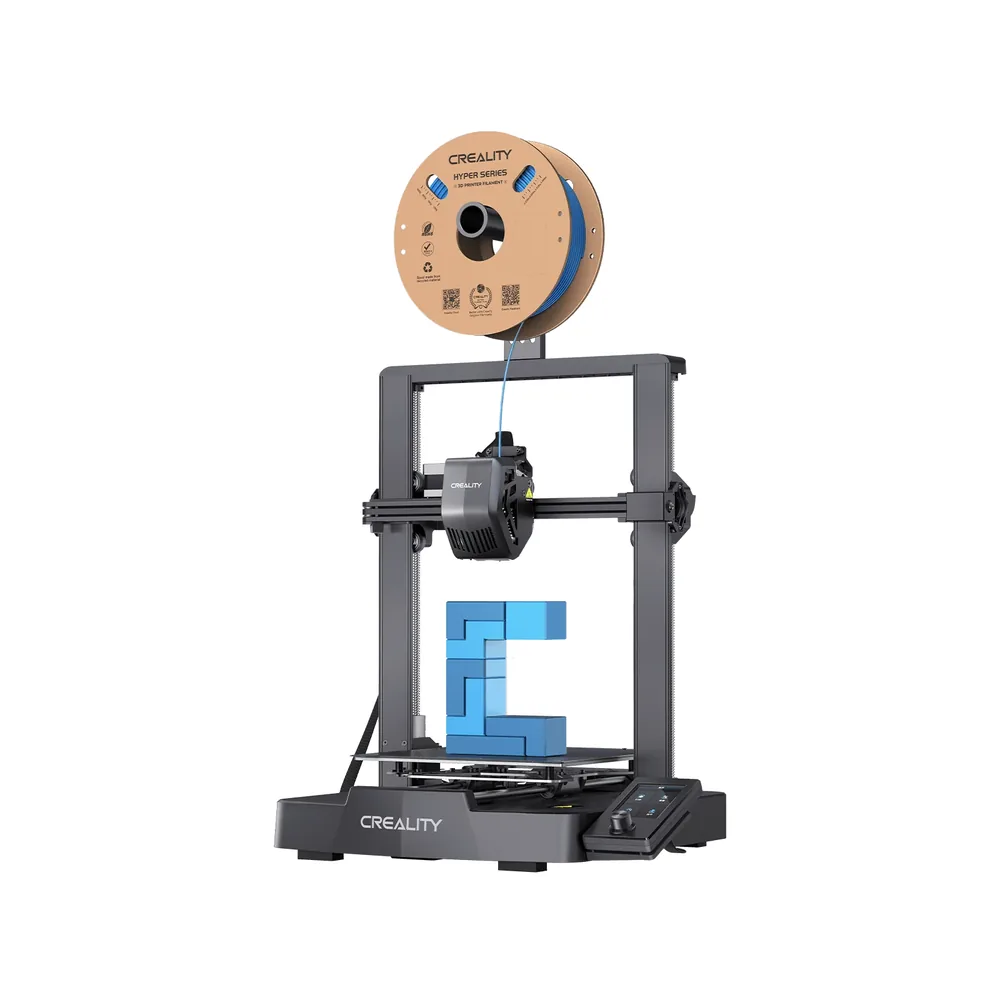
For a larger plate with the same CoreXZ architecture, the Ender-3 V3 Plus offers more room. For a more accessible price at a similar footprint, the Ender-3 V3 SE and Ender-3 V3 KE remain the simpler models in the lineup.
The fastest 3D printer guide can help weigh speed against ease of use, and the Creality page covers the rest of the manufacturer's lineup.
Similar printers to compare
Sources and limits
- Source: official Creality pages (creality.com), checked September 28, 2026. Manufacturer claims, not our measurements.
- How we assess specifications
We have not measured noise, real printing speed, accuracy or reliability, so none of these is rated here.