
Flashforge vs Bambu Lab: IFS or AMS for Your First Multicolor Printer?
Flashforge and Bambu Lab each offer a path into multicolor printing without stepping up to a flagship machine: the IFS on one side, the AMS on the other. This comparison draws on Flashforge's official pages for the AD5X and the Adventurer 5M Pro, and stays qualitative on the Bambu Lab side. The goal is to help you match a system to how you print, not to crown a single winner.
Find My 3D Printer editorial team·Published October 1, 2026·Manufacturer documentation, no hands-on tests claimed

The short answer
Flashforge vs Bambu Lab for accessible multicolor comes down to two approaches: Flashforge's IFS, built into the AD5X as standard, and Bambu Lab's AMS, a separate filament unit that pairs with printers such as the P1S. According to Flashforge's official page, the AD5X prints in 4 colors with no external feeder box and a 600 mm/s maximum speed. The Adventurer 5M Pro is presented by Flashforge as an enclosed printer that handles ABS and ASA, and its page does not feature a multicolor system. Choose the AD5X for integrated multicolor on an entry-level budget, and a P1S with AMS if you want an enclosed machine inside the Bambu Lab ecosystem.
AMS and IFS: Two Routes From Several Spools to One Nozzle
Both systems share the same basic idea: one nozzle, several spools, and a mechanism that loads and unloads filament every time the color changes. Where they differ is packaging. Flashforge's AD5X page says the IFS, short for Intelligent Filament System, comes standard and is fully integrated into the printer, with no external feeder box or add-on required. The four spools sit side by side, which the company pitches as a space saver for a crowded desk or workbench.
Bambu Lab's AMS takes the modular route. It is a separate unit that pairs with the printer, and depending on the configuration you pick, it either ships with the machine or gets added later. That lets you start in single color and grow into multicolor, but it also means planning space for the module and checking exactly what your bundle includes. This comparison only quotes figures that appear on the official Flashforge pages we consulted. For AMS specifics, head to the Bambu Lab P1S page in our catalog.
What Flashforge's Own Page Says About the AD5X
The official page for the Flashforge AD5X leads with 4-color printing, a 600 mm/s maximum speed, and 20,000 mm/s² maximum acceleration. Motion is CoreXY, which Flashforge ties to clean, steady layers on tall models and long jobs. The company also states that the nozzle is cleaned each time the material switches, so edges stay crisp without colors mixing. The stock nozzle is 0.4 mm, with 0.25, 0.6, and 0.8 mm sizes listed as options on a quick-release design.
On materials, the spec list names PLA, PETG, TPU, PLA-CF, and PETG-CF. Flashforge highlights multicolor printing in TPU 64D, while TPU 95A is recommended for single-color jobs. One feature matters even if you rarely print in color: on a single-color model, when one spool runs out, the printer automatically switches to the next. Flashforge also advertises power-loss recovery with a claimed 99% resume success rate, and a three-step assembly that covers the screen, the filament holder, and the multicolor module. Setup is billed at ten minutes or less.
The Adventurer 5M Pro: Enclosed, Not Built for Color
Searches often lump the IFS together with the Adventurer 5M Pro. The official page tells a different story. Flashforge presents the Adventurer 5M Pro as an enclosed CoreXY printer with a metal structure, a 220 × 220 × 220 mm build volume, a 600 mm/s top speed, 20,000 mm/s² acceleration, and 32 mm³/s nozzle flow. No multicolor system is featured there. One customer review on the page even mentions looking forward to upgrading to a multicolor printer down the road.
Its strengths lie elsewhere. According to Flashforge's FAQ, the sealed structure and dual air filtration system are what separate the Pro from the standard Adventurer 5M, and the Pro handles ABS and ASA on top of PLA and PETG. The page describes two airflow modes: internal circulation for ABS, external circulation for PLA and PETG. It also lists fully automatic bed leveling, a built-in camera for remote monitoring and time-lapses, and multi-printer management through FlashMaker. So within the Flashforge lineup, the trade is straightforward: color with the AD5X, or an enclosure with the 5M Pro.
Color Swaps Cost Time and Filament on Either Brand
A single-nozzle system has to clear out the old color before laying down the new one. Flashforge puts it plainly: the nozzle is cleaned each time the material is switched. That cleaning uses filament and adds time, and the same logic applies to Bambu Lab, since both approaches feed one nozzle. The more often your model swaps colors, the longer the print runs and the more waste piles up. None of the pages consulted puts a number on that overhead. It depends on the model, the color count, and your slicer settings.
Flashforge actually uses this point to justify stopping at four colors. Per the AD5X page, a 4-color setup covers most common multicolor needs, from character models to educational tools, while balancing speed, color expression, and system stability. Take a practical rule from that, whichever brand you lean toward: before you buy, look at the models you actually plan to print. A two-tone logo or a sign with raised lettering asks far less of the machine than a figurine that changes colors on nearly every layer.
Feed Reliability: What Flashforge's Published Reviews Reveal
Product pages promise consistency. The customer reviews Flashforge displays on the AD5X page add useful nuance. One buyer calls the printer easy to assemble and maintain, but warns that anything short of quality filament brings lots of feed errors. Another, writing after more than 200 print hours, praises print quality for the money, yet reports that automatic switching to the next spool usually failed with ABS. Worth noting: ABS does not appear in the AD5X's official material list.
These are individual accounts, not measurements. Still, they point to something true of every multi-spool system, the AMS included: each swap is another chance for a jam, and filament quality matters more than it does in single-color printing. Keep spools dry, stick to the manufacturer's material list, and read the warranty terms before you order. Flashforge lists a 1-year limited warranty on its printers, a 3-month warranty on extruder parts, and returns within 30 days of delivery. For Bambu Lab, check the terms in effect when you buy.
Which Setup Fits Which Maker
Want color right away, with nothing extra parked next to the printer and an entry-level budget? The AD5X fits that brief on paper: integrated IFS, four spools, and a quick setup. It suits PLA, PETG, and multicolor TPU, and it is a weaker match for engineering materials that call for an enclosure.
Mostly printing ABS or ASA in a single color? The Adventurer 5M Pro is the Flashforge built for that job, but it leaves the multicolor question unanswered. Looking for an enclosed machine and multicolor in one ecosystem? That is where the P1S paired with an AMS comes in, at a mid-range budget that shifts with the bundle you choose.
Either way, count your spools. Four colors means four spools to buy up front, plus the filament lost to color changes. Our startup budget tool helps you add up the whole package, printer, filament, and accessories, before you check out. If you are still torn, compare the spec sheets side by side rather than relying on brand reputation alone.
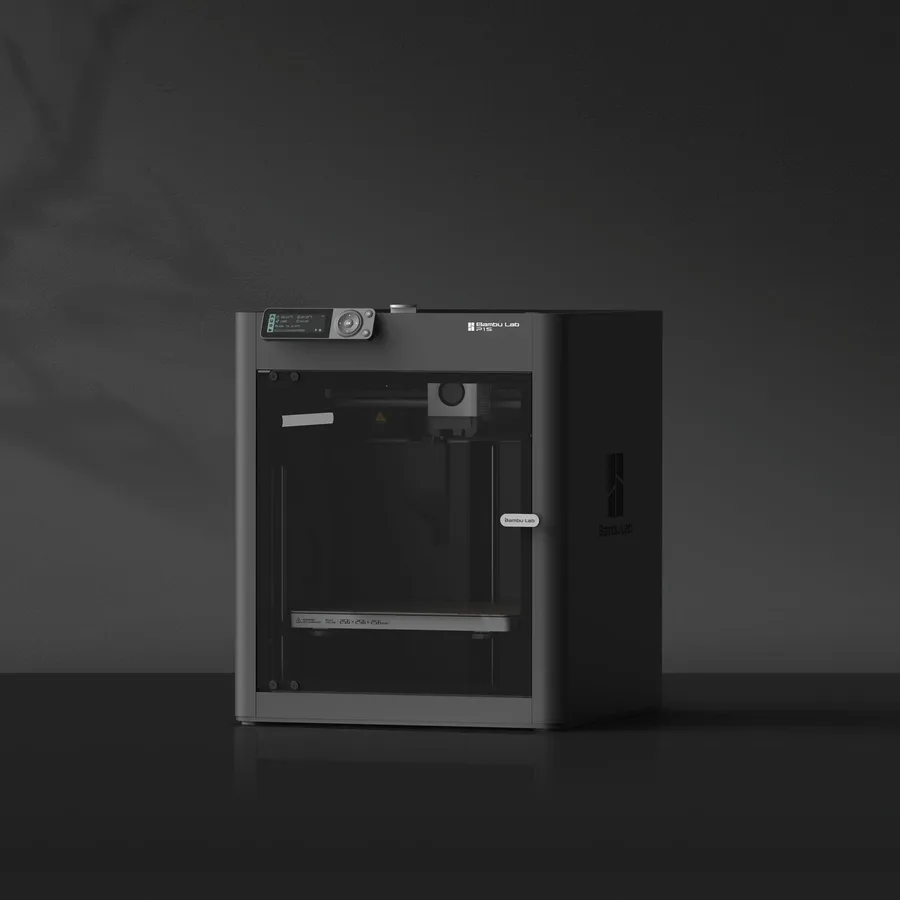
Bambu Lab P1S
256 × 256 × 256 mm
The same nominal volume as the A1, with an enclosure and a different motion system.
Check the precise AMS version, adapters and accessories included. Enclosure alone does not establish material suitability.
Specifications and seller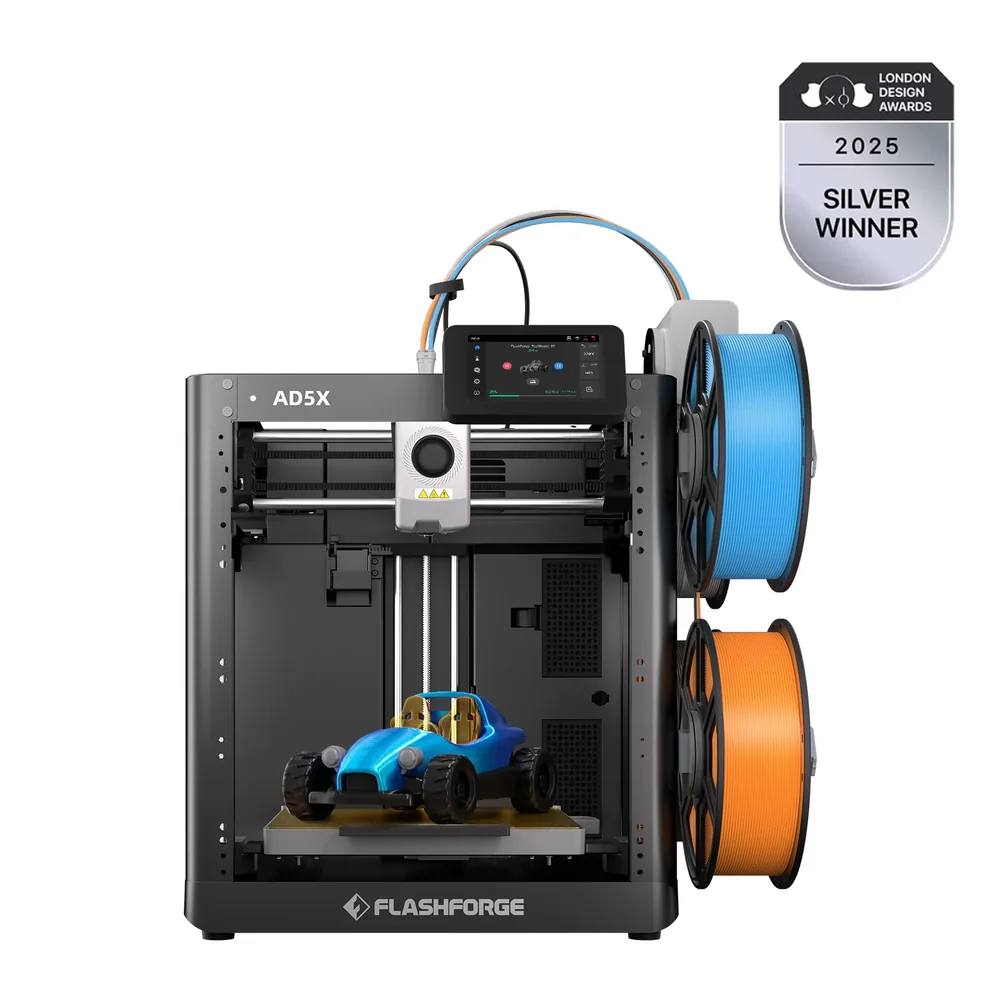
Flashforge AD5X
220 × 220 × 220 mm
A built-in IFS multicolor system with no external accessory, a nozzle advertised up to 300°C, a bed up to 110°C, and a travel speed advertised at 600 mm/s per Flashforge.
The chassis stays open despite the 300°C nozzle; the exact box contents (included spools, spare nozzles) aren't detailed on the manufacturer's listing.
Specifications and seller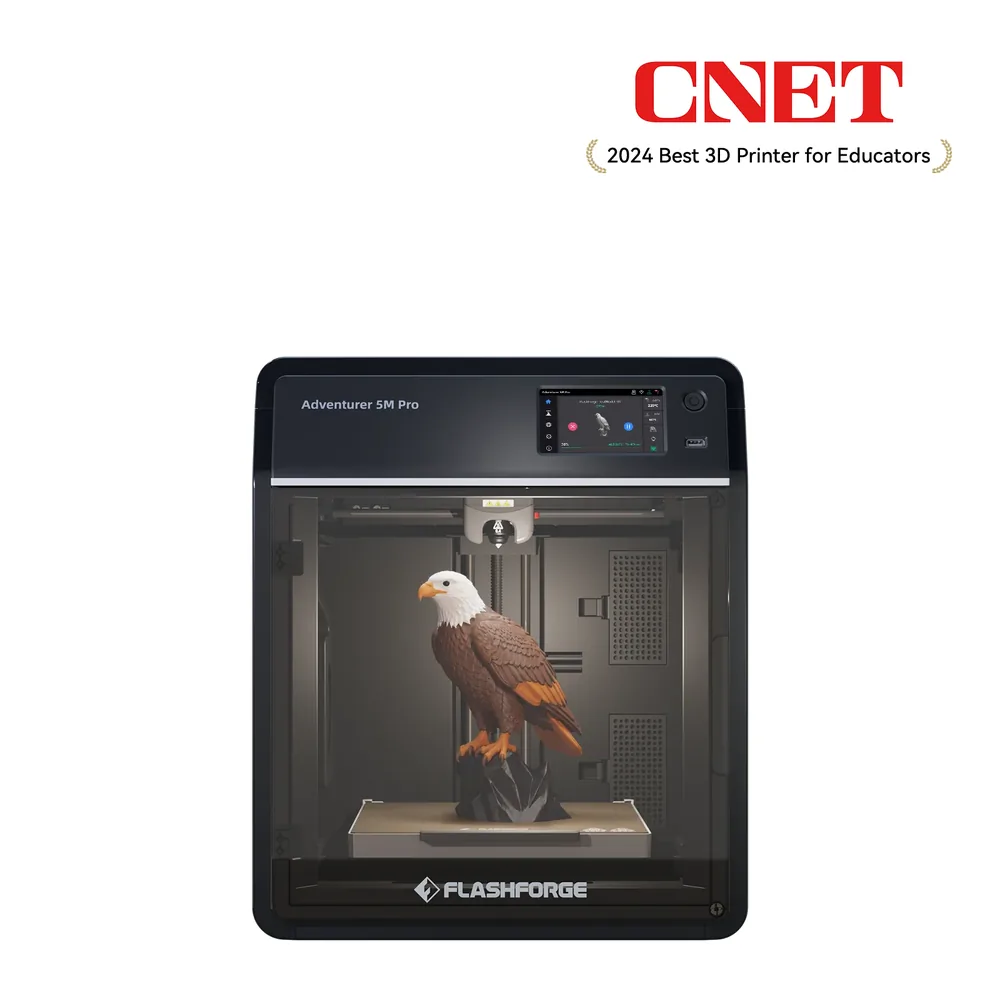
Flashforge Adventurer 5M Pro
220 × 220 × 220 mm
An enclosed chassis with dual HEPA and activated-carbon filtration, a built-in monitoring camera, a nozzle advertised up to 280°C, and a top speed advertised at 600 mm/s per Flashforge.
The exact box contents (spare nozzles, replacement filters) aren't detailed on the manufacturer's listing; check the retailer's page before buying.
Specifications and sellerSources and limits
- Flashforge — Adventurer 5M Pro
- Flashforge — AD5X
We organize manufacturer and community documentation; we have not measured these products ourselves. The manual for your exact model takes precedence over general guidance.
A clearer shortlist starts with your projects.
Use the free buying checklist and budget worksheet before comparing offers.