How we chose
- Only printers documented in our catalog, with a manufacturer spec sheet reviewed in September 2026 (build volume, dimensions, material compatibility).
- One pick per project scale rather than a single leaderboard: a one-piece helmet doesn’t have the same requirements as a resin-printed prop.
- No scores and no claimed testing: we have not tested how sturdy a helmet is or how long a full armor set takes to print.
- For the same use, we favored the most documented and most searched models, for their profiles and community support.
- Some spec sheets show paid partner offers, labeled “Ad”.
One piece or split into sections
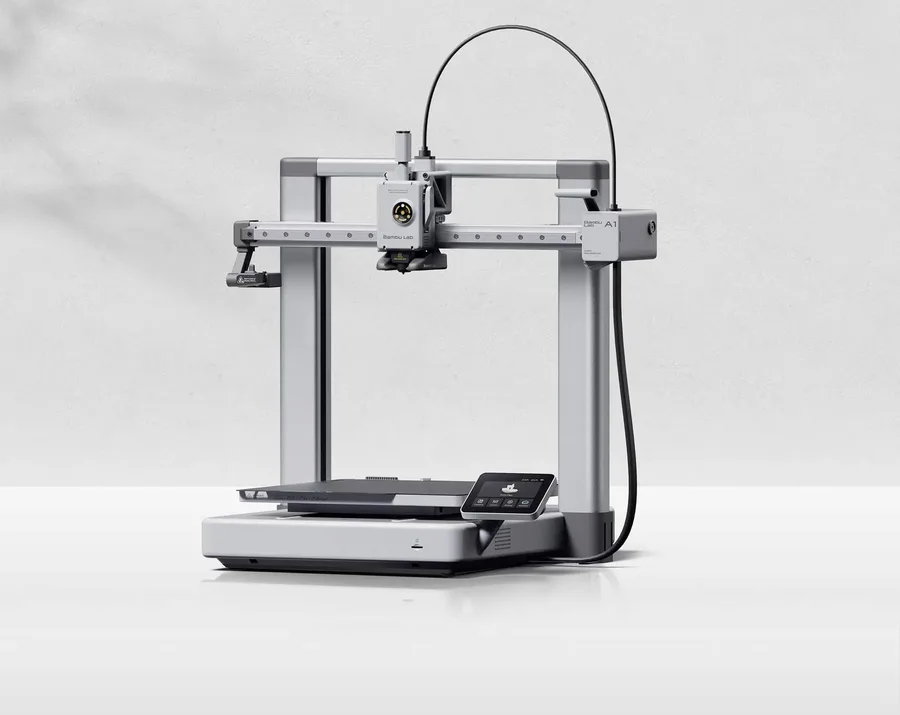
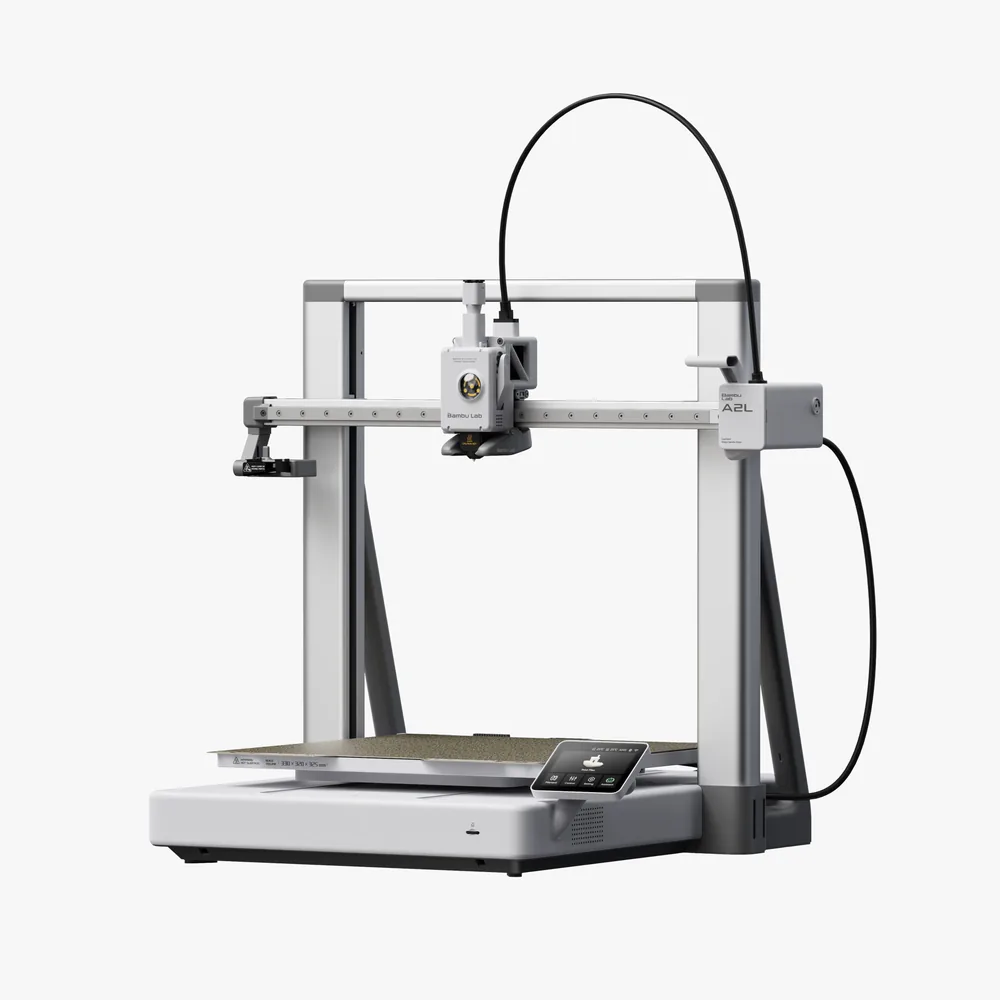
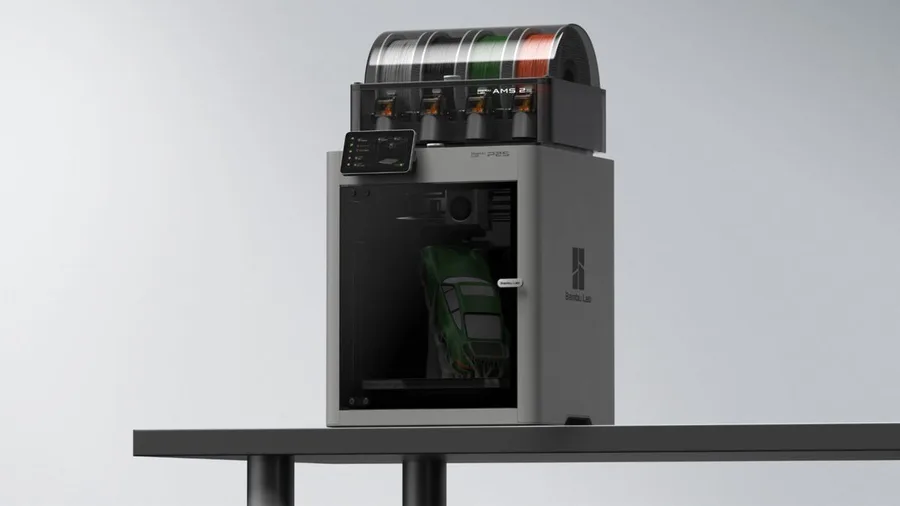
Start from a file scaled to the wearer, with the clearances and openings the costume needs. Compare two approaches: printing the whole piece on a large-format machine like the A2L, or splitting it for a more common bed size like the A1’s or the P2S’s. Splitting adds seams to sand and extra finishing time, but lets a more compact printer do the job. The right tradeoff depends on how visible the seams will be on the finished costume, how you’ll transport it to a convention, and how you like to assemble parts.
Large format: open or enclosed
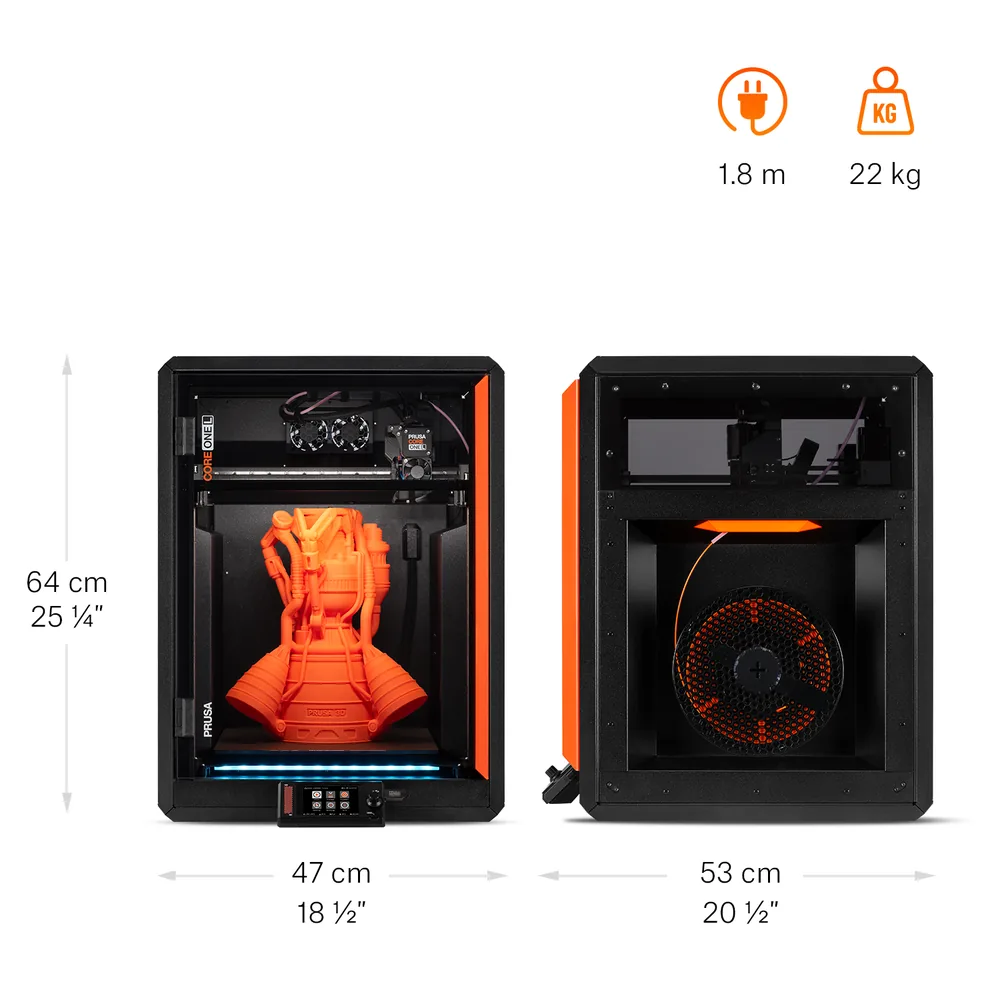
An open large-format printer like the A2L keeps the simplicity of an entry-level machine but limits regular use to PLA and PETG. An enclosed, heated large format like the CORE One L+ widens compatibility to more stable materials (technical PETG, PC, PP in standard configuration; ABS and ASA with the right filtration) and cuts warping on large flat surfaces, like a chest piece. The choice mostly comes down to the material you’re targeting for the part, not just its size. For an even larger file, our large-format buying guide covers bigger volumes than the printers listed here.
Finish and paint
A filament print keeps visible layer lines: progressive sanding, primer, and sometimes acetone vapor smoothing on ABS are the usual steps before paint, covered in more detail on our ABS and ASA page. An enclosed printer that limits warping, like the P2S or the CORE One L+, keeps sections closer to true when you assemble them, cutting down on gap-filling at the seams. For props that will stay close to the viewer (buckles, visors, jewelry), detailed 14K resin gives a smoother surface straight off the printer.
Resin for small details
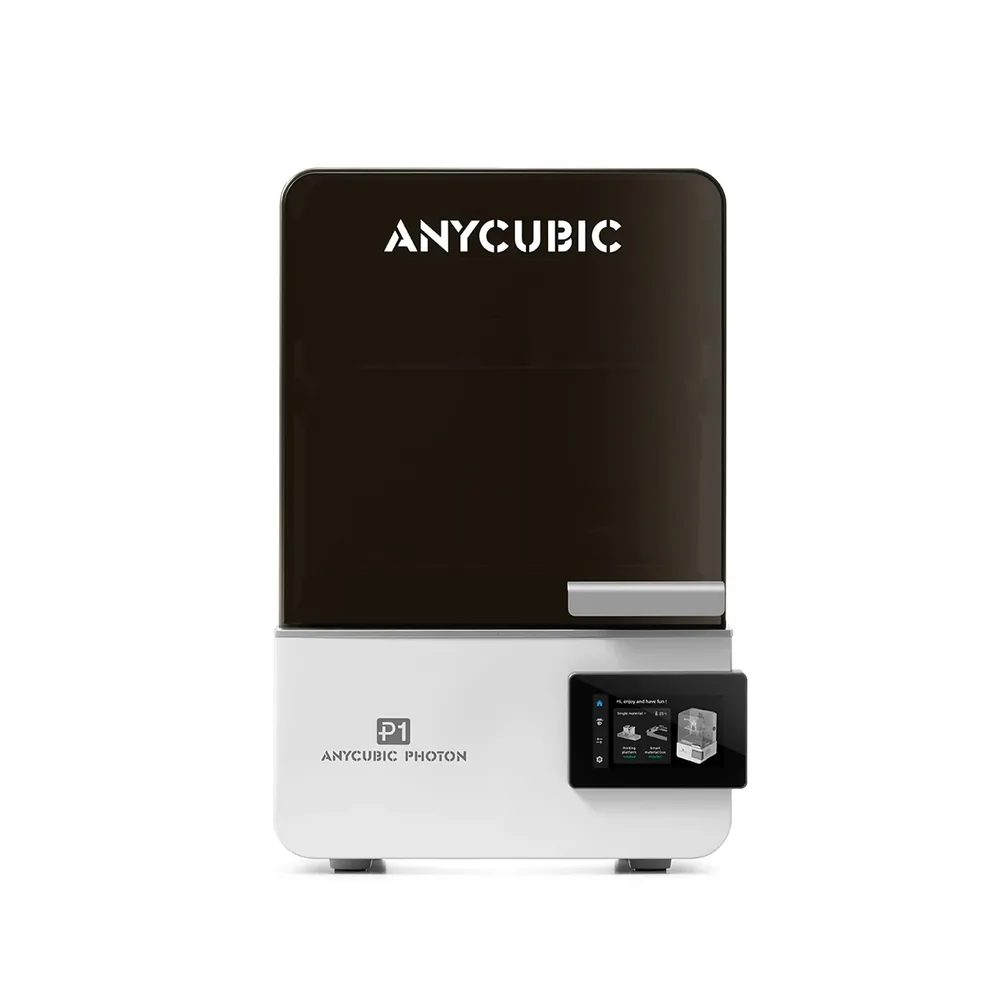
A full helmet in resin would far exceed a printer like the Photon P1’s build volume and get expensive in consumables fast. Resin fits better on props: buckles, gems, visor details, costume jewelry. It requires post-processing (washing, curing, gloves and ventilation) that filament doesn’t; our resin post-processing guide covers these steps before you start.
When to look beyond this list
If your file doesn’t fit any of the printers here, even split into a few reasonable sections, our large-format buying guide covers bigger volumes still. Don’t shrink your costume’s dimensions just to fit a smaller printer: it’s usually better to compare other build volumes or rethink how the file is split.
Frequently asked questions
What’s the best 3D printer for a cosplay helmet?
For a one-piece helmet, a large open-frame printer like the A2L (330 × 320 × 325 mm) skips splitting entirely. For a helmet printed in parts, a 256 mm class machine like the A1 or the P2S is plenty.
Should I split a cosplay file or print it in one piece?
It depends on your available build volume and how much seam-sanding you’re willing to do. A large-format printer skips splitting but costs more and takes up more space; splitting into sections works on a more common printer, at the cost of some extra finishing.
Is an enclosed 3D printer worth it for cosplay?
Mainly for ABS and ASA, which shrink while cooling and warp more on an open frame. For plain PLA or PETG, an open-frame printer like the A1 handles most props just fine.
Is resin good for a full cosplay costume?
Rarely for a whole piece, given the limited volume and consumable cost. It works better for small, highly detailed props (buckles, jewelry, visor details) that filament renders less cleanly.
What if none of these printers are big enough?
Our large-format buying guide covers bigger build volumes than the ones listed here. It’s better to compare other printers than to shrink your costume’s dimensions to fit a smaller one.
Sources
- Bambu Lab — A1 specifications (bambulab.com)
- Bambu Lab — A2L specifications (bambulab.com)
- Bambu Lab — P2S specifications (bambulab.com)
- Prusa Research — CORE One L+ specifications (prusa3d.com)
- Anycubic — Photon P1 specifications (store.anycubic.com)
- Our methodology