
For dual-color resin in 14K
Anycubic Photon P1
An MSLA resin printer with a monochrome 14K screen, a 223 × 126 × 230 mm nominal build volume, and a built-in hinged cover, with optional dual-color/dual-material printing per Anycubic.
In short The Anycubic Photon P1 is a resin (MSLA) 3D printer with a 223 × 126 × 230 mm (8.8 × 5 × 9.1 in) build volume. Anycubic claims a 10.1-inch 14K LCD and up to 35 mm/h; the printer measures 366 × 338 × 539 mm (14.4 × 13.3 × 21.2 in) and weighs 13.6 kg (30 lb).
Documentary analysis · Not personally tested
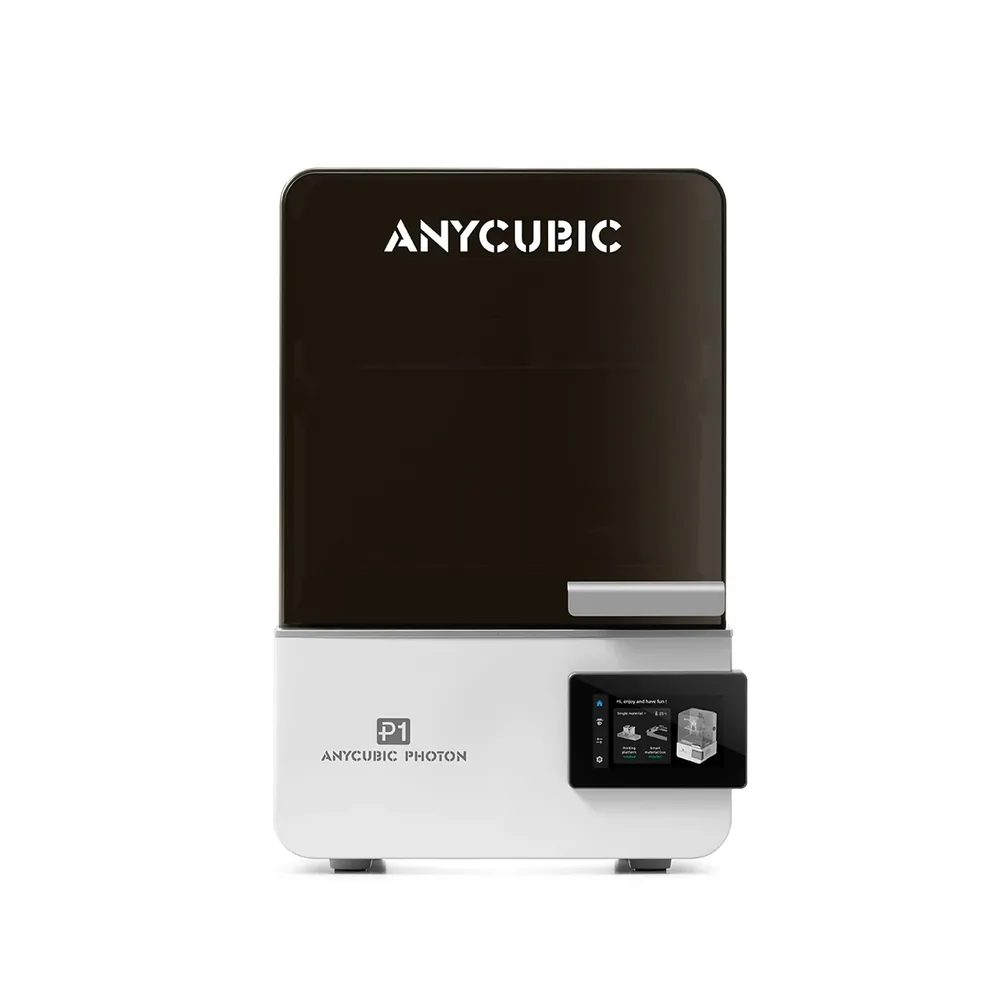 Resin · MSLA
Why consider it?
A 10.1-inch monochrome 14K LCD, an industrial ball screw and linear rails for a repeat positioning accuracy advertised at ±0.01mm, a precision-ground steel build plate, and a thermal-controlled resin vat up to 40°C.
What to verify
The camera and AirPure 2.0 filtration are sold as separate accessories, not standard per Anycubic's listing; a compact 6.5L volume suited to mid-size parts, not large prints.
Anycubic Photon P1 specifications
- Technology
- Resin (MSLA)
- Build volume
- 223 × 126 × 230 mm (8.8 × 5 × 9.1 in)
- Printer dimensions
- 366 × 338 × 539 mm (14.4 × 13.3 × 21.2 in)
- Weight
- 13.6 kg (30 lb)
- Enclosure
- Protective cover
- LCD screen
- 10.1 in · 14K
- Claimed print speed
- 35 mm/h
- Multicolor
- One resin at a time by default; an optional dual-color/dual-material print kit adds a second vat and build plate per Anycubic, to print two colors or materials at once.
- Materials
- Anycubic resins listed as compatible, including ultra-viscous resins up to 8000cps, thanks to a resin vat heated up to 40°C.
- Screen
- 4.5-inch touchscreen
- Built-in camera
- No
- Connectivity
- USB
- Listed features
- Auto bed leveling
How much space does it need?
The Anycubic Photon P1 measures 366 × 338 × 539 mm (14.4 × 13.3 × 21.2 in) for a 223 × 126 × 230 mm (8.8 × 5 × 9.1 in) build volume: the dashed box is the printer, the solid cube the nominal build volume, about 10% of the machine’s volume. Add room for opening the cover, handling the vat, cables and ventilation.
Source: official Anycubic pages (store.anycubic.com), checked September 28, 2026. Manufacturer claims, not our measurements. Build volume is nominal: orientation, supports and reserved zones can reduce the usable space.
Which projects is it for?
The Photon P1 is an MSLA resin printer with a monochrome 14K screen and a 223 × 126 × 230 mm (6.5L) build volume per Anycubic. This mid-size format targets larger parts than compact entry-level models, without reaching the size of the Photon P1 Max Anycubic also sells.
The 10.1-inch 14K screen, with an advertised XY resolution of 16.8 × 24.8 µm, targets finer precision than the brand's earlier generations. An industrial ball screw and linear rails replace the usual smooth rods, for a repeat positioning accuracy advertised at ±0.01mm per Anycubic.
Materials and setup
Anycubic advertises compatibility with its full resin lineup, including ultra-viscous resins up to 8000cps, thanks to a resin vat heated up to 40°C that stabilizes viscosity during printing.
The optional dual-color/dual-material print kit adds a second vat and a second build plate to print two colors or materials in a single run per Anycubic, rather than running two separate prints. Without this kit, the printer runs one resin at a time.
What the bundle includes or not
Per Anycubic's listing, the standalone machine ships with a build plate, a resin vat, wet wipes, a hex key set, protective gear, one filter, scrapers, a USB drive, a power cord, and the manual.
The camera and the AirPure 2.0 filtration are sold as separate accessories, not standard per the product page. The dual-color/dual-material kit, the resin itself, and any wash-and-cure station also depend on the listing chosen: check the exact bundle contents before comparing two prices.
Alternatives to compare
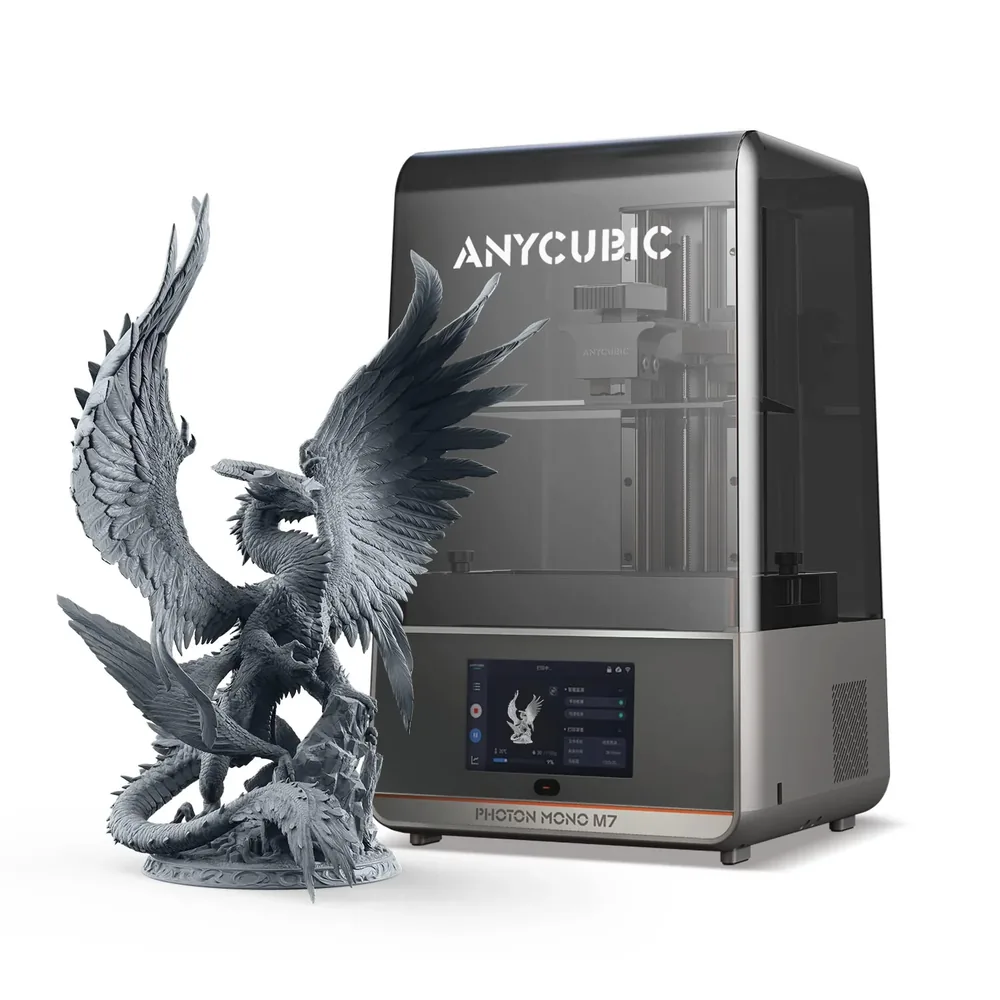
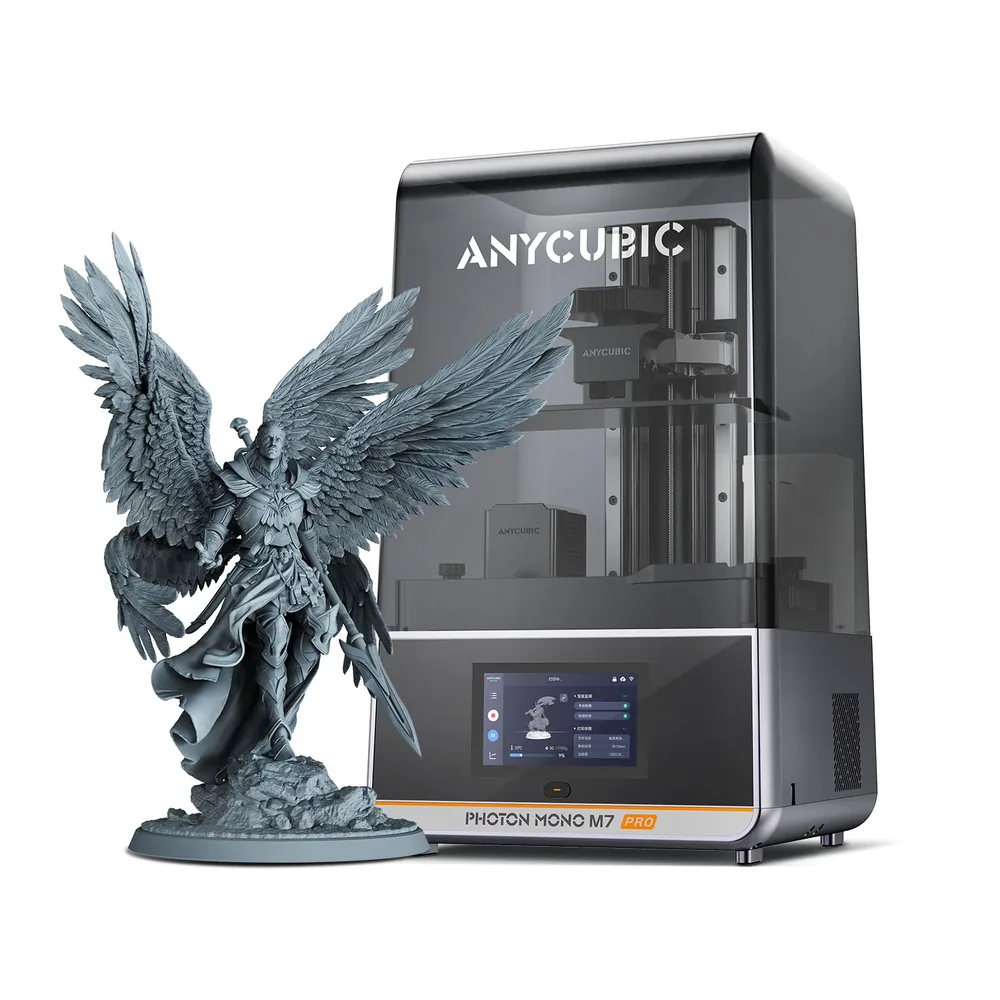
For an even larger format, the Photon Mono M7 Max remains an option at Anycubic to compare on volume and resolution. For a more compact, entry-level resin format, the Photon Mono 4 shares a fine XY resolution but a smaller volume.
The resin printer buying guide covers the criteria for comparing these formats, and the Anycubic page covers the rest of the manufacturer's lineup.
Similar printers to compare

Sources and limits
- Source: official Anycubic pages (store.anycubic.com), checked September 28, 2026. Manufacturer claims, not our measurements.
- How we assess specifications
We have not measured noise, real printing speed, accuracy or reliability, so none of these is rated here.