
For a fast open-frame CoreXY
Elegoo Centauri 2
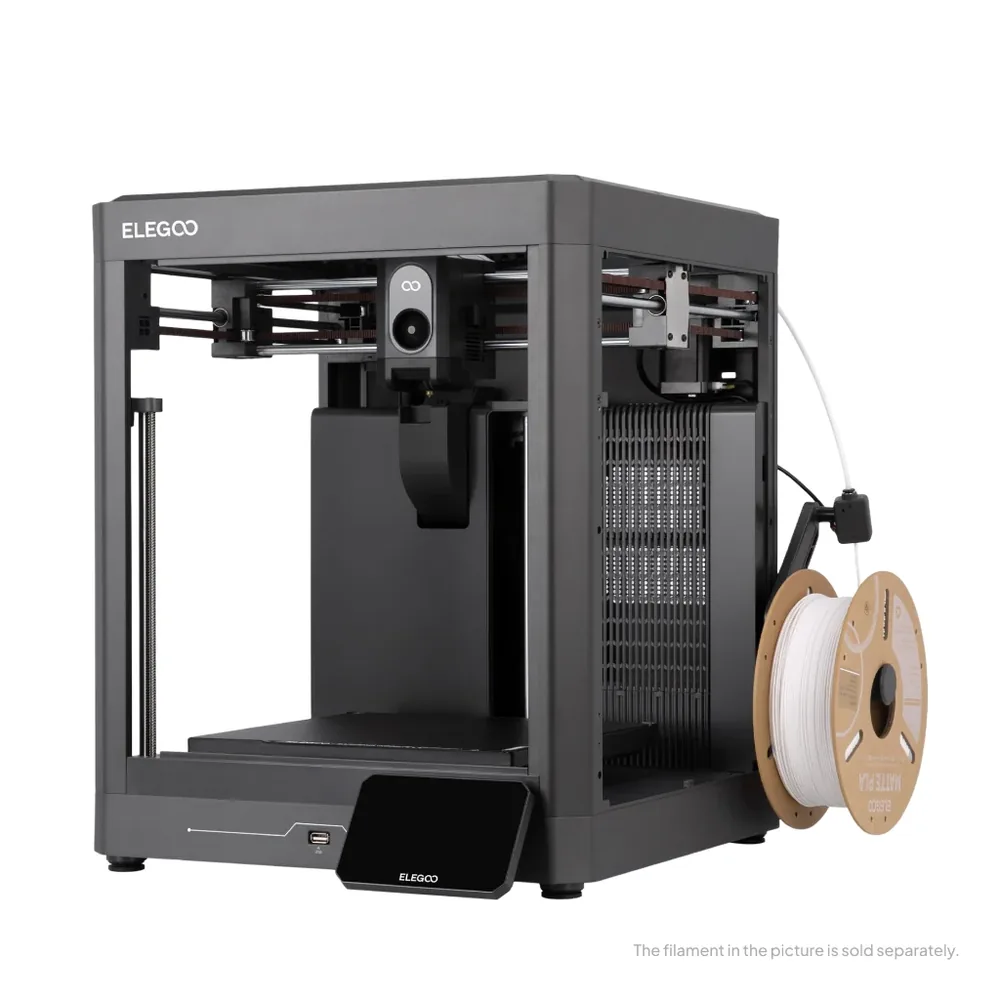
An open-frame CoreXY FDM printer with a 256 × 256 × 256 mm nominal build volume and a speed advertised up to 500 mm/s per Elegoo.
In short The Elegoo Centauri 2 is an open-frame filament (FDM) 3D printer with a 256 × 256 × 256 mm (10.1 × 10.1 × 10.1 in) build volume. Elegoo claims a 500 mm/s top speed, a 350 °C (662 °F) nozzle and a 110 °C (230 °F) bed; the printer measures 398 × 404 × 490 mm (15.7 × 15.9 × 19.3 in) and weighs 13.7 kg (30.2 lb).
Documentary analysis · Not personally tested
 FDM · Open frame
Why consider it?
A die-cast aluminum CoreXY frame, a speed advertised up to 500 mm/s with 10,000 mm/s² acceleration by default, a hardened nozzle up to 350°C, and a 110°C bed per Elegoo.
What to verify
An open frame with no cover, less suited to filaments that need a stable ambient temperature. The CANVAS module for multicolor remains a separate accessory to confirm on the retailer's listing.
Elegoo Centauri 2 specifications
- Technology
- Filament (FDM)
- Build volume
- 256 × 256 × 256 mm (10.1 × 10.1 × 10.1 in)
- Printer dimensions
- 398 × 404 × 490 mm (15.7 × 15.9 × 19.3 in)
- Weight
- 13.7 kg (30.2 lb)
- Enclosure
- Open frame
- Claimed top speed
- 500 mm/s
- Claimed acceleration
- 20,000 mm/s²
- Max nozzle temperature
- 350 °C (662 °F)
- Max bed temperature
- 110 °C (230 °F)
- Multicolor
- The base machine is monochrome; the CANVAS module for 4-color printing is sold separately from the standalone machine.
- Materials
- PLA and PETG per Elegoo's listing; the open frame is not designed for ABS without an added enclosure.
- Screen
- 5-inch touchscreen
- Built-in camera
- No
- Connectivity
- USB, Wi-Fi
- Listed features
- Auto bed leveling, filament runout sensor, filament cutter
How much space does it need?
The Elegoo Centauri 2 measures 398 × 404 × 490 mm (15.7 × 15.9 × 19.3 in) for a 256 × 256 × 256 mm (10.1 × 10.1 × 10.1 in) build volume: the dashed box is the printer, the solid cube the nominal build volume, about 21% of the machine’s volume. Add room for the spool or multicolor unit, cables and ventilation.
Source: official Elegoo pages (fr.elegoo.com), checked September 28, 2026. Manufacturer claims, not our measurements. Build volume is nominal: orientation, supports and reserved zones can reduce the usable space.
Which projects is it for?
The Centauri 2 carries an open-frame CoreXY architecture with a nominal build volume of 256 × 256 × 256 mm per Elegoo, a plate size that suits medium to large parts without aiming for the largest formats.
The advertised speed reaches 500 mm/s at its peak, with 250 mm/s recommended for daily use and a default acceleration of 10,000 mm/s² per Elegoo, targeting users who want shorter print times without moving up a machine tier.
Materials and setup
The hardened 0.4 mm nozzle heats up to 350°C and the bed up to 110°C per Elegoo, values that cover PLA and PETG under good conditions. Since the frame is open, ABS or ASA remain trickier without an added enclosure.
The base machine stays monochrome: Elegoo reserves 4-color printing for the CANVAS module, a separate accessory rather than standard equipment on the Centauri 2.
What the bundle includes or not
Elegoo's listing separates the standalone Centauri 2 from the "Centauri 2 Combo," which pairs the machine with the CANVAS unit for multicolor. The exact box contents (cables, calibration plate, sample filament) should still be checked on the chosen retailer's listing.
Elegoo highlights the die-cast aluminum frame for overall rigidity, a point that matters at the speeds this model advertises.
Alternatives to compare
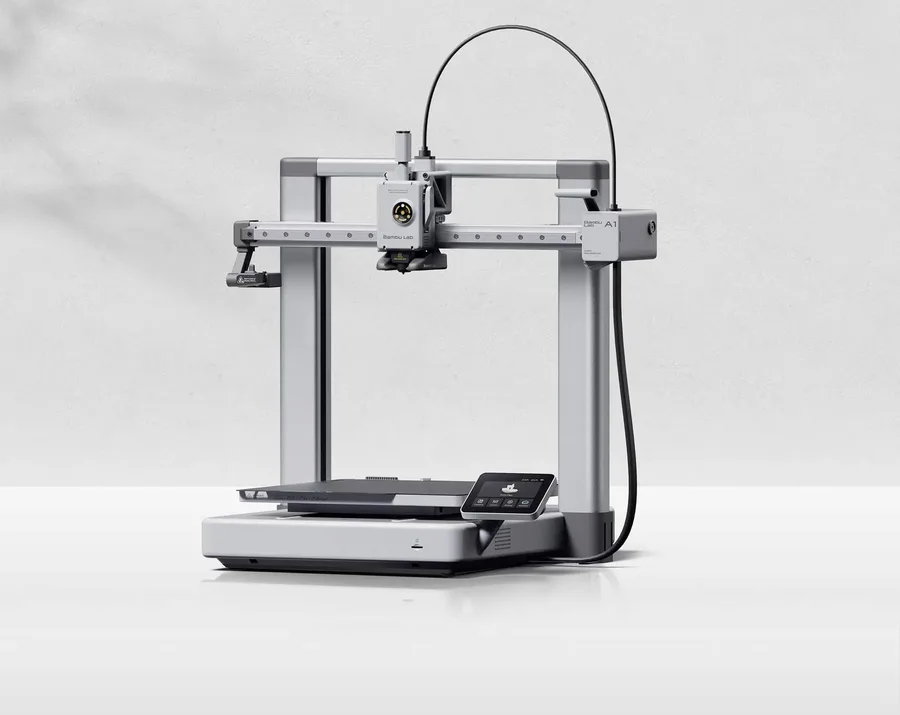
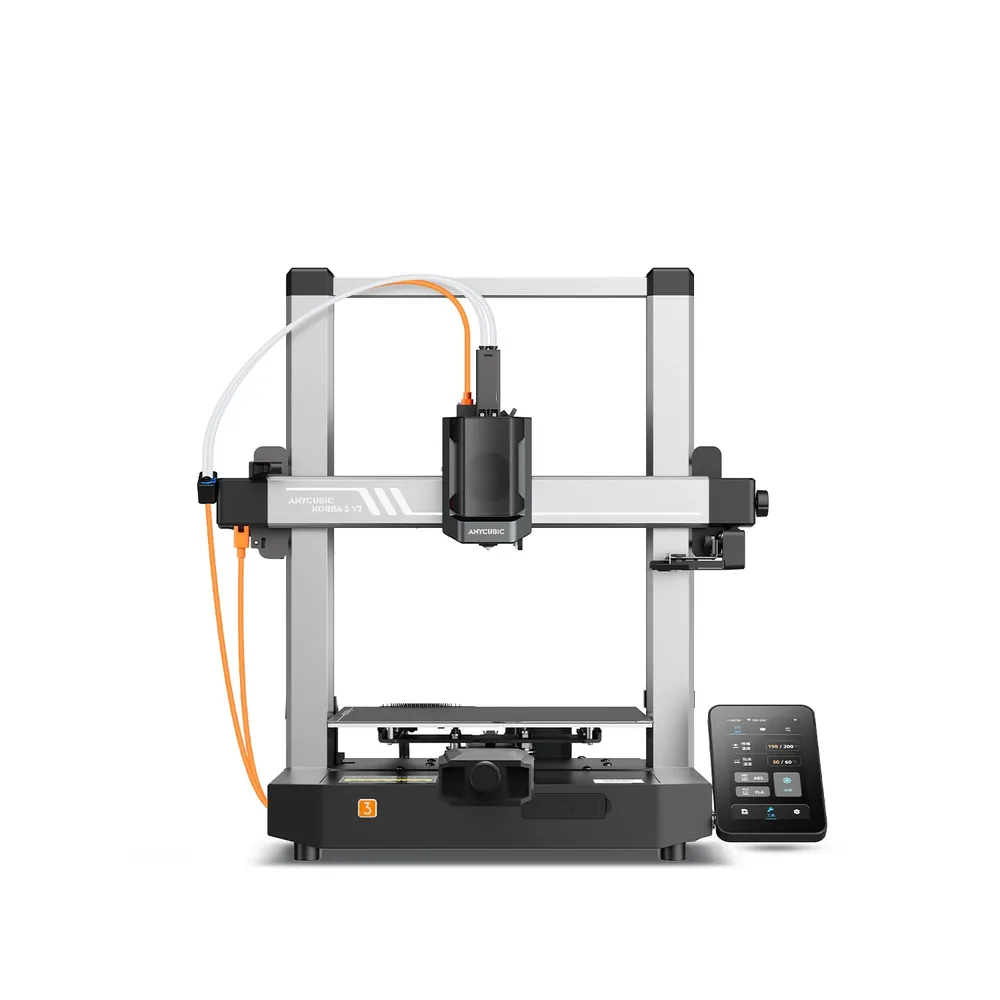
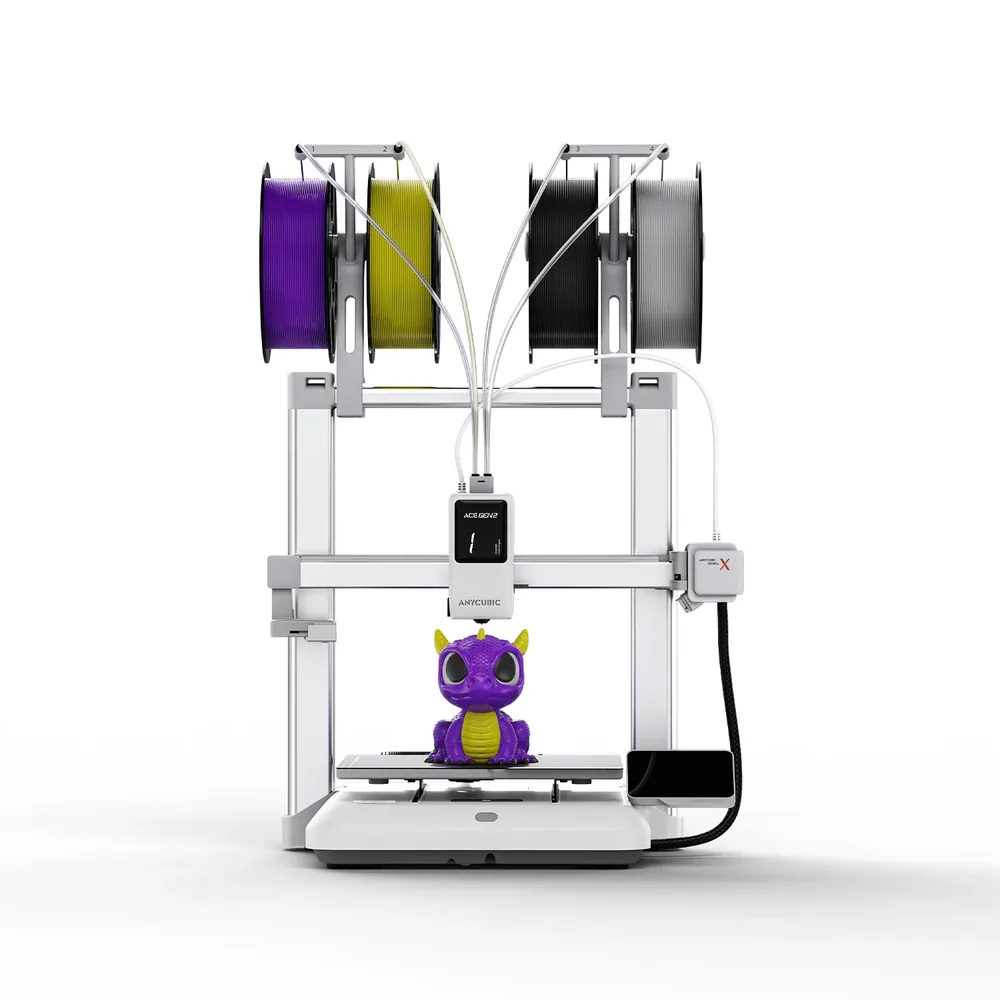
For multicolor built in from the start rather than as a separate accessory, the same lineup's Centauri Carbon and Centauri Carbon 2 cover an enclosed setup. For a compact, affordable base, the Neptune 4 stays simpler.
The FDM vs. resin guide helps confirm FDM is the right fit for the project before comparing CoreXY machines against each other.
Similar printers to compare
Sources and limits
- Source: official Elegoo pages (fr.elegoo.com), checked September 28, 2026. Manufacturer claims, not our measurements.
- How we assess specifications
We have not measured noise, real printing speed, accuracy or reliability, so none of these is rated here.