
Prusa vs Bambu Lab: Speed and Automation or Repairability and Open Source?
Prusa or Bambu Lab is the decision most buyers hit once they move past entry-level printers. One brand sells speed and automation in a tightly integrated package; the other sells a machine you can open, repair, and keep upgrading. This guide lays out the differences that matter, drawing on Prusa's official documentation for the CORE One and MK4S.
Find My 3D Printer editorial team·Published October 2, 2026·Manufacturer documentation, no hands-on tests claimed

The short answer
Bambu Lab focuses on speed and automation inside an integrated ecosystem, while Prusa prioritizes repairability, open-source code, and full offline operation. According to Prusa's documentation, the MK4S comes apart entirely with Allen keys, with no welded or glued parts, and the CORE One is an enclosed CoreXY with an actively controlled chamber that reaches 55 °C and a 250×220×270 mm build volume. The CORE One prints PLA and PETG with the door closed and handles ASA, ABS, PC, and nylon in a warm chamber. Pick Bambu Lab if you want fast output with minimal tinkering; pick Prusa if you want control over maintenance, data, and long-term upgrades.
Two Design Philosophies, Not Just Two Brands
Putting Prusa and Bambu Lab side by side is less about spec sheets than about what you think a 3D printer should be. Bambu Lab built its name on highly automated machines that behave like finished appliances: unbox, hit print, and let the company's ecosystem handle the rest. Prusa argues for something different, a printer you can open up, understand, fix, and upgrade over many years.
That is more than marketing. The MK4S product page states that Prusa's code is open source and that every Original Prusa gets long-term support, including major firmware and hardware upgrades rather than just bug fixes. Prusa's launch post for the CORE One describes it as a new platform that is not a welded or glued box that is impossible to repair.
One note on method: the sources behind this guide are official Prusa documents, so the Prusa figures quoted here come straight from the manufacturer. On the Bambu Lab side we stay qualitative on purpose and point you to the Bambu Lab P1S page for that model's exact specifications.
Speed and Automation: The Gap Is Narrower Than It Used to Be
Speed is Bambu Lab's signature. The brand made fast, heavily assisted printing mainstream, with calibration and print monitoring that ask very little of you. If your goal is to run job after job without thinking about settings, that is the brand's home turf.
Prusa has answered. The MK4S product page credits its shorter print times to a 360° cooling system, a high-flow nozzle fitted as standard, and firmware optimizations. Per Prusa, that cooling also lets the printer handle overhangs of up to 75° without supports, which saves both filament and time. Setup on an assembled unit is pitched as unbox, plug in, run a quick calibration, and start printing in 15 minutes.
Keep in mind that manufacturer speed numbers do not translate cleanly from one brand to another. Real print time depends on the slicer profile, the material, and the geometry of the part. Both companies ship ready-made profiles, and Prusa says the MK4S includes profiles that favor speed and others that favor sturdiness. Compare the same model sliced for each machine before you draw conclusions.
Repairability and Open Source: What Prusa Actually Puts on the Table
This is where Prusa pulls ahead on paper. The MK4S is an open bed-slinger that the company describes as the result of a 10-year evolution. Its product page stresses easy access to every part without lengthy disassembly: no welded or glued components, and everything comes apart with a set of Allen keys.
Prusa backs the claim with its own usage. The company says it runs a print farm of more than 700 of its printers around the clock, which forces it to design for minimal downtime. It also reports a claim rate under 1% across more than half a million printers in the field. Those are manufacturer statements, and you should read them that way.
The openness extends to software and data. Prusa writes that its printers are designed for fully offline operation with no drawbacks, and that it does not collect information about your prints without consent. Tinkerers get optional add-ons for the MK4S, including a GPIO board for driving external electronics and an accelerometer for modders. Bambu Lab takes a more integrated, more closed approach: comfortable day to day, less inviting to modify.
CORE One or MK4S: Which Prusa Lines Up Against a Bambu Lab P1S
If you are cross-shopping an enclosed machine like the P1S, Prusa's natural counterpart is the Prusa CORE One. Prusa's blog describes it as a fully enclosed CoreXY printer with active chamber temperature control and a 250×220×270 mm print volume in a compact footprint. Its exoskeleton structure doubles as frame and outer shell, and the transparent panels are a polymer rather than glass.
The Prusa MK4S plays a different role. Prusa is explicit that the CORE One is not its successor: the two are meant to sit side by side, and the MK4S keeps getting firmware updates and new accessories. For people who mostly print PLA and PETG, the company calls an open-frame printer an excellent choice, with easy access to all components.
Prusa even concedes that CoreXY is not automatically the next step for everyone and comes with some drawbacks. The practical takeaway: against an enclosed Bambu Lab, start your comparison with the CORE One. If an enclosure does nothing for the materials you print, the MK4S covers the need with simpler, more accessible mechanics.
Materials: PLA With the Door Closed, ASA and Nylon in a Warm Chamber
Filament choice often separates these machines better than speed does. Prusa's blog notes that about 90 percent of all prints are made in PLA or PETG, two materials that perform poorly in elevated temperatures. That is why makers of enclosed printers, Prusa included with its MK4S Enclosure, commonly tell you to open the door or remove the top panel for those filaments.
The CORE One is built around that problem. Dual fans at the back actively manage chamber temperature: with PLA or PETG they keep it as low as possible with the door shut, as long as you open a small vent on top. For ASA, ABS, PC, or nylon, Prusa says the compact chamber warms up faster and can reach up to 55 °C.
The MK4S, per its product page, handles PLA, PETG, ASA, carbon-filled filaments, and flexible TPU, which its direct-drive Nextruder is designed to feed easily. To get the most out of demanding materials, Prusa recommends housing it in an enclosure. The Bambu Lab P1S is an enclosed machine as well, so check its page for supported materials before you decide.
Which Buyer Fits Which Brand, and How to Frame the Budget
Lean toward Bambu Lab if you want the printer to disappear behind the result. You accept a more closed ecosystem in exchange for a guided setup and deep automation. That makes sense for fast turnaround, for a first serious printer when you have no interest in wrenching, or for a shop where setup time is the bottleneck.
Lean toward Prusa if you think in years rather than weekends. A printer that comes apart with Allen keys, open-source code, full offline operation, and multi-year hardware support appeals to makers who want control, to schools and labs, and to businesses that care where their files go. US buyers may also note Prusa's statement that it has started manufacturing printers in the USA alongside its Prague headquarters.
Then there is cost. The machines compared here sit in the midrange and above, and the final bill depends on what you add: an enclosure for an open-frame printer, spare build plates and nozzles, filament. Instead of comparing sticker prices, total everything up with our startup budget tool and weigh that figure against how you actually plan to print.
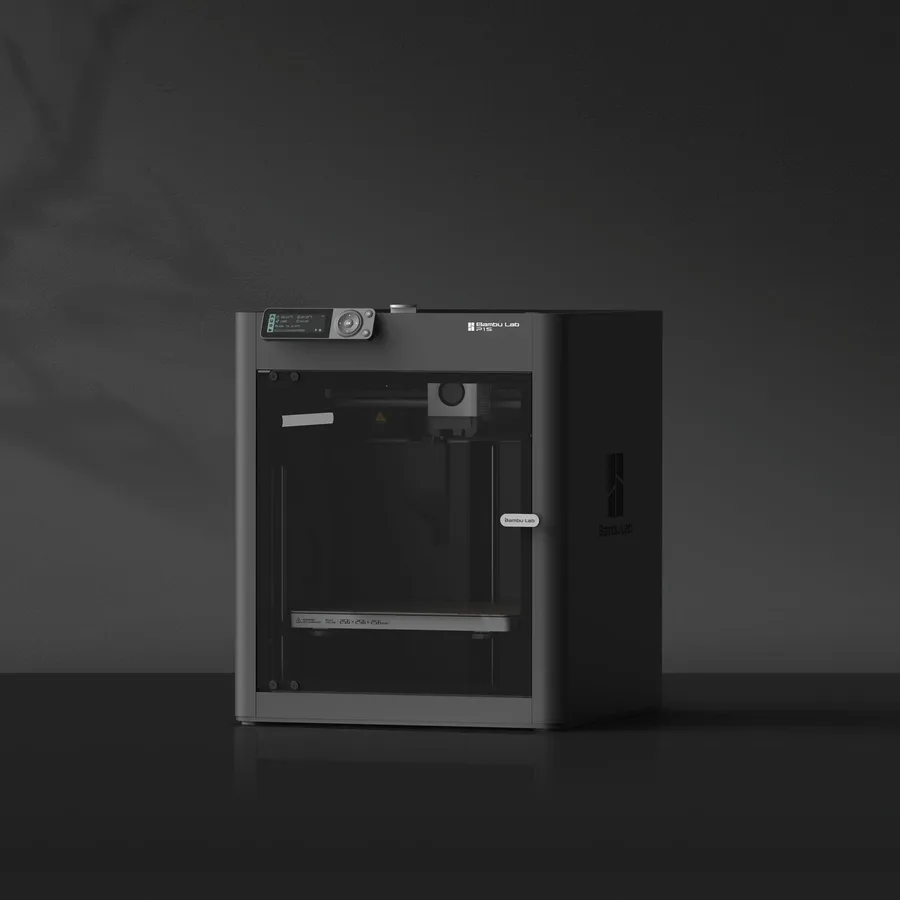
Bambu Lab P1S
256 × 256 × 256 mm
The same nominal volume as the A1, with an enclosure and a different motion system.
Check the precise AMS version, adapters and accessories included. Enclosure alone does not establish material suitability.
Specifications and seller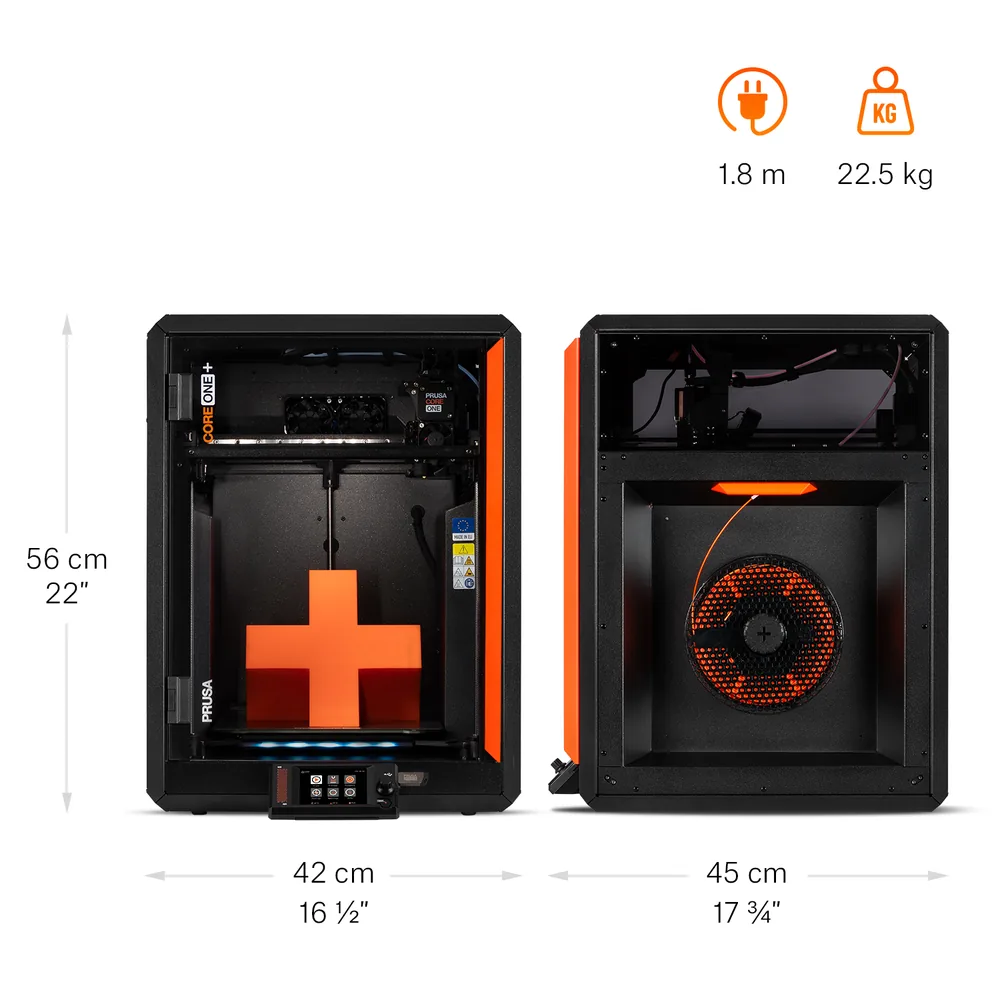
Prusa Research CORE One+
250 × 220 × 270 mm
An enclosed chamber with active heating (55°C), fully automatic first-layer leveling via a load-cell sensor, a Quick-Swap nozzle system, and a 3.5-inch touchscreen; the Gen 2 revision adds GT1.5 belts and a built-in nozzle wiper.
MMU3 or INDX multicolor remains a separate add-on, as does the HEPA filtration needed for ABS and ASA; the internal camera is also optional, not standard equipment.
Specifications and seller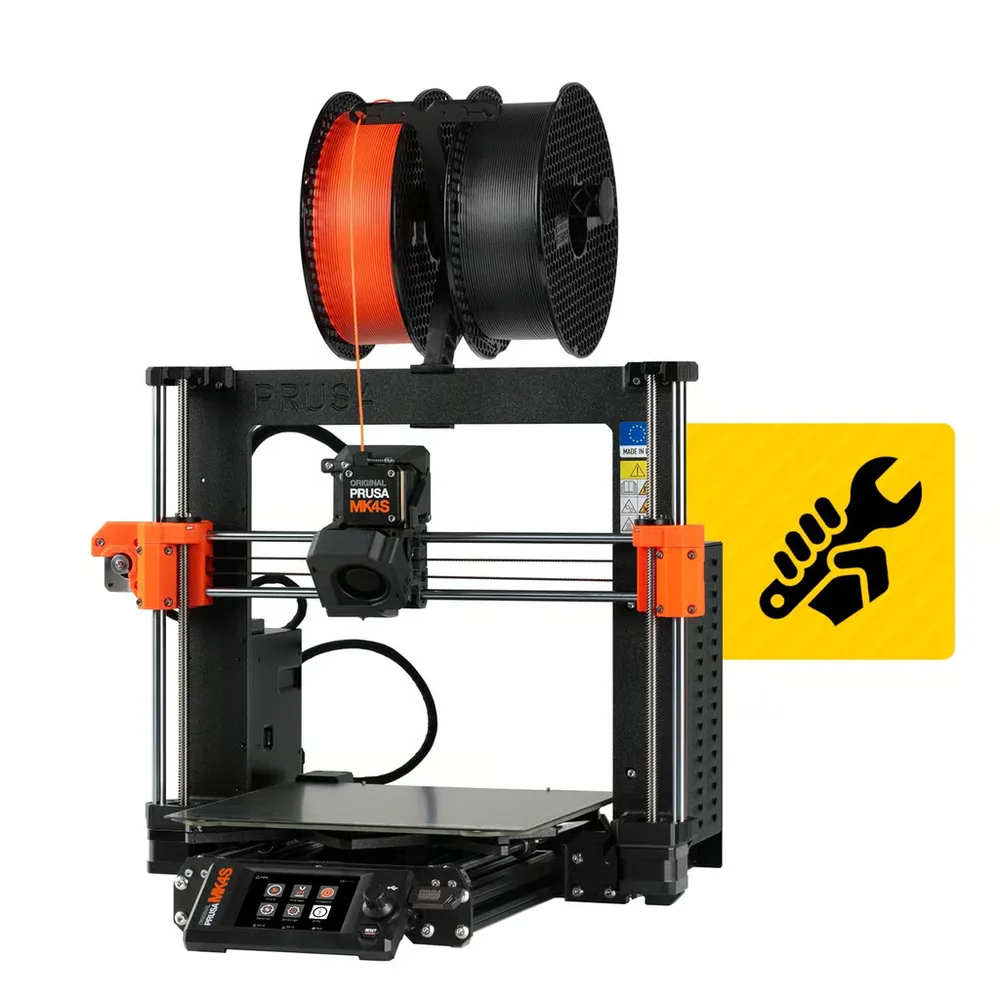
Prusa Research Original Prusa MK4S
250 × 210 × 220 mm
An open-source design with the Nextruder extruder, 360° part cooling and an ecosystem of parts and print profiles thoroughly documented by Prusa Research.
The chassis stays open by default: the enclosure and filter are separate add-ons worth planning for regular ABS or ASA use.
Specifications and sellerSources and limits
- Prusa — Original Prusa MK4S
- Prusa Blog — Introducing Prusa CORE One
We organize manufacturer and community documentation; we have not measured these products ourselves. The manual for your exact model takes precedence over general guidance.
A clearer shortlist starts with your projects.
Use the free buying checklist and budget worksheet before comparing offers.