
For starting resin in 10K
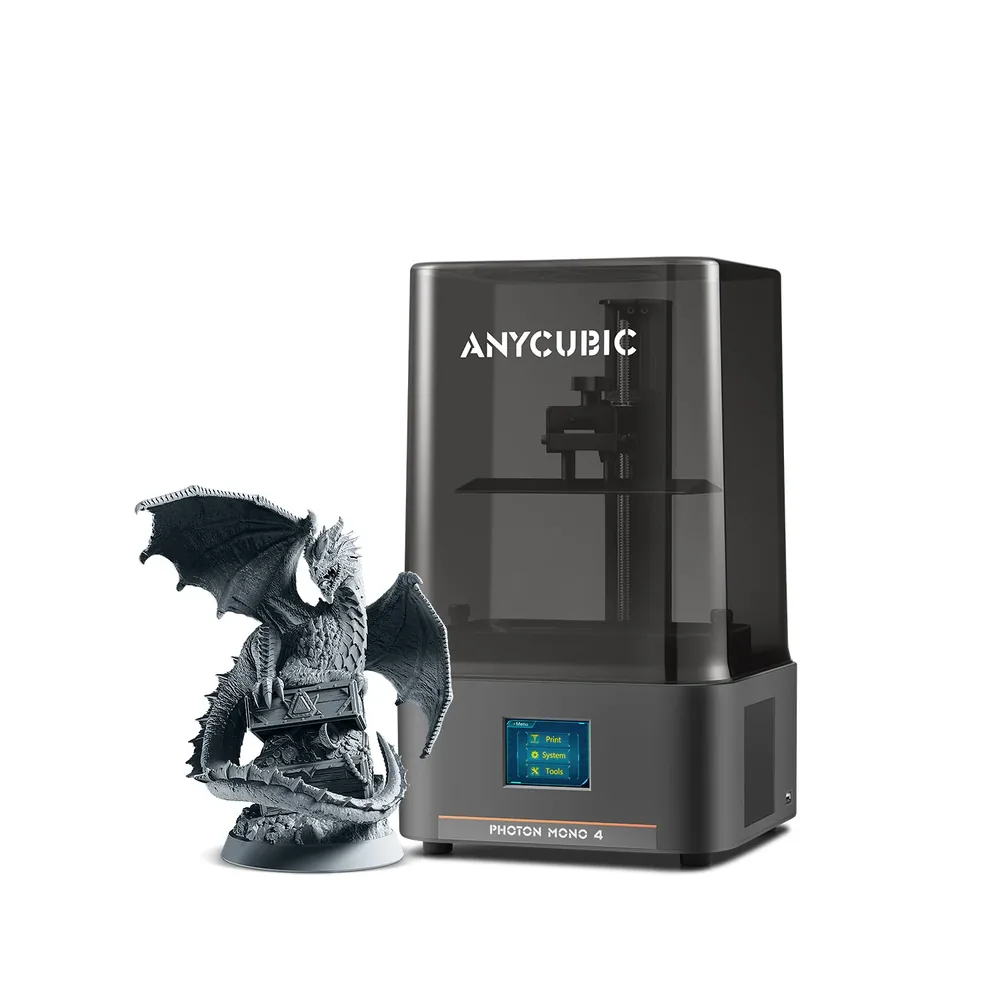
Anycubic Photon Mono 4
An MSLA resin printer with a monochrome 10K screen, a 153.4 × 87 × 165 mm nominal build volume, and a built-in cover.
In short The Anycubic Photon Mono 4 is a resin (MSLA) 3D printer with a 153.4 × 87 × 165 mm (6 × 3.4 × 6.5 in) build volume. Anycubic claims a 7-inch 10K LCD, 17 µm XY resolution and up to 70 mm/h; the printer measures 230 × 235 × 391 mm (9.1 × 9.3 × 15.4 in) and weighs 4 kg (8.8 lb).
Documentary analysis · Not personally tested
 Resin · MSLA
Why consider it?
A 10K screen at 9024 × 5120px with 17 × 17µm pixels and 4-point leveling advertised as simplified.
What to verify
A compact 2.2L volume: suited to miniatures and small parts, not large objects.
Anycubic Photon Mono 4 specifications
- Technology
- Resin (MSLA)
- Build volume
- 153.4 × 87 × 165 mm (6 × 3.4 × 6.5 in)
- Printer dimensions
- 230 × 235 × 391 mm (9.1 × 9.3 × 15.4 in)
- Weight
- 4 kg (8.8 lb)
- Enclosure
- Protective cover
- LCD screen
- 7 in · 10K
- XY resolution
- 17 µm
- Claimed print speed
- 70 mm/h
- Multicolor
- One resin at a time; no automatic color switching.
- Materials
- Compatible 405 nm UV resins: high-speed, water-washable, standard, ABS-like, and plant-based per Anycubic.
- Connectivity
- USB
How much space does it need?
The Anycubic Photon Mono 4 measures 230 × 235 × 391 mm (9.1 × 9.3 × 15.4 in) for a 153.4 × 87 × 165 mm (6 × 3.4 × 6.5 in) build volume: the dashed box is the printer, the solid cube the nominal build volume, about 10% of the machine’s volume. Add room for opening the cover, handling the vat, cables and ventilation.
Source: official Anycubic pages (store.anycubic.com), checked September 28, 2026. Manufacturer claims, not our measurements. Build volume is nominal: orientation, supports and reserved zones can reduce the usable space.
Which projects is it for?
The Photon Mono 4 is an MSLA resin printer with a monochrome 10K screen and a 153.4 × 87 × 165 mm build volume per Anycubic. This compact footprint suits miniatures, figurines, and detailed parts, where resin captures fine surface detail that FDM struggles to match.
The 10K screen, at 9024 × 5120px with 17 × 17µm pixels, targets finer precision than the older Mono 4K generation. 4-point leveling, presented by Anycubic as simplified, cuts down on setup before a first print.
Because the vat and any cured resin remain photosensitive between sessions, the printer works best away from direct sunlight or bright windows, regardless of the built-in cover, to avoid premature curing or discoloration over time. Room temperature also affects resin viscosity, so a stable, moderately warm space makes it easier to match the exposure settings the manufacturer documents for each profile.
Materials and setup
The printer runs compatible 405nm UV resins in MSLA format: high-speed, water-washable, standard, ABS-like, and plant-based per Anycubic. Each resin keeps its own exposure profile, to follow rather than reuse from another product.
The manufacturer advertises a parallel matrix light source at around 3000µW/cm² intensity, and an 18mm activated carbon filter to reduce odors during printing.
What the bundle includes or not
Per Anycubic's listing, the machine alone ships with a build plate, resin vat, manual, screen protector kit, leveling paper, protective gear, two filters, and two scrapers.
The resin itself is not always included depending on the listing chosen, nor is a wash-and-cure station. Check the retailer's listing for exactly what your bundle includes before comparing prices.
Warranty terms and technical support can also differ between Anycubic's own store and a third-party retailer. Since resin printing involves ongoing consumables (resin, isopropyl alcohol, gloves, protective film), it's worth pricing those recurring costs before comparing two machines on purchase price alone.
Alternatives to compare
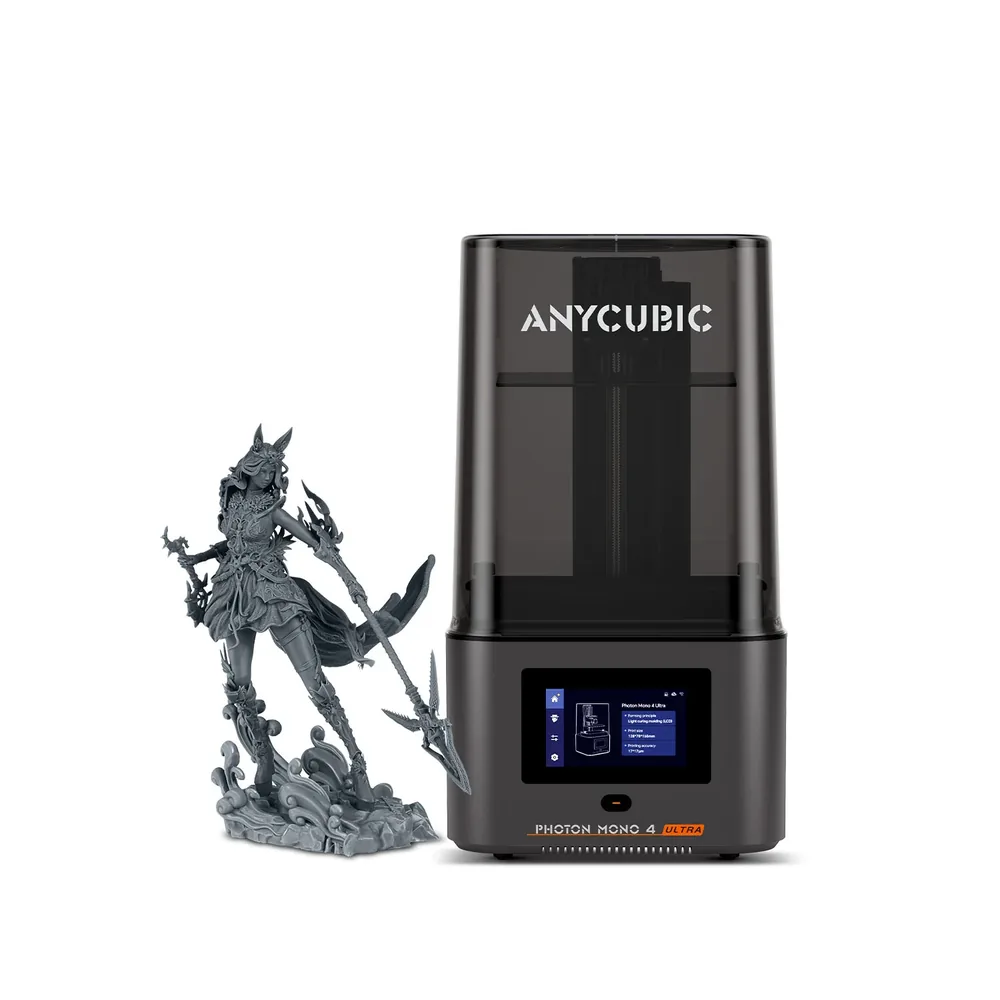
For a higher print speed in the same lineup, the Photon Mono 4 Ultra shares an identical volume with a dedicated high-speed resin. From another manufacturer, Elegoo's Mars 5 Ultra remains a comparable compact format.
The Anycubic page covers the rest of the manufacturer's lineup, and the resin printer buying guide covers the criteria for choosing between these compact formats.
Similar printers to compare
Sources and limits
- Source: official Anycubic pages (store.anycubic.com), checked September 28, 2026. Manufacturer claims, not our measurements.
- How we assess specifications
We have not measured noise, real printing speed, accuracy or reliability, so none of these is rated here.