
Comparing a faster resin option
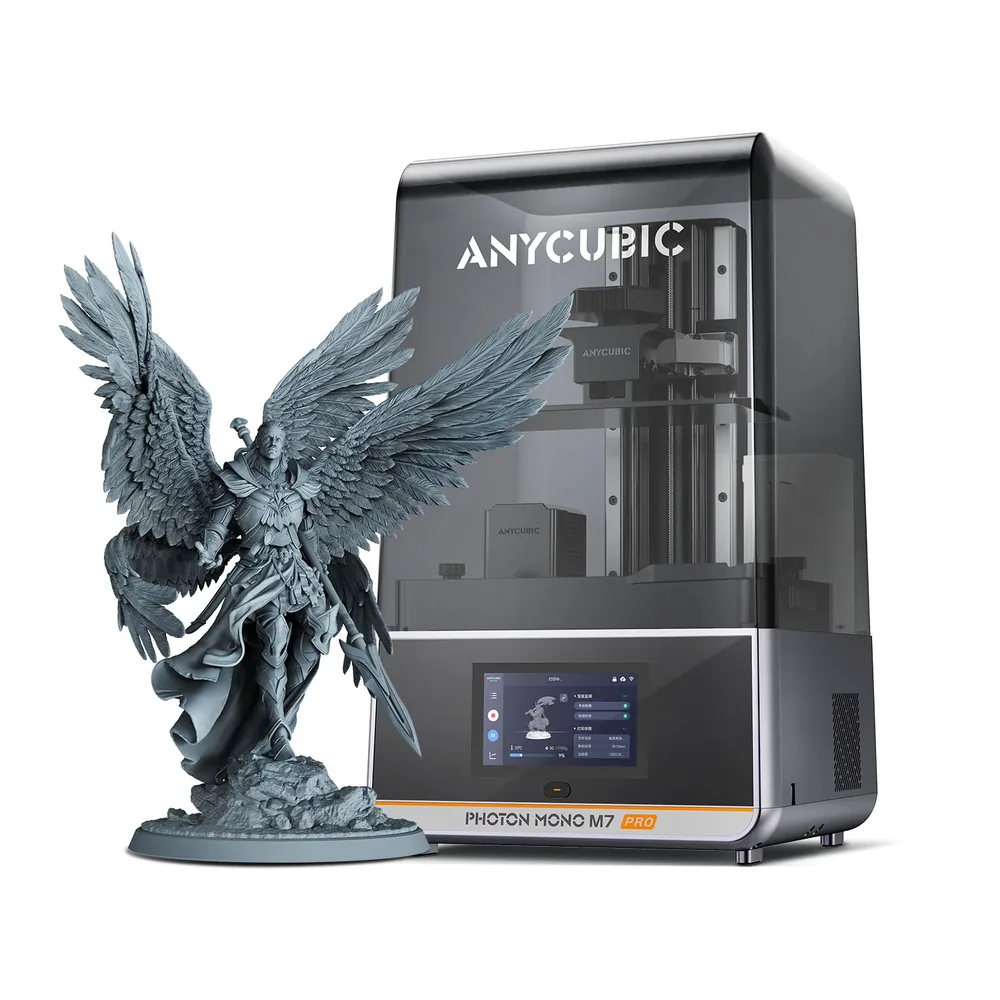
Anycubic Photon Mono M7 Pro
An MSLA resin printer with a monochrome 14K screen, the same volume as the M7, plus a speed advertised up to 170 mm/h with fast resin.
In short The Anycubic Photon Mono M7 Pro is a resin (MSLA) 3D printer with a 223 × 126 × 230 mm (8.8 × 5 × 9.1 in) build volume. Anycubic claims a 10.1-inch 14K LCD and up to 170 mm/h.
Documentary analysis · Not personally tested
 Resin · MSLA
Why consider it?
LighTurbo 3.0 light source, uniformity advertised at 90% or higher, auto-adaptive heating, and automatic resin refill.
What to verify
Same volume as the base M7: the gain is in speed and precision, not plate size.
Anycubic Photon Mono M7 Pro specifications
- Technology
- Resin (MSLA)
- Build volume
- 223 × 126 × 230 mm (8.8 × 5 × 9.1 in)
- Enclosure
- Protective cover
- LCD screen
- 10.1 in · 14K
- Claimed print speed
- 170 mm/h
- Multicolor
- One resin at a time; no automatic color switching.
- Materials
- Compatible standard and high-speed resins per Anycubic.
- Listed features
- Auto bed leveling
Source: official Anycubic pages (store.anycubic.com), checked September 28, 2026. Manufacturer claims, not our measurements. Build volume is nominal: orientation, supports and reserved zones can reduce the usable space.
Which projects is it for?
The Photon Mono M7 Pro carries over the same volume as the M7, 223 × 126 × 230 mm per Anycubic, with a 10.1-inch monochrome 14K screen (13320 × 5120px). It targets the same use case: batches of figurines and medium-sized parts, with a higher print speed.
Anycubic advertises up to 130 mm/h at 0.1mm layer height with standard resin, and up to 170 mm/h with a high-speed resin, cutting total time for regular batches compared with the base M7.
Because the vat and any cured resin remain photosensitive between sessions, the printer works best away from direct sunlight or bright windows, regardless of the built-in cover, to avoid premature curing or discoloration over time. Room temperature also affects resin viscosity, so a stable, moderately warm space makes it easier to match the exposure settings the manufacturer documents for each profile.
Materials and setup
The printer runs compatible standard and high-speed resins per Anycubic, with the LighTurbo 3.0 light source combining a COB chip, Fresnel lenses, and front-facing reflectors to keep light within a 3° angle. Screen uniformity is advertised at 90% or higher, for a tolerance of ±0.01 to 0.05mm.
Auto-adaptive heating regulates the resin vat's temperature, backed by automatic refill and drain plus an assisted workflow per the manufacturer.
What the bundle includes or not
Anycubic's listing highlights the automatic features (heating, refill, leveling) rather than a full list of accessories included in the box for the machine alone.
Resin and a wash-and-cure station are not guaranteed to be included when buying the machine alone. Check the retailer's listing for the exact contents of your offer before comparing prices.
Warranty terms and technical support can also differ between Anycubic's own store and a third-party retailer. Since resin printing involves ongoing consumables (standard or high-speed resin, isopropyl alcohol, gloves), it's worth pricing those recurring costs before comparing two machines on purchase price alone.
Alternatives to compare
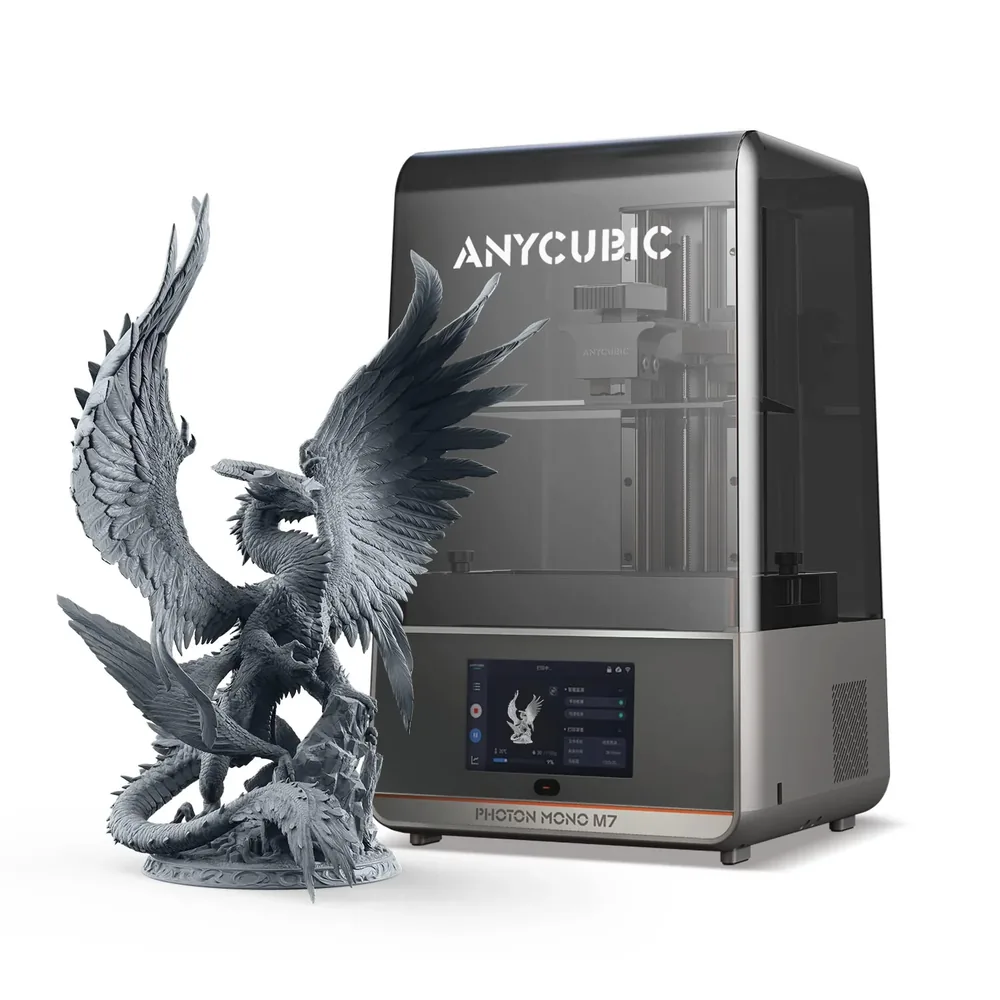
For a lower price at the same volume, the Photon Mono M7 remains the most direct comparison. For a notably larger plate, the Photon Mono M7 Max steps up to 298 × 164 × 300 mm.
The Anycubic page covers the rest of the manufacturer's lineup, and the resin printer buying guide helps weigh speed against format for your usual projects.
Similar printers to compare

Sources and limits
- Source: official Anycubic pages (store.anycubic.com), checked September 28, 2026. Manufacturer claims, not our measurements.
- How we assess specifications
We have not measured noise, real printing speed, accuracy or reliability, so none of these is rated here.