
For large-format resin printing
Anycubic Photon Mono M7 Max
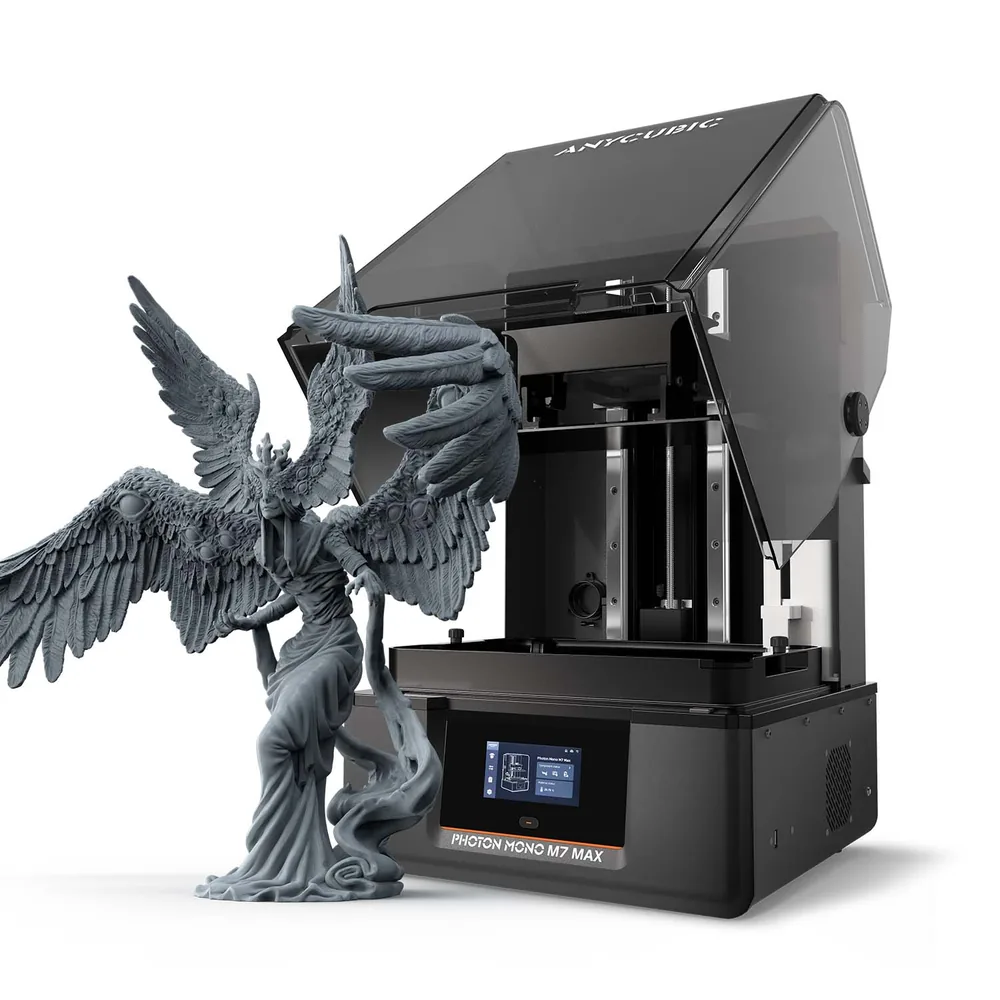
An MSLA resin printer with a 13.6-inch monochrome screen, a 298 × 164 × 300 mm nominal build volume, and a one-handed hinged cover.
In short The Anycubic Photon Mono M7 Max is a resin (MSLA) 3D printer with a 298 × 164 × 300 mm (11.7 × 6.5 × 11.8 in) build volume. Anycubic claims a 13.6-inch 7K LCD, 46 µm XY resolution and up to 86 mm/h; the printer measures 425 × 362 × 652 mm (16.7 × 14.3 × 25.7 in) and weighs 24 kg (52.9 lb).
Documentary analysis · Not personally tested
 Resin · MSLA
Why consider it?
A volume of about 14.7L, an XY resolution advertised at 46 × 46µm, and a LighTurbo 3.0 light source with anti-aliasing.
What to verify
Leveling is manual at four points. The larger format also requires washing and curing equipment sized for the printed parts.
Anycubic Photon Mono M7 Max specifications
- Technology
- Resin (MSLA)
- Build volume
- 298 × 164 × 300 mm (11.7 × 6.5 × 11.8 in)
- Printer dimensions
- 425 × 362 × 652 mm (16.7 × 14.3 × 25.7 in)
- Weight
- 24 kg (52.9 lb)
- Enclosure
- Protective cover
- LCD screen
- 13.6 in · 7K
- XY resolution
- 46 µm
- Claimed print speed
- 86 mm/h
- Multicolor
- One resin at a time; no automatic color switching.
- Materials
- Compatible standard, ABS-like, and water-washable resins per Anycubic.
- Screen
- 4.3-inch touchscreen
- Connectivity
- USB, Wi-Fi
How much space does it need?
The Anycubic Photon Mono M7 Max measures 425 × 362 × 652 mm (16.7 × 14.3 × 25.7 in) for a 298 × 164 × 300 mm (11.7 × 6.5 × 11.8 in) build volume: the dashed box is the printer, the solid cube the nominal build volume, about 15% of the machine’s volume. Add room for opening the cover, handling the vat, cables and ventilation.
Source: official Anycubic pages (store.anycubic.com), checked October 6, 2026. Manufacturer claims, not our measurements. Build volume is nominal: orientation, supports and reserved zones can reduce the usable space.
Which projects is it for?
The Photon Mono M7 Max is an MSLA resin printer with a 13.6-inch monochrome screen and a 298 × 164 × 300 mm nominal build volume per Anycubic, roughly 14.7L printable at once. It suits large batches of figurines or medium-to-large resin parts, bigger than what the standard M7 allows.
The one-handed hinged cover makes it easier to access the vat between prints, a practical point on a model meant for repeated rather than occasional use.
Because the vat and any cured resin remain photosensitive between sessions, the printer works best away from direct sunlight or bright windows, regardless of the built-in cover, to avoid premature curing or discoloration over time on a vat this large.
Materials and setup
The printer runs compatible standard, ABS-like, and water-washable resins per Anycubic. At 0.1mm layer height, the manufacturer advertises up to 63 mm/h with standard resin and 86 mm/h with high-speed resin.
The advertised XY resolution is 46 × 46µm, with an improved LighTurbo 3.0 light source and anti-aliasing technology to smooth part edges per the manufacturer.
What the bundle includes or not
Anycubic's listing highlights the one-handed hinged cover and the LighTurbo 3.0 light source without detailing a full list of accessories included in the box for the machine alone.
Resin and a wash-and-cure station sized for this format are not guaranteed to be included. Check the retailer's listing for the exact contents of your offer before comparing prices, especially for a bed this large.
Warranty terms and technical support can also differ between Anycubic's own store and a third-party retailer. Since resin printing involves ongoing consumables, and more of them on a bed this size, it's worth pricing those recurring costs before comparing two machines on purchase price alone.
Alternatives to compare
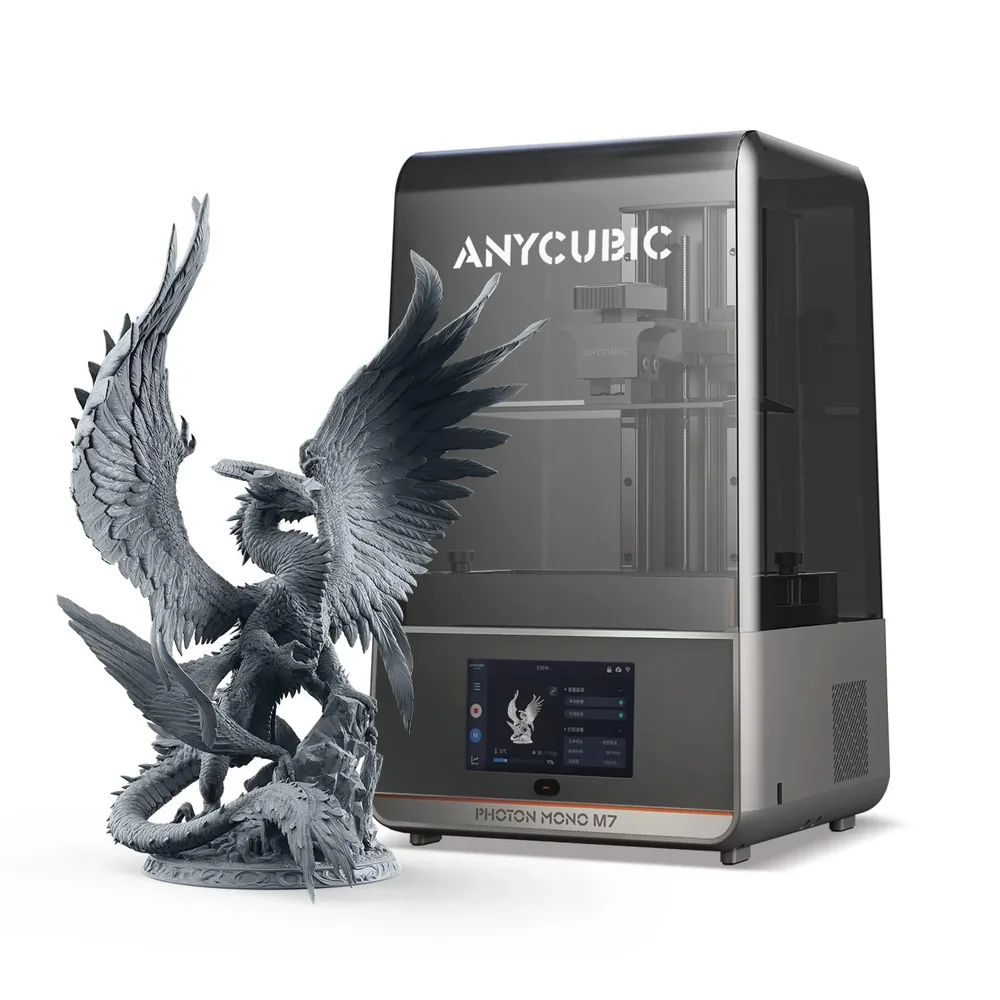
For a more compact format in the same lineup, the Photon Mono M7 Pro shares the same technical family at a smaller scale. From another manufacturer, Elegoo's Saturn 4 Ultra 16K remains a relevant comparison for large-format resin.
The Anycubic page covers the rest of the manufacturer's lineup, and the resin printer buying guide covers the criteria for choosing the right plate size for your projects.
Similar printers to compare
Sources and limits
- Source: official Anycubic pages (store.anycubic.com), checked October 6, 2026. Manufacturer claims, not our measurements.
- How we assess specifications
We have not measured noise, real printing speed, accuracy or reliability, so none of these is rated here.