
For a first printer on a budget
Anycubic Kobra 2 Neo
An open-frame FDM printer with a 220 × 220 × 250 mm nominal build volume and a top speed advertised at 250 mm/s.
In short The Anycubic Kobra 2 Neo is an open-frame filament (FDM) 3D printer with a 220 × 220 × 250 mm (8.7 × 8.7 × 9.8 in) build volume. Anycubic claims a 250 mm/s top speed, a 260 °C (500 °F) nozzle and a 110 °C (230 °F) bed; the printer measures 440 × 440 × 485 mm (17.3 × 17.3 × 19.1 in) and weighs 7.3 kg (16.1 lb).
Documentary analysis · Not personally tested
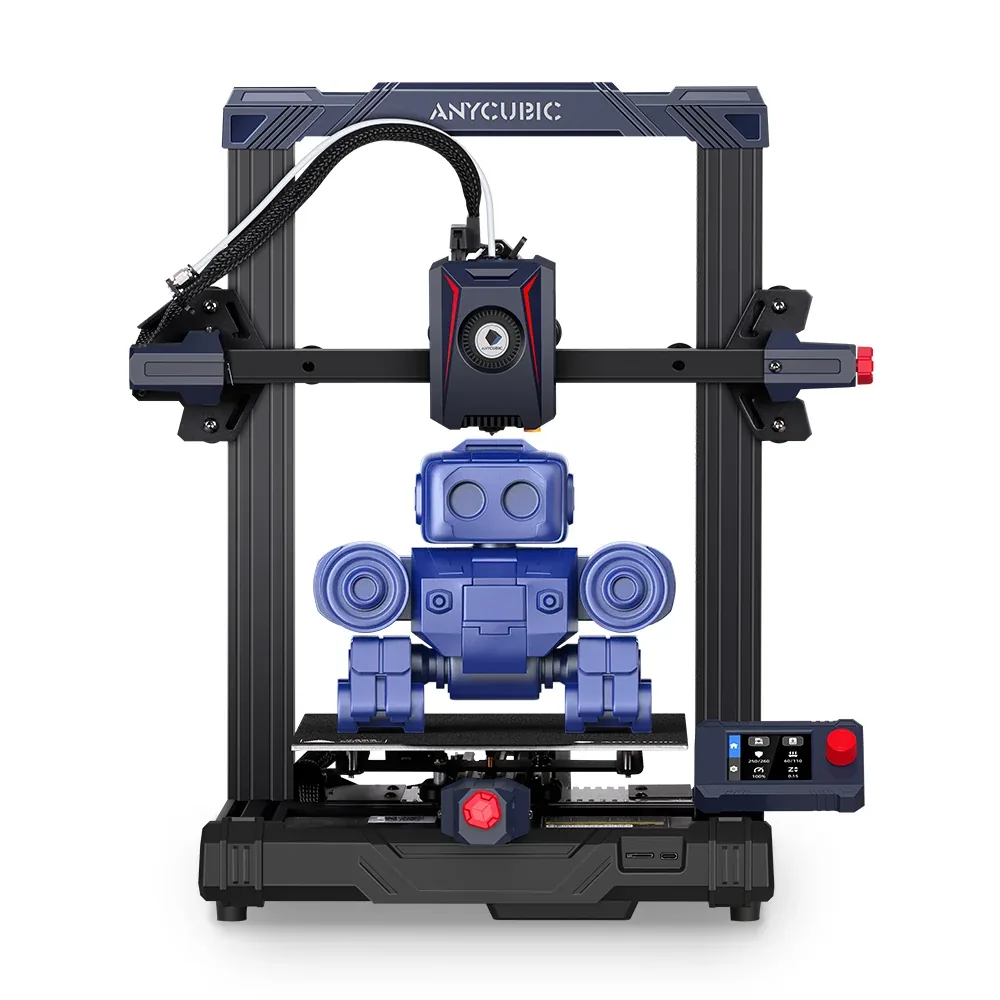 FDM · Open frame
Why consider it?
Automatic 25-point LeviQ 2.0 leveling and setup advertised at around ten minutes.
What to verify
Slower than the Kobra 2 Pro and Max; no multicolor printing on this model.
Anycubic Kobra 2 Neo specifications
- Technology
- Filament (FDM)
- Build volume
- 220 × 220 × 250 mm (8.7 × 8.7 × 9.8 in)
- Printer dimensions
- 440 × 440 × 485 mm (17.3 × 17.3 × 19.1 in)
- Weight
- 7.3 kg (16.1 lb)
- Enclosure
- Open frame
- Claimed top speed
- 250 mm/s
- Max nozzle temperature
- 260 °C (500 °F)
- Max bed temperature
- 110 °C (230 °F)
- Multicolor
- No multicolor system; a single-nozzle extruder per Anycubic.
- Materials
- PLA, ABS, PETG, and TPU per Anycubic.
- Screen
- 2.4-inch screen
- Connectivity
- microSD card
- Listed features
- Auto bed leveling
How much space does it need?
The Anycubic Kobra 2 Neo measures 440 × 440 × 485 mm (17.3 × 17.3 × 19.1 in) for a 220 × 220 × 250 mm (8.7 × 8.7 × 9.8 in) build volume: the dashed box is the printer, the solid cube the nominal build volume, about 13% of the machine’s volume. Add room for the spool or multicolor unit, cables and ventilation.
Source: official Anycubic pages (eu.anycubic.com), checked September 28, 2026. Manufacturer claims, not our measurements. Build volume is nominal: orientation, supports and reserved zones can reduce the usable space.
Which projects is it for?
The Kobra 2 Neo is an entry-level open-frame FDM printer with a 220 × 220 × 250 mm nominal build volume per Anycubic, launched in September 2023 alongside the rest of the Kobra 2 series. It targets a first purchase for everyday parts (brackets, enclosures, decorative objects) with no advanced settings to configure.
The advertised top speed of 250 mm/s is more modest than the Pro and Max versions in the lineup, making it a base for learning printer tuning before aiming for faster or larger machines.
The open frame and the absence of any enclosure also mean ambient room temperature affects print quality more than on a closed-chamber machine, something worth factoring in if you plan to print ABS regularly rather than occasionally.
Materials and setup
The printer runs PLA, ABS, PETG, and TPU per Anycubic, with a nozzle advertised up to 260°C and a bed up to 110°C. Automatic 25-point LeviQ 2.0 leveling also computes Z-offset without manual input, useful for a first setup.
The extruder stays single-nozzle: this machine is not built for multicolor, unlike the brand's Kobra 3 models, which support the optional ACE Pro.
What the bundle includes or not
Anycubic advertises a modular assembly doable in about ten minutes, but the exact accessories included (test spool, tools, spare plate) are not detailed on the product page reviewed.
Before buying, check the retailer's listing for the exact box contents (test filament, tools, plate) rather than relying only on the product photo, especially when comparing offers at different prices.
Warranty terms and technical support can also differ between Anycubic's own store and a third-party retailer, worth checking before comparing two similarly priced offers. Since filament beyond the test spool is not included, it's also worth budgeting for ongoing material costs as part of a first purchase.
Alternatives to compare
For a faster machine in the same lineup, the Kobra 2 Pro shares the same volume with a more powerful processor. For multicolor, the Kobra 3 adds compatibility with the optional ACE Pro.
The Anycubic page covers the rest of the manufacturer's lineup, and the beginner's buying guide helps compare this entry-level model against other equivalent machines before buying.
Similar printers to compare
Sources and limits
- Source: official Anycubic pages (eu.anycubic.com), checked September 28, 2026. Manufacturer claims, not our measurements.
- How we assess specifications
We have not measured noise, real printing speed, accuracy or reliability, so none of these is rated here.