
For extending the CR-10 lineup
Creality CR-10 SE
An open-frame FDM printer with a 220 × 220 × 265 mm nominal build volume and a nozzle rated up to 300°C.
In short The Creality CR-10 SE is an open-frame filament (FDM) 3D printer with a 220 × 220 × 265 mm (8.7 × 8.7 × 10.4 in) build volume. Creality claims a 600 mm/s top speed.
Documentary analysis · Not personally tested
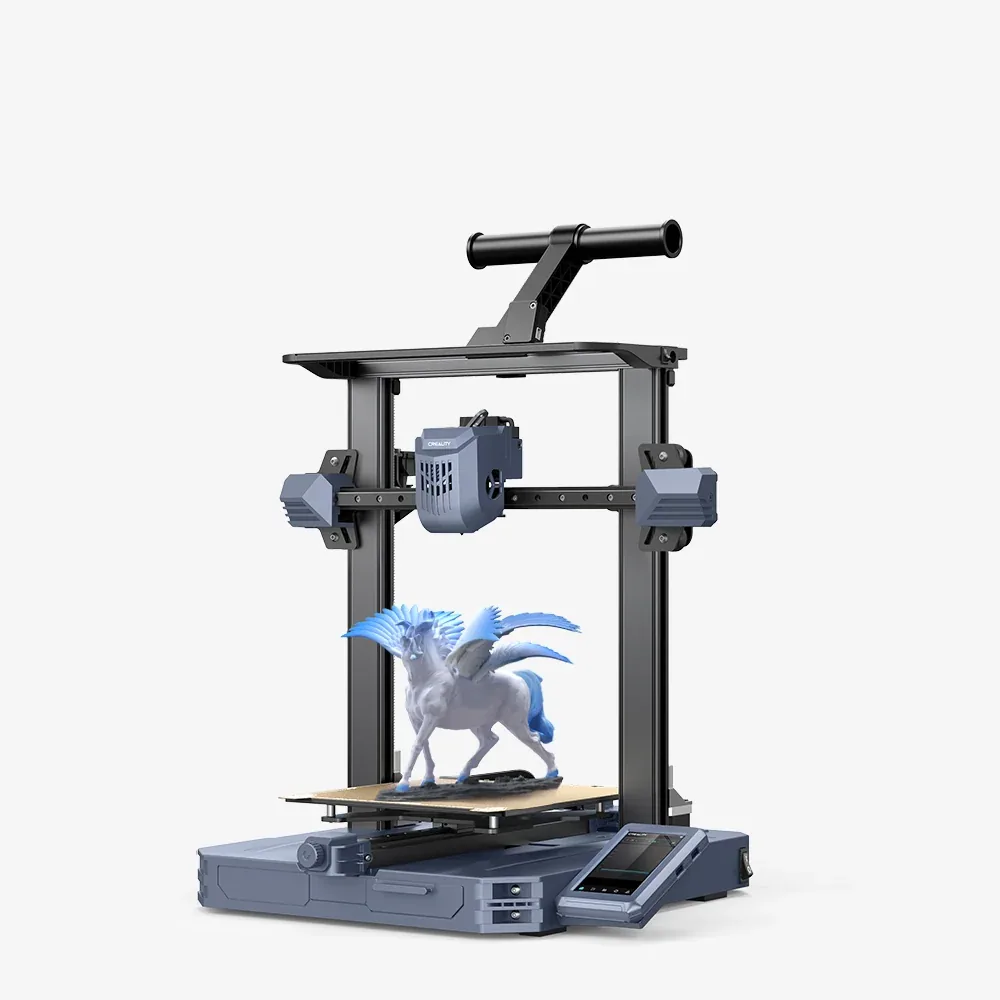 FDM · Open frame
Why consider it?
CR Touch and a pressure sensor for automatic leveling and Z-offset, with a top speed advertised at 600 mm/s.
What to verify
Open frame in the classic CR-10 tradition: no enclosure for ABS or ASA in regular use.
Creality CR-10 SE specifications
- Technology
- Filament (FDM)
- Build volume
- 220 × 220 × 265 mm (8.7 × 8.7 × 10.4 in)
- Enclosure
- Open frame
- Claimed top speed
- 600 mm/s
- Multicolor
- No multicolor system on this machine, per Creality's listing.
- Materials
- PLA, PETG, TPU and flexible filaments, ABS and ASA per the advertised 300°C nozzle.
- Listed features
- Auto bed leveling
Source: official Creality pages (store.creality.com), checked October 6, 2026. Manufacturer claims, not our measurements. Build volume is nominal: orientation, supports and reserved zones can reduce the usable space.
Which projects is it for?
The CR-10 SE is an open-frame FDM printer from Creality with a 220 × 220 × 265 mm nominal build volume. Presented by Creality as continuing the CR-10 lineup, it suits users who want the simplicity of a classic open frame while benefiting from more recent automated leveling.
The advertised speed reaches 600 mm/s with acceleration up to 8000 mm/s², driven by a Sprite direct extruder and an independent cooling fan rated at 12,000 rpm per Creality.
Materials and configuration
The copper-titanium alloy nozzle with a hardened steel tip heats up to an advertised 300°C, covering PLA, PETG, flexible TPU, as well as ABS and ASA per Creality.
The frame stays open despite this high temperature: without an enclosure, ABS and ASA remain more prone to warping than on an enclosed machine, even when the nozzle temperature allows it.
What the bundle includes or not
CR Touch paired with a pressure sensor provides automatic leveling and Z-offset with no manual tuning per Creality, running on a Creality OS system driven by a 1.2 GHz dual-core CPU and 8 GB of ROM.
The exact box contents (plate, tools, test spool) should still be checked on the retailer's listing before buying, since this can vary by region and model availability.
Alternatives to compare
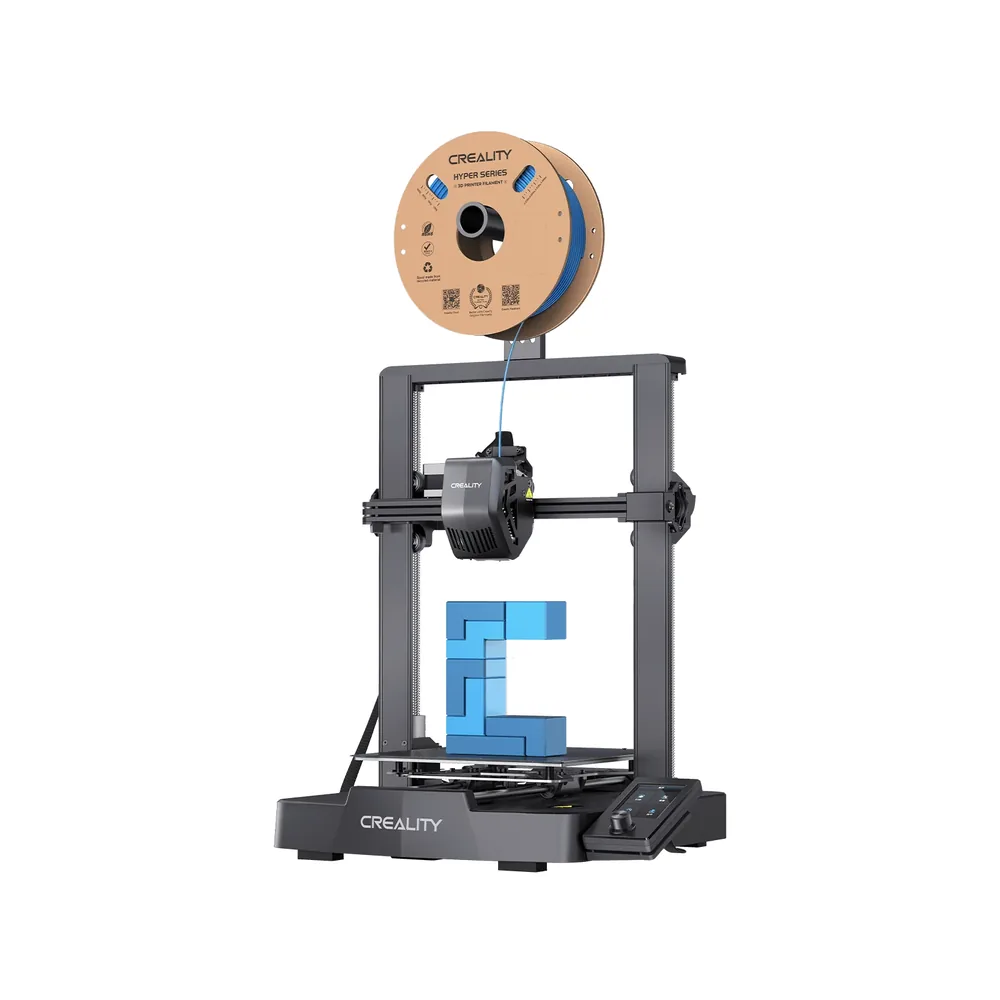
For a similar build volume with a newer CoreXZ architecture, the Ender-3 V3 reaches an equivalent advertised speed. The K1 SE is another open-frame CoreXY option; it does not replace an enclosed printer for materials sensitive to drafts.
The Creality page covers the rest of the manufacturer's lineup, and the PLA vs PETG guide helps pick the first material to try on this machine.
Similar printers to compare
Sources and limits
- Source: official Creality pages (store.creality.com), checked October 6, 2026. Manufacturer claims, not our measurements.
- How we assess specifications
We have not measured noise, real printing speed, accuracy or reliability, so none of these is rated here.