
For a very large bed, now discontinued
QIDI Tech X-Max 3
A CoreXY FDM printer with an actively heated chamber up to 65°C, a 325 × 325 × 315 mm nominal build volume; discontinued by QIDI.
In short The Qidi X-Max 3 is an enclosed filament (FDM) 3D printer with a 325 × 325 × 315 mm (12.8 × 12.8 × 12.4 in) build volume. QIDI Tech claims a 600 mm/s top speed, a 350 °C (662 °F) nozzle and active chamber heating to 65 °C (149 °F); the printer measures 553 × 553 × 601 mm (21.8 × 21.8 × 23.7 in) and weighs 30.2 kg (66.6 lb).
Documentary analysis · Not personally tested
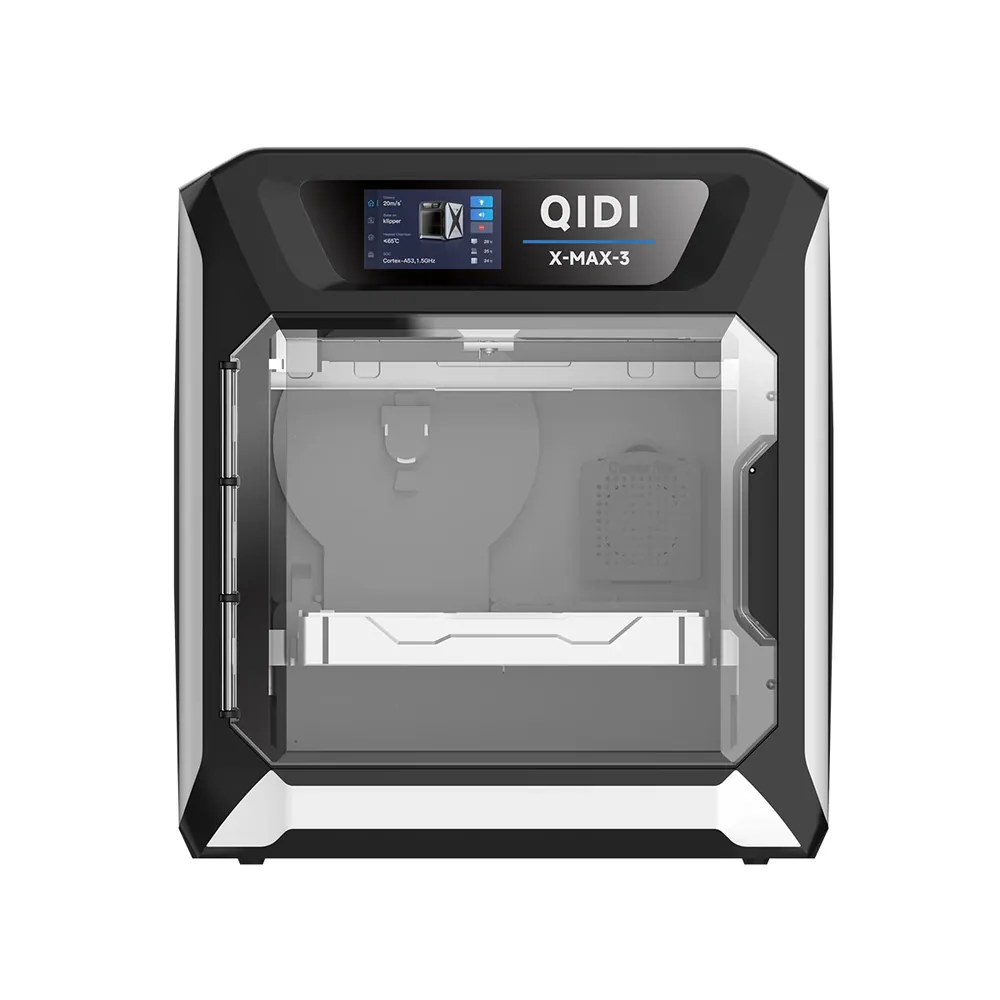 FDM · Enclosed
Why consider it?
A 325 × 325 × 315 mm volume with an actively heated chamber up to 65°C, a nozzle advertised up to 350°C, and a bed up to 120°C per QIDI, one of the brand's largest heated formats.
What to verify
QIDI lists this model as discontinued (its listing shows sold out) and points to the QIDI Max4 (390 × 390 × 340 mm) as a successor; new-unit availability isn't guaranteed.
Qidi X-Max 3 specifications
- Technology
- Filament (FDM)
- Build volume
- 325 × 325 × 315 mm (12.8 × 12.8 × 12.4 in)
- Printer dimensions
- 553 × 553 × 601 mm (21.8 × 21.8 × 23.7 in)
- Weight
- 30.2 kg (66.6 lb)
- Enclosure
- Enclosed, active heating up to 65 °C (149 °F)
- Claimed top speed
- 600 mm/s
- Claimed acceleration
- 20,000 mm/s²
- Max nozzle temperature
- 350 °C (662 °F)
- Max bed temperature
- 120 °C (248 °F)
- Multicolor
- No stock multicolor system; compatible with the optional QIDI Box on later models in the lineup.
- Materials
- PLA, ABS, ASA, PETG, TPU, PC, nylon (UltraPA), and recommended fiber-reinforced composites (PAHT-CF, PET-CF, PA12-CF) per QIDI.
- Screen
- 5-inch touchscreen
- Connectivity
- Wi-Fi, Ethernet, USB
- Listed features
- Auto bed leveling, filament runout sensor, built-in air filtration
How much space does it need?
The Qidi X-Max 3 measures 553 × 553 × 601 mm (21.8 × 21.8 × 23.7 in) for a 325 × 325 × 315 mm (12.8 × 12.8 × 12.4 in) build volume: the dashed box is the printer, the solid cube the nominal build volume, about 18% of the machine’s volume. Add room for the spool or multicolor unit, cables and ventilation.
Source: official QIDI Tech pages (qidi3d.com), checked September 28, 2026. Manufacturer claims, not our measurements. Build volume is nominal: orientation, supports and reserved zones can reduce the usable space.
Which projects is it for?
The X-Max 3 is a very-large-format CoreXY FDM printer, with a 325 × 325 × 315 mm nominal build volume per QIDI. It targeted makers printing large single parts or full batches on one plate, with an actively heated chamber to limit warping.
QIDI now lists this model as discontinued on its official page, which stays online with full specifications; it's no longer a standard new purchase, with the brand steering new buyers toward the even larger Max4.
Materials and setup
The actively heated chamber up to 65°C, a nozzle advertised up to 350°C, and a bed up to 120°C let it print ABS, ASA, PETG, and TPU on top of standard PLA per QIDI, at a generous format.
QIDI also recommends fiber-reinforced composites like PAHT-CF, PET-CF, and PA12-CF, as well as UltraPA nylon, materials that benefit from the heated chamber on a part this size.
What the bundle includes or not
Per the manufacturer's listing, the machine shipped with a desiccant dryer box and two nozzle sets (copper alloy and hardened steel), to cover both standard materials and abrasive composites.
The exact contents of any remaining stock unit aren't guaranteed to match this original description: check the retailer's listing carefully before buying.
Alternatives to compare
For an even larger format at QIDI, the Max4 (390 × 390 × 340 mm) officially takes over, though it isn't yet part of this catalog. For a large format still sold by QIDI, the Plus 4 is the direct alternative with a slightly smaller volume.
Against other enclosed large formats from other brands, the Creality K1 Max offers a 300 × 300 × 300 mm volume without an actively heated chamber, a useful comparison depending on the materials you target.
Similar printers to compare
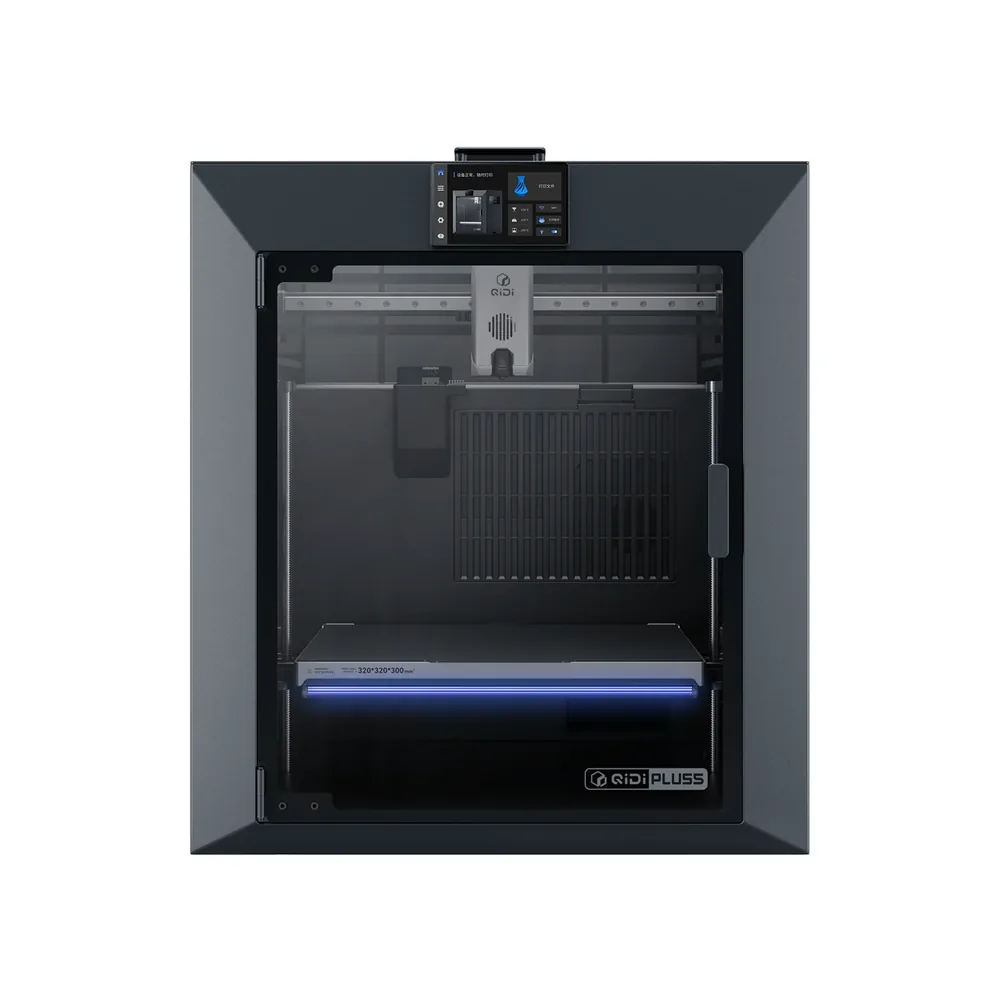
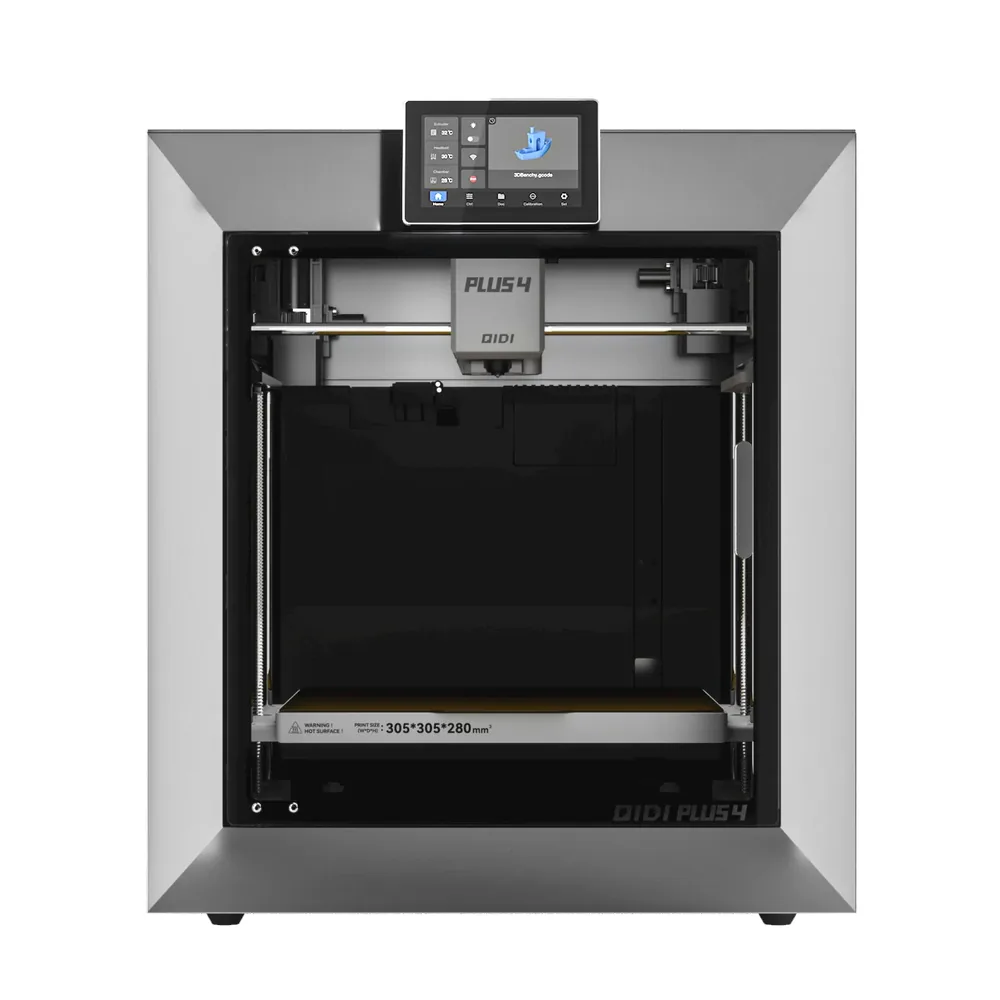
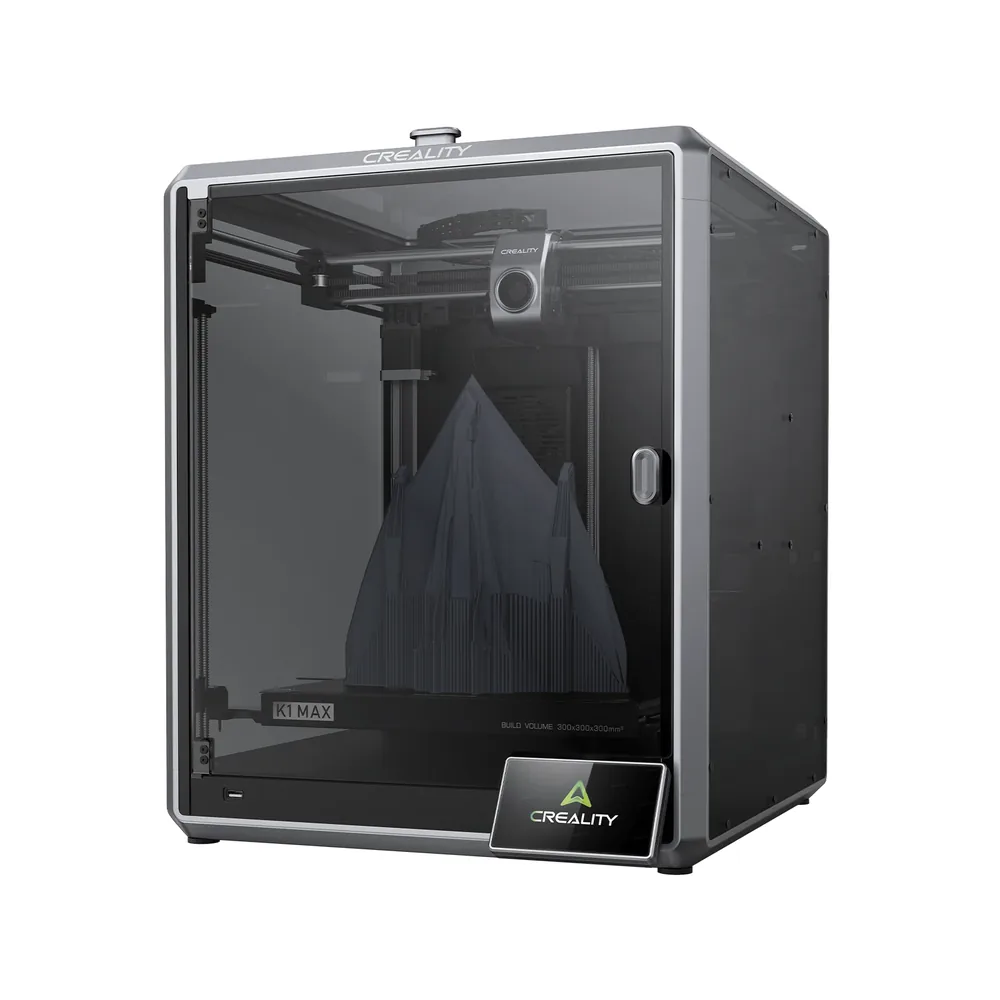
Sources and limits
- Source: official QIDI Tech pages (qidi3d.com), checked September 28, 2026. Manufacturer claims, not our measurements.
- How we assess specifications
We have not measured noise, real printing speed, accuracy or reliability, so none of these is rated here.