
For a first printer in a small space
Prusa Research Original Prusa MINI+
A compact open-frame FDM printer with a 180 × 180 × 180 mm build volume, a color screen, and a SuperPINDA sensor per Prusa Research.
In short The Prusa MINI+ is an open-frame filament (FDM) 3D printer with a 180 × 180 × 180 mm (7.1 × 7.1 × 7.1 in) build volume. Prusa Research claims a 280 °C (536 °F) nozzle and a 100 °C (212 °F) bed; the printer measures 380 × 330 × 380 mm (15 × 13 × 15 in) and weighs 4.5 kg (9.9 lb).
Documentary analysis · Not personally tested
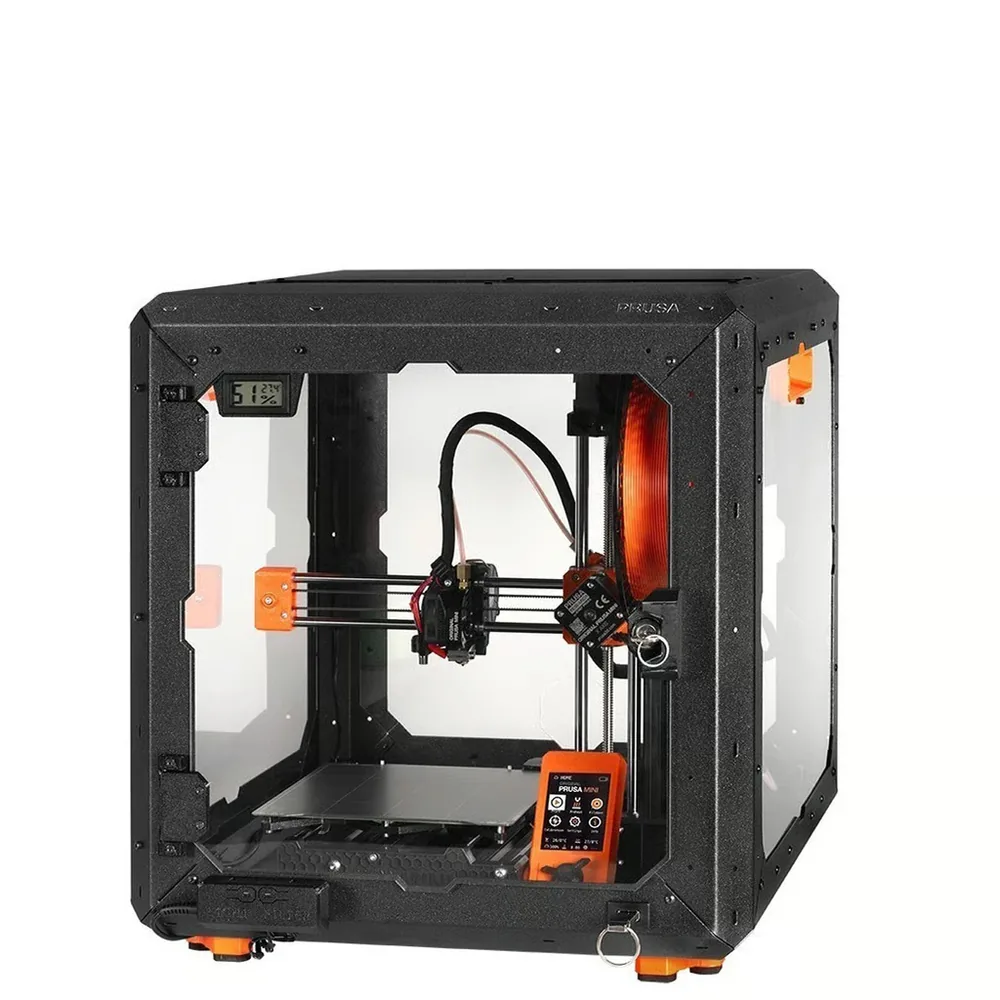 FDM · Open frame
Why consider it?
A compact format that stays within the Prusa ecosystem (PrusaSlicer, Prusa Connect) with an automatic SuperPINDA leveling sensor.
What to verify
A 180 mm build volume and no MMU compatibility rule it out for large parts or automated multicolor printing.
Prusa MINI+ specifications
- Technology
- Filament (FDM)
- Build volume
- 180 × 180 × 180 mm (7.1 × 7.1 × 7.1 in)
- Printer dimensions
- 380 × 330 × 380 mm (15 × 13 × 15 in)
- Weight
- 4.5 kg (9.9 lb)
- Enclosure
- Open frame
- Max nozzle temperature
- 280 °C (536 °F)
- Max bed temperature
- 100 °C (212 °F)
- Multicolor
- No compatible MMU: the MINI+'s Bowden extruder does not support Prusa's MMU multicolor system.
- Materials
- PLA, PETG, ASA, ABS, PC, CPE, PVA/BVOH, PVB, HIPS, PP, Flex, and filled materials per Prusa Research.
- Screen
- 2.8-inch screen
- Connectivity
- USB, Ethernet
- Listed features
- Filament runout sensor
How much space does it need?
The Prusa MINI+ measures 380 × 330 × 380 mm (15 × 13 × 15 in) for a 180 × 180 × 180 mm (7.1 × 7.1 × 7.1 in) build volume: the dashed box is the printer, the solid cube the nominal build volume, about 12% of the machine’s volume. Add room for the spool or multicolor unit, cables and ventilation.
Source: official Prusa Research pages (prusa3d.com), checked September 28, 2026. Manufacturer claims, not our measurements. Build volume is nominal: orientation, supports and reserved zones can reduce the usable space.
Which projects is it for?
The MINI+ is an open-frame FDM printer with a build volume of 180 × 180 × 180 mm per Prusa Research, built to fit on a small desk or start a small print farm. It suits figurines, small functional parts, and learning FDM printing without a large budget.
The compact format is not a substitute for a larger-volume machine on bulky parts, but it keeps most of the Prusa ecosystem: PrusaSlicer, Prusa Connect for remote monitoring, and a SuperPINDA sensor for automatic first-layer leveling.
Materials and setup
Prusa Research lists broad material support: PLA, PETG, ASA, ABS, PC, CPE, PVA/BVOH, PVB, HIPS, PP, flexible filaments, and filled materials (wood, composites), with a hotend up to 280°C and a heatbed up to 100°C.
The MINI+ uses a Bowden extruder that is not compatible with Prusa's MMU system: there is no official automated multicolor option for this model, unlike the MK4S or the CORE One.
What the bundle includes or not
Per Prusa Research's listing, the semi-assembled version includes a smooth PEI sheet, a filament sensor, a power cable, an English handbook, and free access to an online 3D-printing course.
The 2.8-inch color screen is standard. The MINI enclosure remains a separate accessory worth adding for regular ABS or ASA use; check precisely what a listing includes before buying.
Alternatives to compare
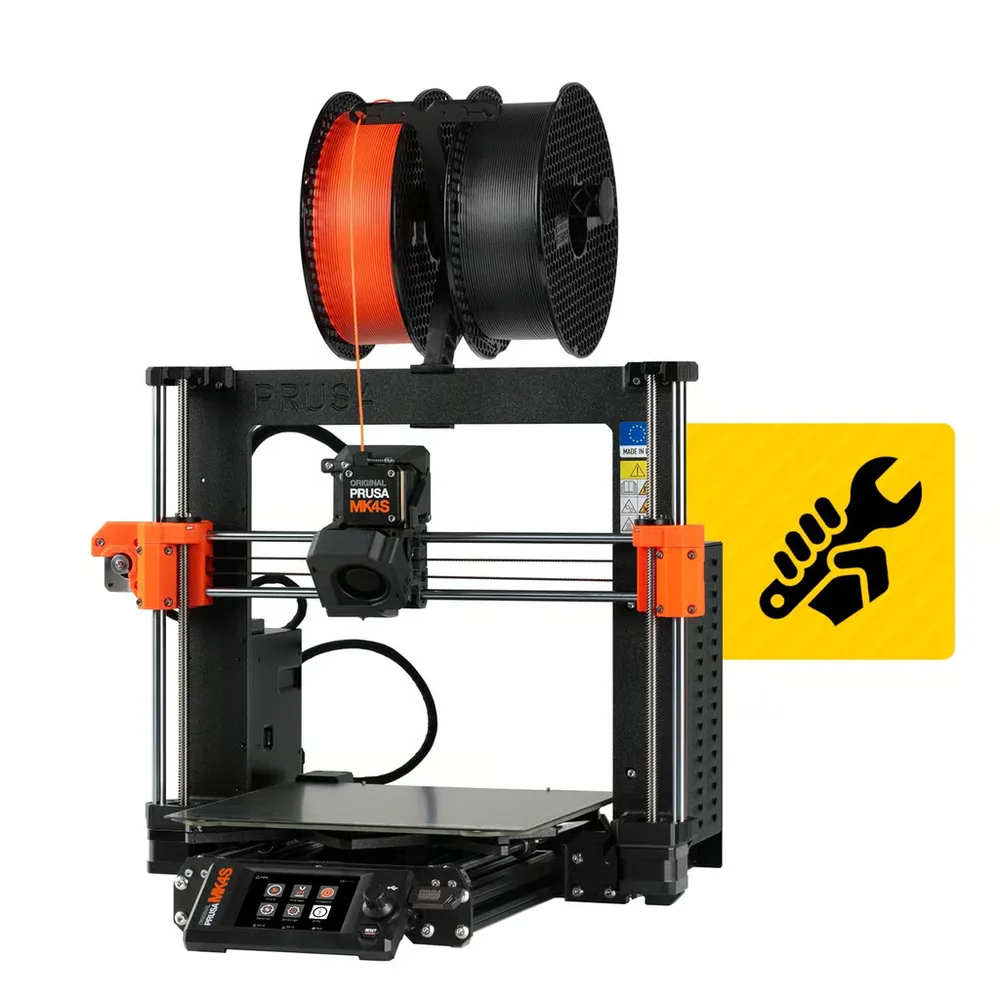
For a larger volume from the same maker, the MK4S is the direct comparison, with the added benefit of MMU3 compatibility for multicolor. The Prusa Research page places the MINI+ within the rest of the lineup.
The beginner's buying guide helps decide between this compact format and a more versatile machine depending on the size of parts you plan to print.
Similar printers to compare
Sources and limits
- Source: official Prusa Research pages (prusa3d.com), checked September 28, 2026. Manufacturer claims, not our measurements.
- How we assess specifications
We have not measured noise, real printing speed, accuracy or reliability, so none of these is rated here.